
Last update: 12 Oct 2026
* We earn a commission from some links on this page.
Faroe Islands Summary
These place ratings give you a quick overview of how well a destination matches different types of trips.
‘Best for’ scores:
The specific interest scores show where this place really shines – whether it's ideal for hiking, food & drink experiences, museums or other activities. These highlights help you understand what makes the destination special at a glance.
‘Your personal’ scores:
This reflects how well a place matches your personal preferences. You can adjust the importances of travel topics or other personal requirements categories in your account settings.
‘Suited for’ badges:
These give you a quick overview of how well a destination suits specific types of travellers, to help you find the places that match your lifestyle, preferences or travel situation.
Suited for
Faroe Islands – Quick facts
| Power Grid: |
230 V, 50 Hz Plug: Type C , Type F
Type C:
  Read about power adapters |
|---|---|
| Currency: |
Danish Krone (DKK) £1 ≈ DKK 8.93 |
| Cashless info: |
Rating 4/5
Cashless payments are accepted in many establishments in the Faroe Islands, but cash is still widely used. Credit cards are accepted in larger businesses.
Save with a travel credit card |
| eSIM providers: |
Best value: Saily Flexibility: Airalo Read our in-depth comparison |
| Tipping: | Tipping is not expected in the Faroe Islands. However, small tips for good service in restaurants and hotels are appreciated. |
|---|---|
| Public drinking: | Public drinking is generally not allowed in the Faroe Islands, and alcohol is consumed in licensed venues such as bars and restaurants. |
| Public smoking: | Smoking is prohibited in indoor public spaces, but designated smoking areas are available outdoors. |
| Ólavsøka (St. Olaf's Day) (29 July) |
The Faroese national holiday, celebrated in Tórshavn with festivities, rowing races and the opening of parliament |
|---|---|
| Christmas (25 December) |
Celebrated with traditional family gatherings and meals |
| Emergency contact: | Emergency Number: 112 |
|---|---|
| Taxi apps: | |
| Other: | The Faroe Islands are known for their dramatic landscapes, including cliffs, fjords, and seabirds. The islands offer a peaceful and nature-focused travel experience. |
Best times to travel
The best times to travel section shows how the months compare for a visit, so you can find the time of year that fits what you want to do.
Background colours of the months:
The colour shows the typical temperature: yellow (hot), green (mild) and blue (cold). How strong the colour is shows the travel season: full colour means high season, soft colour means shoulder season and soft-striped means off season.
Weather symbols:
Each month has one symbol showing what the weather is typically like, such as hot and sunny, freezing or a rainy or snowy season. Use them to quickly spot months that match the weather you want, or to avoid the ones that don't.
Crowdedness:
The people icon shows how busy the place usually is. The more people, the more crowded it gets.
Additional notes:
The grey info boxes point out special things worth knowing, like recurring weather issues or seasonal events.
for Faroe Islands, Faroe Islands
Most hotels, restaurants and tourist services close from October to April, main season runs May to August
Puffins nest on the cliffs from about May to mid August
Weather changes fast, fog and storms regularly cancel helicopter, ferry and flights, especially in winter
Don't miss
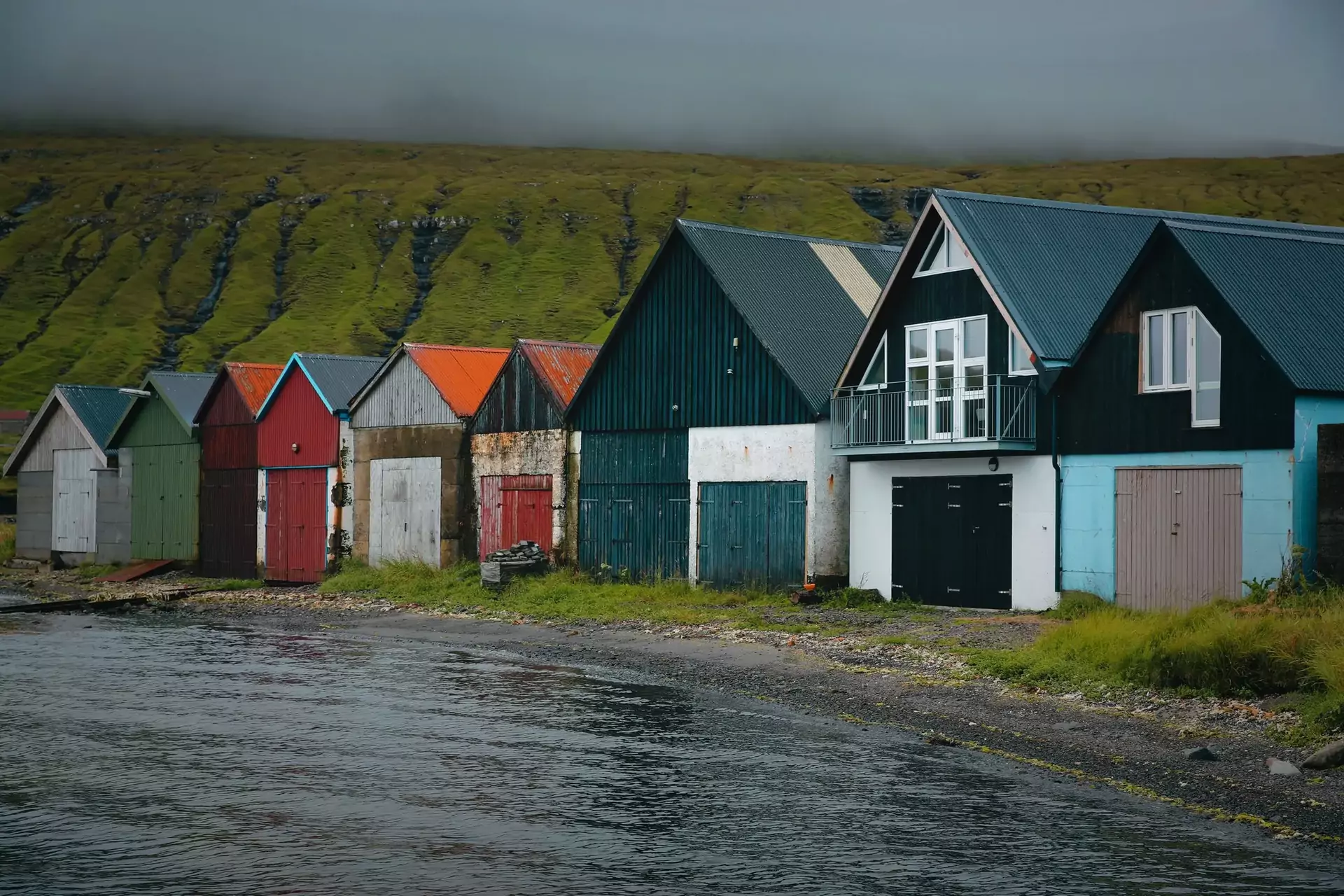
- 💦 Hike to the breathtaking Múlafossur Waterfall in Gásadalur
- ⛵ Sail between the towering sea cliffs of Vestmanna
- 🏡 Walk through the colorful turf-roofed village of Saksun
- 🥾 Climb Slættaratindur, the highest peak in the Faroe Islands
- ☕ Explore the quaint harbor and cafés of Tórshavn
- 🐦 Spot puffins nesting along the cliffs of Mykines Island
You've been here?
Log in to manage your own bucket list! Why travel to Faroe Islands?
The Faroe Islands' appeal lies in their untouched natural beauty and otherworldly landscapes that feel like stepping into a fantasy realm. The islands boast some of Europe's most dramatic scenery, including towering sea cliffs, picturesque waterfalls that seem to drop directly into the ocean and emerald valleys dotted with grazing sheep. What makes the Faroes particularly special is the opportunity to experience these breathtaking vistas without the crowds found in more popular destinations, allowing for a more intimate connection with nature. However, travelers should be prepared for certain challenges. The weather is notoriously unpredictable, with frequent rain, wind and fog that can change rapidly throughout the day. According to climate data, the islands experience around 210 rainy or snowy days per year, making sunny days quite rare. The current inflation rate of 0.8% (as of Q4 2024) indicates a stable economy, but the Faroe Islands remain relatively expensive for visitors, with costs comparable to other Nordic countries. Additionally, the islands' remote location and limited transportation options can make getting around more challenging without proper planning.
🏙️Cities & Regions
-
1
Tórshavn
Capital of the Faroe Islands, this town sits on a rocky peninsula overlooking the Atlantic. It offers narrow streets lined with wooden houses, a historic harbor and easy access to dramatic cliffs, hiking trails and local seafood markets.
🏯Places worth seeing
🎡Places for activities
🏞️Natural landmarks
🛍️Shopping
🎈Events
-
Ólavsøka (National Holiday)
-
G! Festival
-
Summartónar (Summer Tones)
-
Faroe Islands Marathon
-
Tórshavn Marathon
-
Christmas Celebrations
-
Boat Festival
-
Vestanstevna Festival
-
Faroe Islands Birdwatching Festival
-
Cultural Festivals in Villages
Knowledge before you go
- Pack waterproof layers; weather changes fast, even in summer.
- Bring sturdy waterproof hiking boots and wool socks; trails are often wet and windy.
- If hiking, carry a map, snacks, water and power bank; mobile coverage can be limited.
- Skip umbrellas in strong gusts; locals rely on shells and layers instead for comfort.
How to travel to Faroe Islands
Most international visitors arrive in the Faroe Islands by air through Vágar Airport, with connections primarily from Copenhagen, though seasonal flights are available from other European cities. Another option is arriving by ferry from Denmark or Iceland, which allows you to bring your own vehicle. The journey by sea takes approximately 36 hours from Denmark and offers a unique way to approach the islands. As the Faroe Islands are part of the Danish Kingdom but not the EU, different entry requirements may apply compared to mainland Denmark.
Access summary
- Fly into Vágar Airport (FAE) from Denmark, Iceland, Norway, Scotland hubs.
- From Denmark/Iceland: Smyril Line ferry with cars and passengers to Tórshavn.
- Atlantic Airways based at FAE; independent, partnerships but no major alliance.
Check your route from anywhere
Where to stay in Faroe Islands
The Faroe Islands offer a range of accommodations from modern hotels in Tórshavn to guesthouses in smaller villages and self-catering cottages in rural areas. Traditional turf-roofed houses converted into guesthouses provide a unique cultural experience. While luxury options are limited, the quality of accommodations is generally high, though prices tend to be on the expensive side, comparable to other Nordic countries. Booking well in advance is essential, especially during the peak summer season (June-August), as the limited number of rooms can fill quickly.
Hotel recommendations
*by rating and popularity. Commissions have no influence on the rankings.



How to get around Faroe Islands
Getting around the Faroe Islands is best done by car, which gives you the freedom to explore at your own pace and stop at scenic viewpoints. The islands are connected by an excellent network of roads, tunnels and bridges, making most areas accessible by vehicle. For those without a car, public transportation includes buses and ferries that connect the main islands, with multi-day travel cards available for unlimited travel. Helicopter service exists primarily for residents of remote islands, though tourists can sometimes book specific sightseeing tours through Atlantic Airways during peak season.
Budget snapshot
Costs compared to home
We calculate the average costs when travelling to destinations and compare those with the living costs at your home. With this you can get an estimate of how expensive or cheap the destination is for you.
To customise this, you can set up which location and price level are used for the calculations in your account settings.
Daily expenses in the region are around 38% higher than the average across United States. That means you'll spend considerably more on meals and getting around.
Exchange rate trend
The exchange rate price factor shows how expensive or cheap a currency currently is compared to its historical average. It's a quick way to see if a country is currently more or less affordable due to exchange rate changes.
Your exchange rate (GBP to DKK) is 3% better than in recent years. That means travelling now costs around the same compared to the past.
Travel costs
To help you plan your trip, we provide estimated daily costs per person (when travelling as a pair) for different travel styles. These numbers give you an idea of what you might spend each day at this destination, including accommodation, food, transport and activities.
Additionally, we also provide average hotel costs for different travel styles to give you an estimate for the accommodation only.
Please note that these are only estimates. The real costs depend on booking times, season and other factors.
Daily cost summary
Travel style categories explained:
Backpacker:
Staying in hostels or budget hotels, cooking your own meals or eating cheap and choosing low-cost activities.
Mid-range:
Staying in mid-range hotels, eating at a mix of restaurants and casual spots and enjoying a variety of activities.
Luxury:
Staying in luxury hotels, dining out at high-end restaurants and enjoying premium experiences without worrying about the price.
| Backpacker | Mid-range | Luxury | |
|---|---|---|---|
| 💵 Total costs per day, including accommodation | |||
| 🏨 Accommodation per night, per person | |||
| 🍝 Food per day | |||
| 🚕 Transportation per day |
Food & Drink
| 🍽️ Restaurant Dinner, per person | |
|---|---|
| 🍛 Lunch Set, per person | |
| 🍟 Fast food combo | |
| 🍝 Preparing your own food, per day | |
| ☕ Cappuccino | |
| 🍺 Beer in a restaurant, 0.5 l |
Transportation
| 🚌 Public transport ticket | |
|---|---|
| 🚕 Taxi Ride, 10 km / 6 mi | |
| ⛽ Petrol, 1 l |
Other
| 🎞️ Cinema ticket | |
|---|---|
| 👩⚕️ Doctor's consult | |
| 🤧 Cold medication | |
| 💇 Basic haircut |
Safety information overview
General safety
The Faroe Islands are extremely safe with virtually no violent crime. The main safety concerns are related to natural hazards like steep cliffs, rapidly changing weather and strong winds. Exercise caution when hiking near cliff edges, especially in windy or foggy conditions.
Health & Medical
Healthcare in the Faroe Islands is of high quality, with modern facilities in Tórshavn. However, medical services in smaller communities may be limited. Comprehensive travel insurance is recommended. No special vaccinations are required, but be prepared for motion sickness on boats and ferries.
Accessibility
Accessibility can be challenging in the Faroe Islands due to the mountainous terrain. Many natural attractions require hiking over uneven ground and historic buildings may lack modern accessibility features. Major hotels and public buildings in Tórshavn offer better accessibility options.
Tap water
Tap water in the Faroe Islands is clean, safe to drink and of excellent quality. Bottled water is unnecessary, as the local water comes from pure mountain sources. Bringing a reusable water bottle is recommended for hiking and outdoor activities.
Packing recommendations for Faroe Islands
Log in to add this place to a travel list and get a summary of all recommended items for your whole trip.
🥾
Walking boots
📷
Camera
🚰
Reusable water bottle
🧥
Waterproof jacket
👀
Binoculars
for birdwatching
🕶️
Sunglasses
🔋
Power bank
🩹
Basic first aid kit
📃
Travel insurance
🪪
Copies of passport and important documents
☂️
Sturdy umbrella
🧢
Woolly hat
☔
Rucksack rain cover
🧤
Warm gloves
🧥
Fleece mid-layer
even in summer
👖
Waterproof overtrousers
📱
Travel eSIM
🔌
Universal travel adaptor
🩺
Prescription medicines
💳
Credit card with no foreign transaction fees
🛂
Passport
Related articles & guides for Faroe Islands



Looking for inspiration?

Discover
Top solo travel destinations and safe hubs
Travelling alone sounds like a bigger deal than it is. The first day feels strange – eating dinner by yourself, navigating without someone to double-check the map with, making…
Read more
Discover
Top birdwatching destinations and avian hotspots
Birdwatching has a way of changing how you travel. Once you start paying attention to what's flying, perching and calling overhead, a destination opens up in ways that a standard…
Read more

Discover
Best couple holiday destinations
Travelling as a couple sounds simple enough, yet the best couple holiday destinations mean something different to almost every pair. What feels romantic to one couple can feel like…
Read more

Discover
Best travel destinations for seniors
Senior travel covers a wide range, from slow, low effort trips built around comfort to more independent trips for travellers who still want to cover plenty of ground. Some…
Read more

Discover
Top ecotourism destinations and sustainable travel hubs
Travel and conservation do not always go hand in hand, but eco tourism is built on the idea that a trip can truly support the places it visits rather than just pass through them.…
Read more

Discover
Intimate escapes and romantic getaways
The most memorable trips for couples tend to have less to do with luxury and more to do with the quality of shared experience. A place that slows you down, removes the usual…
Read more
Discover
Top adventure destinations and outdoor activities
Adventure travel covers an enormous range of activities and risk tolerances, from multi-day wilderness trekking and white water rafting to technical climbing, polar expeditions and…
Read more

Discover
Top island destinations and tropical getaways
Island travel offers a self-contained quality that few other destination types match, with defined geography, distinct local culture and the particular atmosphere that comes from…
Read more

Discover
Top photography destinations and scenic landscapes
A genuinely photogenic destination offers more than one good shot: it has the light, the composition and enough variety of conditions to reward repeat visits at different times of…
Read more
Discover
Best birdwatching destinations in Europe
Europe may not have the sheer species numbers of the tropics, but it offers far more than most visitors expect as a birdwatching destination. The continent sits at the intersection…
Read more

Discover
Top hiking destinations and famous trails
Hiking at its best is one of the most direct ways to engage with a landscape. The pace forces a relationship with terrain, weather and distance that faster forms of travel rarely…
Read more
Discover
Best solo travel destinations in Europe
Europe is where most people start, and for good reason. The trains connect cities across borders, the hostels have been running for decades, and the distances between completely…
Read more
Discover
Best couple vacation destinations in Europe
Europe has been the backdrop for love stories for centuries, and for couples it remains one of the easiest continents to feel romantic in without even trying. The choice of…
Read more

Discover
Best destinations to visit in July
July is the height of summer across the Northern Hemisphere, with schools out and much of Europe and North America in full holiday mode. Beaches, national parks and major cities…
Read more
Discover
Top up-and-coming destinations and trending hotspots
The most interesting up and coming destinations are typically those where a combination of improved access, growing regional tourism infrastructure and word-of-mouth reputation has…
Read more
What other users say about travelfilters
“travelfilters made it easy for me to find ski areas and compare what else they offer, so that I could find the best place for my personal travel style.”

Chris
Snowboarding & Onsen trip to Japan
“I love how transparent the data feels. There is no pushy upsell, just honest information and settings I can tune to my own travel style.”

Maria
After booking her 2027 winter escape
“The level of detail for each destination and how well those are displayed, make planning feel confident instead of overwhelming.”

Mina
Planned a week in New York City
“We used travelfilters for our planning from start to end. The trip turned out even better than expected, thanks to all their tools and customisation options.”

Allan & Etienne
Trip to Japan to see autumn foliage
“Thanks to travelfilters, I found some hidden gems to see. Being able to filter for exactly your interests is a game changer for my travel planning.”

Michael
Tour through the old cities of Northern Italy
“The customizable filters helped me find a quiet beach town with good wifi and low season crowds in under five minutes.”

Diego
Weekend Escape to Llanes, Spain
“The airport connection map saved me hours by showing good flight options from my home airport to lesser-known cities.”

Nguyen
Planning a 2027 trip to France
“The website is clean, fast and focused on the search itself, which makes travelfilters feel more like a professional tool than an ad-heavy booking site.”

Hassan
Christmas Market trip, Germany
