









Was this page helpful?

| Power Grid: |
230 V, 50 Hz Plug: Type D , Type M
Type D:
  Read about power adapters |
|---|---|
| Currency: |
Sri Lankan Rupee (LKR) £1 ≈ LKR 442.31 |
| Cashless info: |
Rating 3/5
Cashless payments are becoming more common in Sri Lanka, especially in larger cities, but cash is still widely used in rural areas.
Save with a travel credit card |
| eSIM providers: |
Best value: Saily Flexibility: Airalo Read our in-depth comparison |
| Tipping: | Tipping is not mandatory in Sri Lanka, but small tips are appreciated for good service in restaurants, hotels, and taxis. |
|---|---|
| Public drinking: | Public drinking is generally not allowed in Sri Lanka. Alcohol is typically consumed in licensed venues such as bars and restaurants. |
| Public smoking: | Smoking is prohibited in indoor public spaces, including restaurants, bars, and public transport. |
| Sinhala and Tamil New Year (13–14 April) |
Celebrated with family gatherings |
|---|---|
| Independence Day (4 February) |
Commemorates Sri Lanka's independence from British rule |
| Emergency contact: | Emergency Numbers: 119 (Police), 1990 (Ambulance), 110 (Fire) |
|---|---|
| Taxi apps: | PickMe, Uber |
| Other: | Sri Lanka is known for its stunning beaches, ancient temples, and rich cultural heritage. It is a popular destination for nature lovers and history enthusiasts. |
The best times to travel section shows how the months compare for a visit, so you can find the time of year that fits what you want to do.
Background colours of the months:
The colour shows the typical temperature: yellow (hot), green (mild) and blue (cold). How strong the colour is shows the travel season: full colour means high season, soft colour means shoulder season and soft-striped means off season.
Weather symbols:
Each month has one symbol showing what the weather is typically like, such as hot and sunny, freezing or a rainy or snowy season. Use them to quickly spot months that match the weather you want, or to avoid the ones that don't.
Crowdedness:
The people icon shows how busy the place usually is. The more people, the more crowded it gets.
Additional notes:
The grey info boxes point out special things worth knowing, like recurring weather issues or seasonal events.
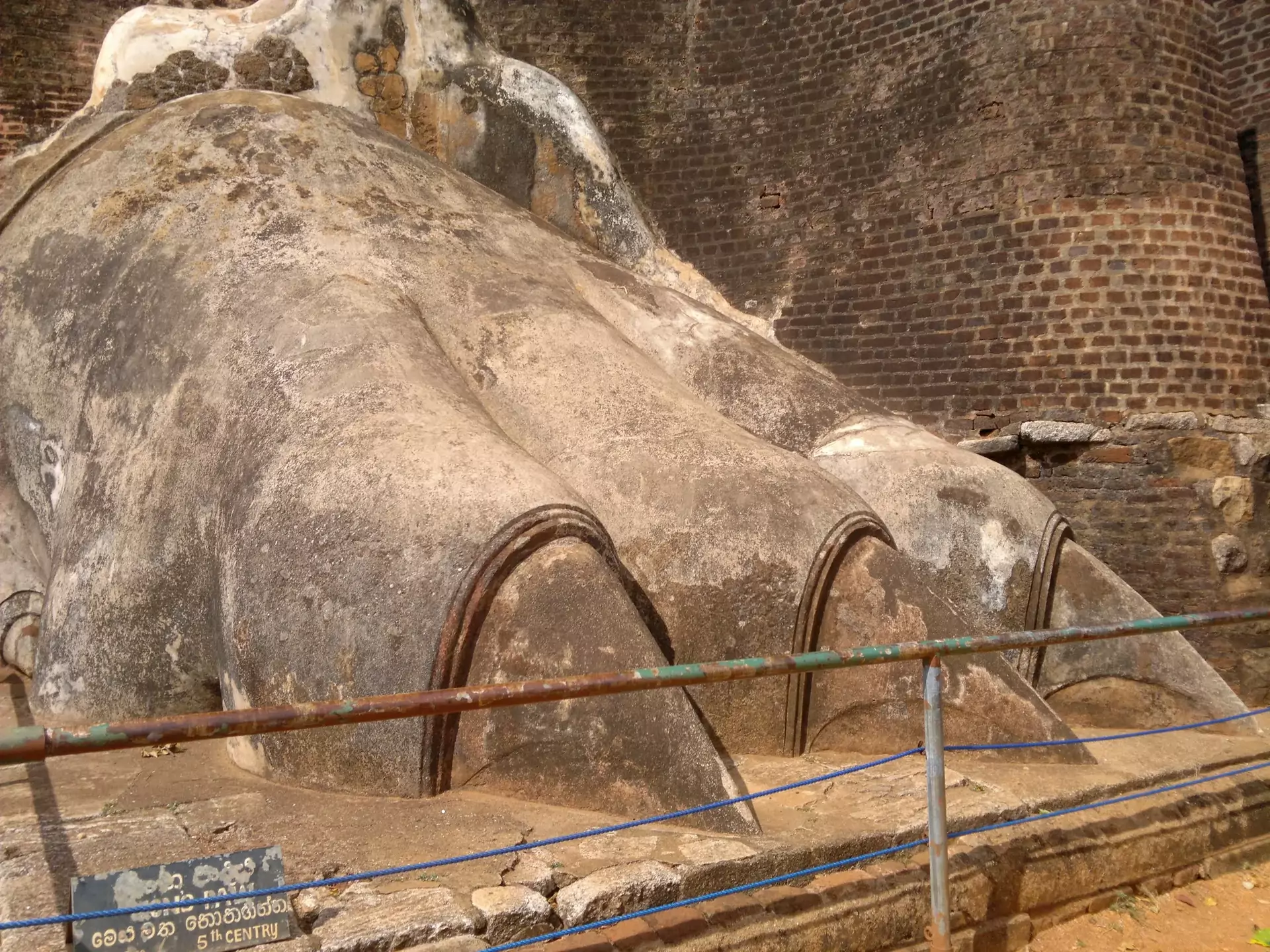
Sigiriya stands as a remarkable rock fortress in central Sri Lanka. The site features ancient ruins atop a massive granite column that rises over 200 meters above the surrounding plains. Archaeologists have uncovered evidence of royal palaces gardens and intricate frescoes that reveal advanced artistry from centuries ago.
The climb to the summit involves navigating steep staircases carved into the rock face. At the top visitors find remnants of a palace complex including brick structures stone pathways and water features designed with precision engineering. The site also includes a series of terraces gardens and pools that show sophisticated urban planning from the 5th century CE.
Carvings known as the Sigiriya Frescoes depict figures believed to represent royalty or religious symbols. These paintings demonstrate skill in color application and composition despite limited tools available at the time. Nearby visitors can explore caves with ancient inscriptions called graffiti that provide insights into daily life and beliefs of past communities.
Surrounding areas contain remnants of defensive walls moats and reservoirs indicating a well-organized settlement. The site’s location offers panoramic views across dry zone landscapes where vegetation adapts to seasonal rainfall patterns. Travelers interested in history architecture or archaeology will find Sigiriya both educational and visually striking without relying on modern attractions.
Sigiriya, located in central Sri Lanka, is accessible via a network of roads connecting it to major cities such as Colombo and Kandy. The nearest railway station is in Dambulla, approximately 18 kilometers away, with local buses and taxis available for the final leg of the journey. The site is reachable by private vehicle through well-maintained highways, including the Sigiriya Road connecting to the A26 highway. Visitors may also use domestic flights to reach nearby airports like Ratmalana (Colombo) or Bandaranaike International Airport, followed by a road transfer. Entry to the archaeological site requires tickets purchased at the entrance, with guided tours available for those seeking structured access.
Near Sigiriya, accommodations range from boutique guesthouses to luxury resorts, catering to every budget and preference. Traditional stone cottages offer a rustic charm with local décor, while modern villas provide spacious rooms, private pools and panoramic views of the surrounding hills. Mid‑range hotels typically charge between LKR 12,000 – 18,000 (£27.22 – 40.82) per night, featuring free Wi‑Fi, breakfast buffets and guided tour services. High‑end resorts command upwards of LKR 30,000 (£68.04) per night, offering spa treatments, fine dining and personalized concierge care. The area is renowned for its eco‑friendly lodgings that blend sustainability with comfort, often incorporating organic gardens and locally sourced materials into their design.
Log in to add this place to a travel list and get a summary of all recommended items for your whole trip.
We calculate the average costs when travelling to destinations and compare those with the living costs at your home. With this you can get an estimate of how expensive or cheap the destination is for you.
To customise this, you can set up which location and price level are used for the calculations in your account settings.
The exchange rate price factor shows how expensive or cheap a currency currently is compared to its historical average. It's a quick way to see if a country is currently more or less affordable due to exchange rate changes.
