











Was this page helpful?

These place ratings give you a quick overview of how well a destination matches different types of trips.
‘Best for’ scores:
The specific interest scores show where this place really shines – whether it's ideal for hiking, food & drink experiences, museums or other activities. These highlights help you understand what makes the destination special at a glance.
‘Your personal’ scores:
This reflects how well a place matches your personal preferences. You can adjust the importances of travel topics or other personal requirements categories in your account settings.
‘Suited for’ badges:
These give you a quick overview of how well a destination suits specific types of travellers, to help you find the places that match your lifestyle, preferences or travel situation.
| Power Grid: |
100 V, 50 Hz Plug: Type A
Type A:
 Read about power adapters |
|---|---|
| Currency: |
Japanese Yen (JPY) £1 ≈ JP¥210 |
| Cashless info: |
Rating 4/5
Cashless payments are becoming more common, especially in cities, with some shops still preferring cash. Be prepared for occasional cash-only situations in rural areas.
Save with a travel credit card |
| eSIM providers: |
Best value: Saily Flexibility: Airalo Read our in-depth comparison |
| Tipping: | Tipping is not customary in Japan and can be considered rude. Excellent service is the norm, and tipping is unnecessary in most places. |
|---|---|
| Public drinking: | Public drinking is legal and commonly accepted, particularly during festivals and events. |
| Public smoking: | Smoking is prohibited in indoor public places but allowed in designated outdoor areas. Some restaurants may have smoking sections. |
| New Year (January) |
One of the most important holidays, expect crowded temples and high prices. Plan ahead. |
|---|---|
| Golden Week (April-May) |
The busiest travel time, expect high demand for accommodation and transport. |
| Obon (August) |
A time to honour ancestors, many businesses close, and transport can be crowded. |
| Emergency contact: | Emergency Number: 110 (Police), 119 (Fire & Ambulance) |
|---|---|
| Taxi apps: | Uber, JapanTaxi, DiDi |
| Other: | Japan is a country of respect, so understanding local customs and etiquette is important. Public transport is efficient, but can be crowded during peak hours. |
The best times to travel section shows how the months compare for a visit, so you can find the time of year that fits what you want to do.
Background colours of the months:
The colour shows the typical temperature: yellow (hot), green (mild) and blue (cold). How strong the colour is shows the travel season: full colour means high season, soft colour means shoulder season and soft-striped means off season.
Weather symbols:
Each month has one symbol showing what the weather is typically like, such as hot and sunny, freezing or a rainy or snowy season. Use them to quickly spot months that match the weather you want, or to avoid the ones that don't.
Crowdedness:
The people icon shows how busy the place usually is. The more people, the more crowded it gets.
Additional notes:
The grey info boxes point out special things worth knowing, like recurring weather issues or seasonal events.
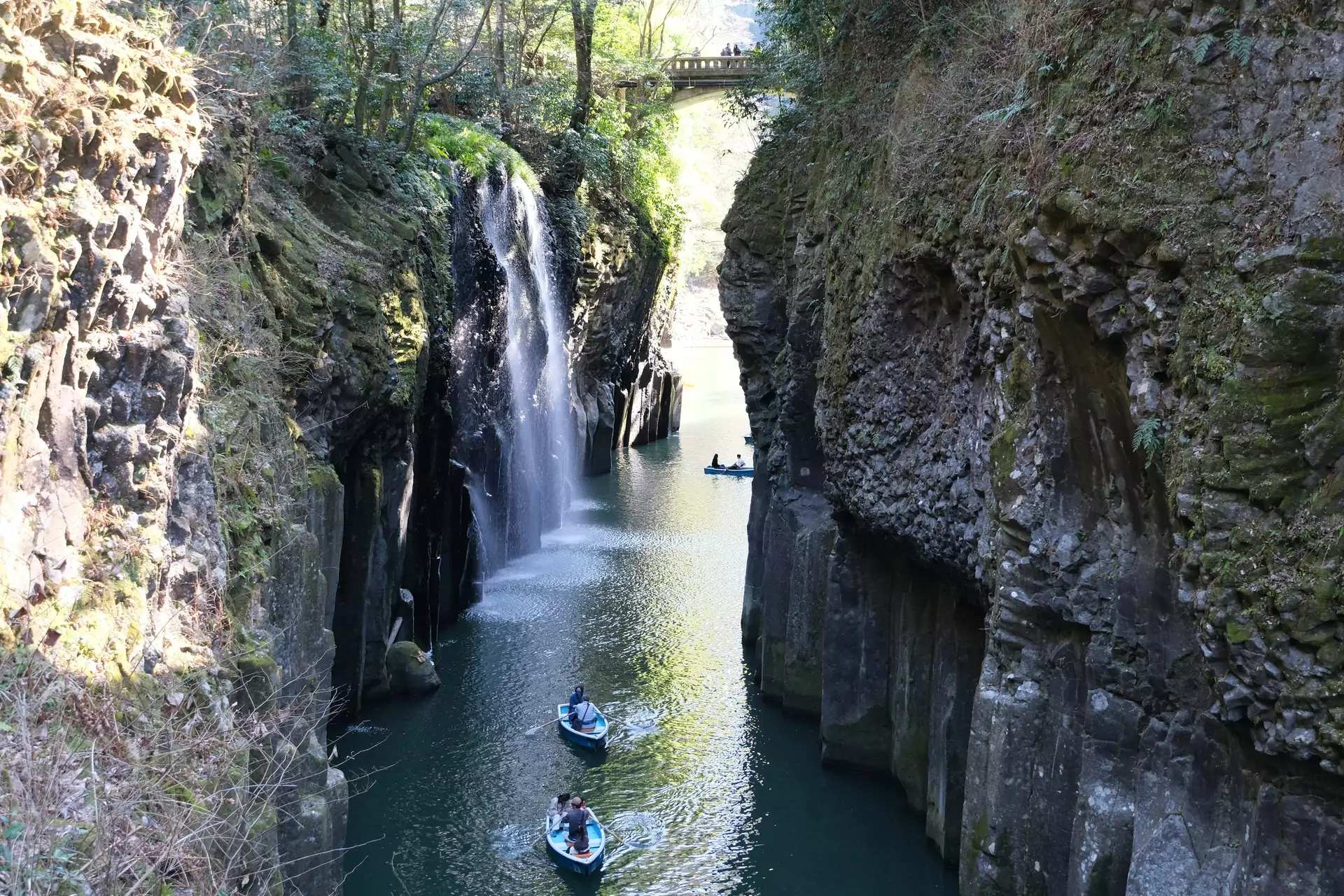
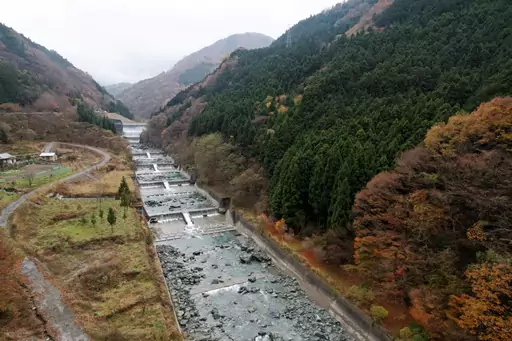
Takachiho's gorge is a narrow canyon about 7 km long with steep rock walls, cut by the Gokase River. The best-known stretch is below Manai Falls, a waterfall 17 m high. You can hire a rowboat and paddle up beneath the falls or walk the path above the water and look down on it. Boats have to be booked online ahead of time and are suspended when the water is high, but the walking path stays open. The town also appears in the story of Amaterasu, the sun goddess, who hid in a cave and left the world in darkness. Amano Iwato Shrine faces that cave. A priest can lead visitors to a viewing spot, though the tour is given in Japanese. Amano Yasukawara, a cavern filled with small stacked stones, is a short walk up the river. Takachiho Shrine is among tall cedars and has a nightly kagura performance that retells these myths in dance. The kagura is designated an important intangible folk cultural asset. A stay of one or two nights suits the town. A single day covers the gorge and the shrines, but the kagura is at night so staying over makes the trip easier. In summer the town is also known for nagashi somen, noodles caught from flowing bamboo gutters, which is said to have started here.
Takachiho has no railway so access is by bus or car. From Kumamoto a highway bus runs from Sakuramachi Bus Terminal to Takachiho Bus Centre in about 2 hours 10 minutes. From the east coast you can take a train to Nobeoka (about 1 hour 10 minutes from Miyazaki) and then a bus of about 80 minutes to Takachiho Bus Centre. A bus link from Aso is also listed by the local tourism association but service may be limited so check current times. By car Takachiho is about 78 km and 1.5 hours from Kumamoto and the route can include a stop in Aso. Mountain roads have many bends so allow extra time. The nearest major airports are Aso Kumamoto Airport (KMJ) and Miyazaki Airport (KMI).
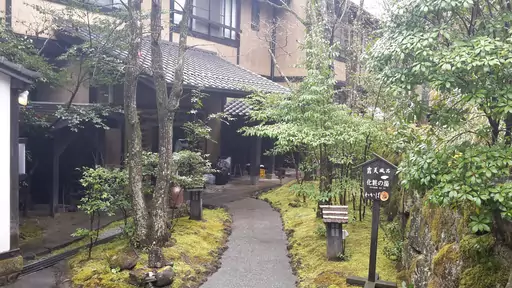
Takachiho has mostly ryokan and smaller inns and staying overnight lets you see the nightly kagura. Staying near the centre puts the bus centre and the tourist information centre within a short walk, which suits anyone arriving without a car. The information centre is open until 19:00 and can store luggage until 17:00, which helps if you arrive before check-in. Rooms fill up at autumn foliage weekends and in the kagura season in late autumn and winter, so book ahead. A day trip from Kumamoto is possible but the bus alone takes about 2 hours 10 minutes each way. Longer trips often combine Takachiho with Aso or Nobeoka.
The town centre around Takachiho Bus Centre is compact but the main sights are spread out. Without a car a taxi or e-bike covers the core sights. In busy periods the gorge area uses shuttle buses and parking controls.
Walking and e-bikes:
The gorge is about 25 minutes on foot from the bus centre or 12 minutes by e-bike. Takachiho Shrine is about 14 minutes on foot. Electric-assist bikes can be hired at the tourist information centre.
Buses:
Amano Iwato is farther out and a local bus covers the trip in about 15 minutes but runs only about once every one to two hours, so check the timetable.
Taxis and cars:
Sightseeing taxis offer 2 and 3 hour courses. A car helps if you want to reach Amano Iwato and the gorge without waiting for buses.
Food here is simple mountain cooking. Local beef, sold as Takachiho beef, is on menus around town. The best-known dish is nagashi somen, a summer speciality where thin white noodles flow down a bamboo gutter filled with spring water. You catch them with chopsticks and dip them in sauce. The dish is said to have begun here and a restaurant near the gorge claims to be its birthplace, with sets that include simmered vegetables and charcoal-grilled trout.
Some places also serve sake warmed in a green bamboo stalk. Lunch spots cluster near the gorge so you can eat before or after the boats. Plan dinner before the kagura since reception starts at 19:00.
We calculate the average costs when travelling to destinations and compare those with the living costs at your home. With this you can get an estimate of how expensive or cheap the destination is for you.
To customise this, you can set up which location and price level are used for the calculations in your account settings.
The exchange rate price factor shows how expensive or cheap a currency currently is compared to its historical average. It's a quick way to see if a country is currently more or less affordable due to exchange rate changes.
To help you plan your trip, we provide estimated daily costs per person (when travelling as a pair) for different travel styles. These numbers give you an idea of what you might spend each day at this destination, including accommodation, food, transport and activities.
Additionally, we also provide average hotel costs for different travel styles to give you an estimate for the accommodation only.
Please note that these are only estimates. The real costs depend on booking times, season and other factors.
Travel style categories explained:
Backpacker:
Staying in hostels or budget hotels, cooking your own meals or eating cheap and choosing low-cost activities.
Mid-range:
Staying in mid-range hotels, eating at a mix of restaurants and casual spots and enjoying a variety of activities.
Luxury:
Staying in luxury hotels, dining out at high-end restaurants and enjoying premium experiences without worrying about the price.
| Backpacker | Mid-range | Luxury | |
|---|---|---|---|
| 💵 Total costs per day, including accommodation | |||
| 🏨 Accommodation per night, per person | |||
| 🍝 Food per day | |||
| 🚕 Transportation per day |
| 🍽️ Restaurant Dinner, per person | |
|---|---|
| 🍛 Lunch Set, per person | |
| 🍟 Fast food combo | |
| 🍝 Preparing your own food, per day | |
| ☕ Cappuccino | |
| 🍺 Beer in a restaurant, 0.5 l |
| 🚌 Public transport ticket | |
|---|---|
| 🚕 Taxi Ride, 10 km / 6 mi | |
| ⛽ Petrol, 1 l |
| 🎞️ Cinema ticket | |
|---|---|
| 👩⚕️ Doctor's consult | |
| 🤧 Cold medication | |
| 💇 Basic haircut |
Log in to add this place to a travel list and get a summary of all recommended items for your whole trip.
