









Was this page helpful?

| Public website: | www.tajmahal.gov.in |
|---|
| Power Grid: |
230 V, 50 Hz Plug: Type C , Type D , Type M
Type C:
   Read about power adapters |
|---|---|
| Currency: |
Indian Rupee (INR) £1 ≈ ₹126.52 |
| Cashless info: |
Rating 4/5
Cashless payments are becoming more common in India, especially in urban areas. Credit cards and mobile payment apps like Google Pay, Paytm, and PhonePe are widely accepted in cities.
Save with a travel credit card |
| eSIM providers: |
Best value: Saily Flexibility: Airalo Read our in-depth comparison |
| Tipping: | Tipping is appreciated in India but not mandatory. A 10% tip in restaurants is common. Tipping taxi drivers and hotel staff is also customary, typically 10-15% for good service. |
|---|---|
| Public drinking: | Public drinking is not commonly seen in India. Alcohol is typically consumed in licensed bars, restaurants, and hotels. |
| Public smoking: | Smoking is prohibited in many indoor public spaces, including restaurants, bars, and public transport stations. |
| Independence Day (15 August) |
A national holiday celebrated with flag hoisting and parades |
|---|---|
| Diwali (October-November) |
The Festival of Lights, celebrated with fireworks and festivities |
| Emergency contact: | Emergency Number: 112 |
|---|---|
| Taxi apps: | Ola, Uber |
| Other: | India is a vast and diverse country with a rich cultural heritage, offering a wide range of experiences from ancient temples to modern cities. Prepare for varying infrastructure and safety conditions depending on the region. |
The best times to travel section shows how the months compare for a visit, so you can find the time of year that fits what you want to do.
Background colours of the months:
The colour shows the typical temperature: yellow (hot), green (mild) and blue (cold). How strong the colour is shows the travel season: full colour means high season, soft colour means shoulder season and soft-striped means off season.
Weather symbols:
Each month has one symbol showing what the weather is typically like, such as hot and sunny, freezing or a rainy or snowy season. Use them to quickly spot months that match the weather you want, or to avoid the ones that don't.
Crowdedness:
The people icon shows how busy the place usually is. The more people, the more crowded it gets.
Additional notes:
The grey info boxes point out special things worth knowing, like recurring weather issues or seasonal events.
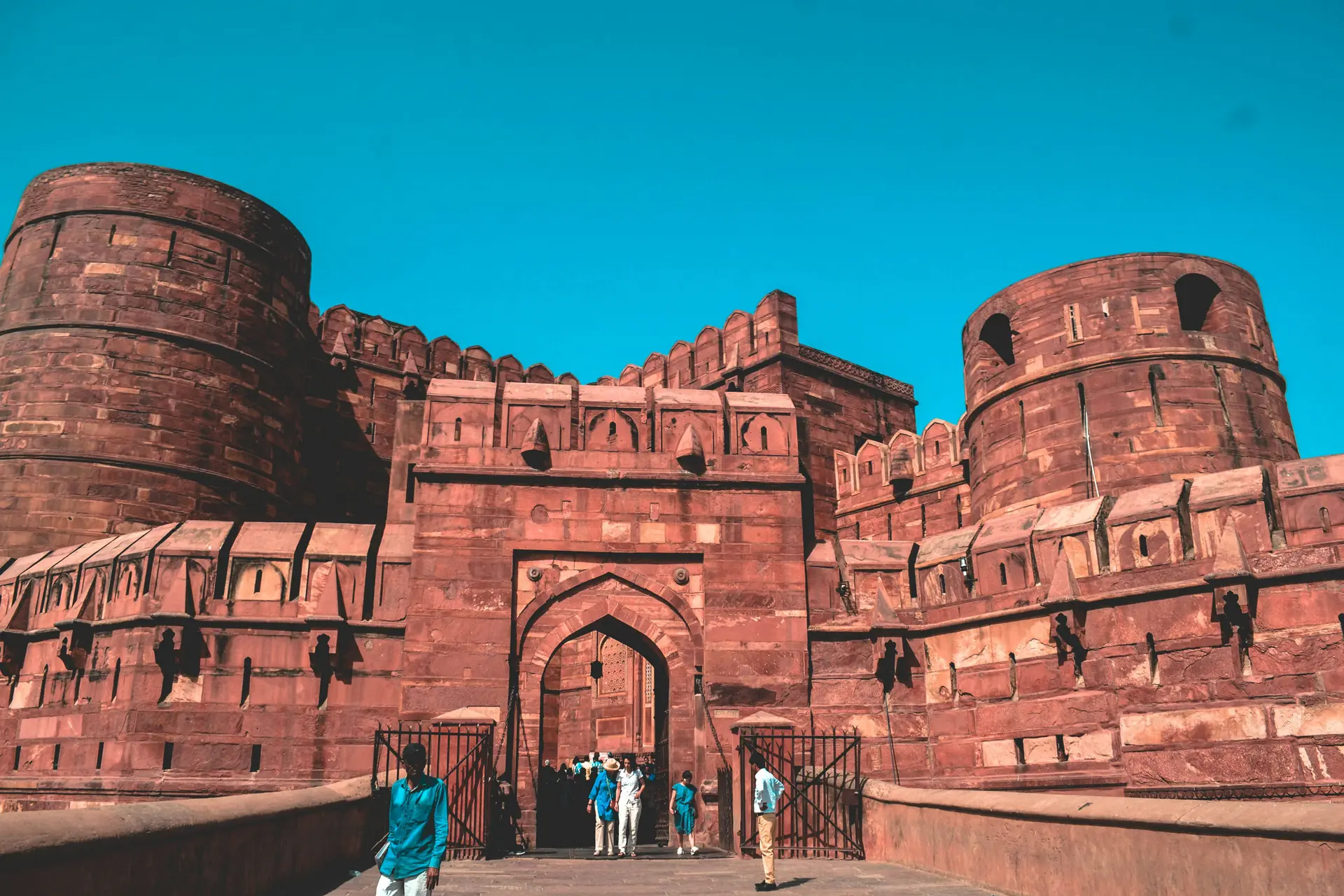
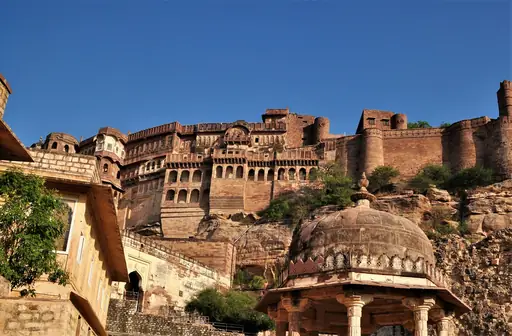
agra-fort stands as a remarkable example of Mughal architecture in northern India. Built primarily from red sandstone and marble the structure reflects centuries of history and cultural exchange. Visitors can see intricate carvings and expansive courtyards that once served both ceremonial and defensive purposes. The site’s layout shows careful planning with gateways towers and open spaces designed to manage crowds and protect inhabitants.
The fortress overlooks the city of Agra which was an important center during the Mughal era. Its walls have witnessed royal processions battles and daily life within the palace complex. Today parts of the fort are museums galleries and exhibition halls where artifacts from the period are displayed. Guides often point out sections that survived damage over time showing how restoration efforts help preserve original details.
Walking through agra-fort visitors encounter a blend of functional design and artistic expression. The main entrance features delicate lattice work and calligraphy carved into stone. Inside courtyards provide shade while narrow passages reveal hidden rooms and storage areas once used for supplies. Some sections still bear traces of earlier constructions indicating layers of history built upon one another.
The site remains a place where past and present intersect. Local events cultural festivals and educational programs take place within its walls bringing new meaning to the space. For those interested in history architecture or simply quiet exploration agra-fort provides clear insight into how power and creativity shaped an important chapter of Indian heritage.
Agra Fort, a UNESCO World Heritage Site, is located in Agra, Uttar Pradesh, India. The fort is accessible via road and rail connections from major cities like Delhi, which is approximately 200 km away. The nearest railway station is Agra Cantt, about 8 km from the fort. Buses and taxis are readily available from the station to reach the site. The fort itself sits on a slightly raised plateau between the Yamuna River and the city, making it easily visible from various parts of Agra. Visitors can also reach via air travel through Agra Airport (approximately 13 km away), though flight options are limited compared to road and rail access.
Agra’s central district offers a spectrum of lodging that caters to every budget and taste. Budget travelers can find clean, basic guesthouses and hostels in the bustling lanes around Chandni Chowk, with nightly rates ranging from ₹1,200 (£9.50) to ₹2,500 (£19.80). Mid‑range hotels provide comfortable rooms, free Wi‑Fi and on‑site dining, typically priced between ₹3,000 (£23.76) and ₹6,000 (£47.52) per night. For those seeking a touch of luxury, boutique properties in the historic Mughal quarter boast elegant décor, private balconies overlooking the Taj Mahal and rates from ₹8,000 (£63.36) to ₹15,000 (£118.80). The area is renowned for heritage hotels that preserve colonial architecture, offering guests an immersive experience steeped in Agra’s regal past.
Log in to add this place to a travel list and get a summary of all recommended items for your whole trip.
We calculate the average costs when travelling to destinations and compare those with the living costs at your home. With this you can get an estimate of how expensive or cheap the destination is for you.
To customise this, you can set up which location and price level are used for the calculations in your account settings.
The exchange rate price factor shows how expensive or cheap a currency currently is compared to its historical average. It's a quick way to see if a country is currently more or less affordable due to exchange rate changes.
