







Was this page helpful?

| Power Grid: |
220 V, 50 Hz Plug: Type A , Type I
Type A:
  Read about power adapters |
|---|---|
| Currency: |
Chinese Yuan Renminbi (CNY) £1 ≈ CN¥8.87 |
| Cashless info: |
Rating 5/5
Cashless payments are widely accepted in China, particularly in urban areas. Mobile payment services like Alipay and WeChat Pay are commonly used.
Save with a travel credit card |
| eSIM providers: |
Best value: Saily Flexibility: Airalo Read our in-depth comparison |
| Tipping: | Tipping is not customary in China and is not expected, although it may be appreciated in high-end restaurants or by hotel staff for exceptional service. |
|---|---|
| Public drinking: | Public drinking is generally not allowed in many places in China, but it is common in restaurants and bars. |
| Public smoking: | Smoking is prohibited in many indoor public spaces, such as restaurants and public transport, but enforcement can vary. |
| Chinese New Year (January/February) |
Major holiday with family gatherings and public celebrations |
|---|---|
| National Day (1 October) |
National holiday with parades and festivities |
| Emergency contact: | Emergency Numbers: 110 (Police), 120 (Ambulance), 119 (Fire) |
|---|---|
| Taxi apps: | DiDi, Uber |
| Other: | China is known for its vast cultural heritage, including historical landmarks like the Great Wall, the Forbidden City, and the Terracotta Army. It offers diverse landscapes ranging from mountains to beaches. |
The best times to travel section shows how the months compare for a visit, so you can find the time of year that fits what you want to do.
Background colours of the months:
The colour shows the typical temperature: yellow (hot), green (mild) and blue (cold). How strong the colour is shows the travel season: full colour means high season, soft colour means shoulder season and soft-striped means off season.
Weather symbols:
Each month has one symbol showing what the weather is typically like, such as hot and sunny, freezing or a rainy or snowy season. Use them to quickly spot months that match the weather you want, or to avoid the ones that don't.
Crowdedness:
The people icon shows how busy the place usually is. The more people, the more crowded it gets.
Additional notes:
The grey info boxes point out special things worth knowing, like recurring weather issues or seasonal events.
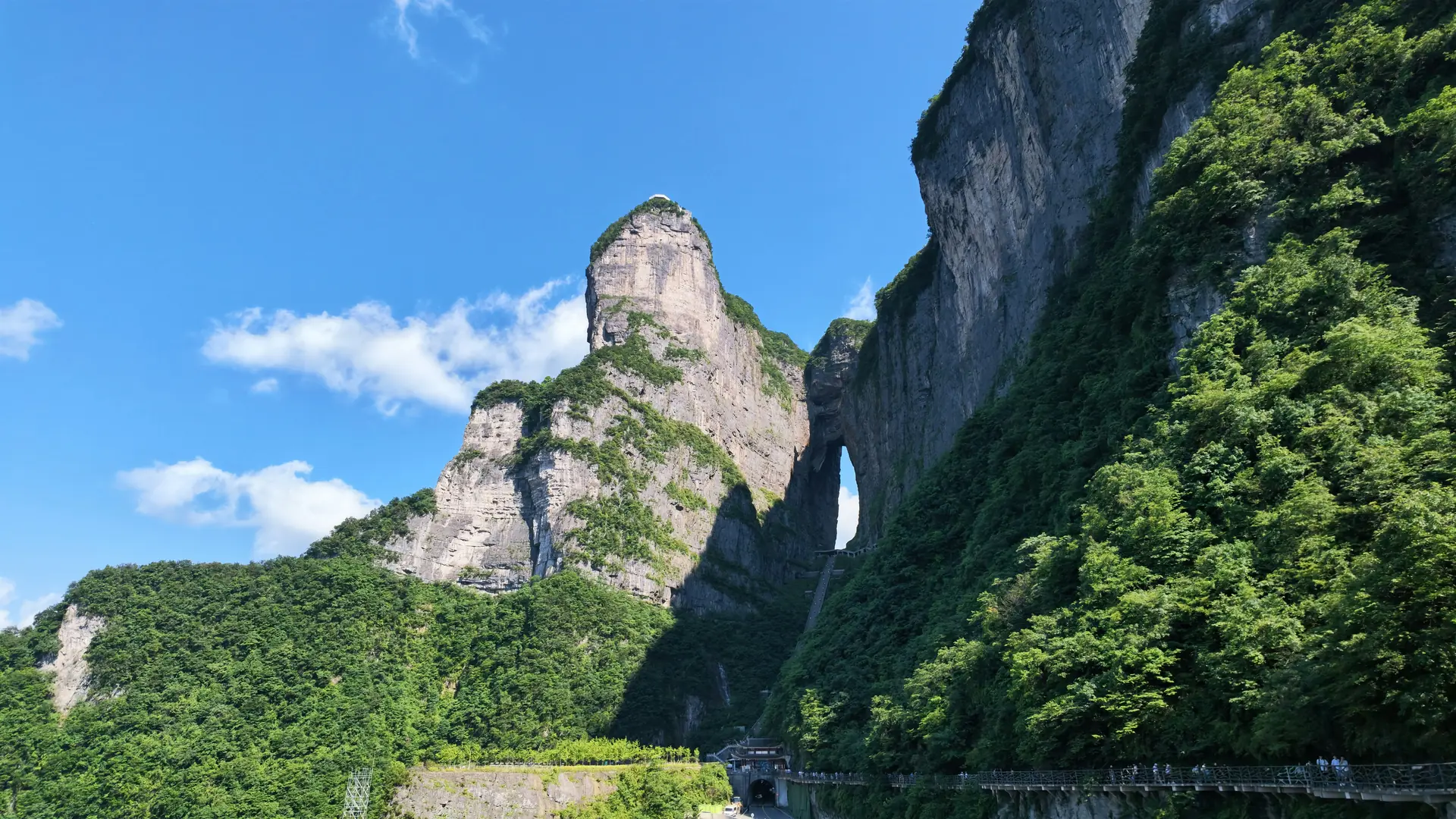
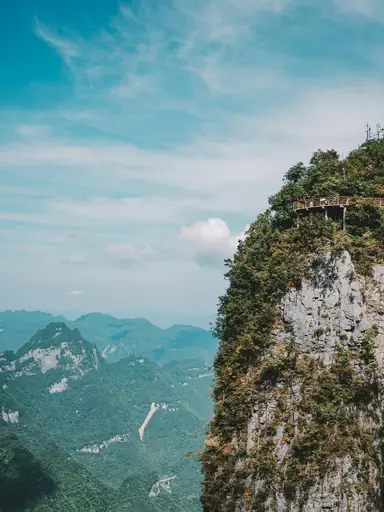
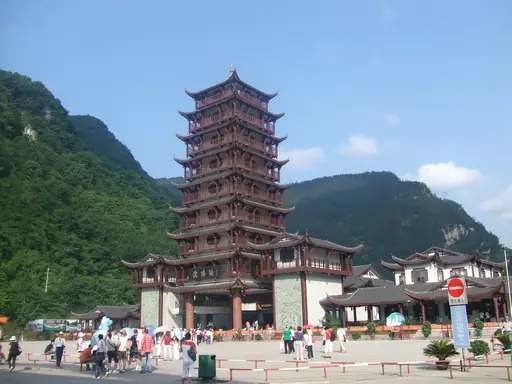
Tianmen Mountain rises in Hunan Province as a striking geological formation shaped by millions of years of erosion. The mountain’s most recognizable feature is the Tianmen Cave, a massive opening that reveals a narrow path leading upward through sheer cliffs. Visitors often describe the climb to the summit as challenging yet rewarding due to the dramatic scenery along the way.
The landscape around Tianmen Mountain includes dense forests and steep ridges covered with mossy trees. At higher elevations the air becomes cooler and the views expand over valleys far below. The trail passes through several layers of rock that tell a story written in stone about ancient seas and shifting landmasses. Many hikers pause at observation points to capture photos of mist rolling between peaks.
One key attraction is the world’s longest cable car ride, which carries passengers from the base station to near the summit in under four minutes. The journey provides sweeping views of cloud-covered mountains and deep gorges below. Alongside natural beauty the area supports diverse plant life including rare ferns and conifers that thrive in cool moist conditions.
Local culture adds another dimension to Tianmen Mountain. Villages near the base maintain traditions tied to mountain worship and seasonal festivals. Guides share information about the region’s history as well as tips for navigating trails safely. Whether seeking adventure or quiet reflection this destination offers a place where nature and human presence coexist in steady rhythm.
Tianmen Mountain in Zhangjiajie, Hunan Province, China, is accessible via several transportation methods. The nearest major city is Zhangjiajie, which connects to the mountain through a network of highways and scenic routes. Visitors can reach Zhangjiajie by high-speed rail from Beijing (approximately 5–6 hours) or Shanghai (around 7–8 hours), then transfer to local buses or taxis for the final leg. The Tianmen Mountain Railway, one of China’s steepest cable car systems, offers a direct ascent from the base station in Zhangjiajie to the summit. Alternatively, travelers can take a bus from Zhangjiajie’s main terminal to the mountain entrance. Road access is available via National Highway G56, linking it to regional highways for private or guided tours.
Tianmen Mountain’s visitor zone offers a mix of modest inns and mid‑range boutique lodges that cater to both budget travelers and those seeking comfort. Many guesthouses feature traditional Hunan décor, with rooms ranging from CN¥200 – 400 (£22.37 – 44.75) per night, while higher‑end boutique hotels provide private balconies overlooking the cliff face at roughly CN¥600 – 900 (£67.12 – 100.69). The area is renowned for its “skywalk” accommodations – small hostels perched near the cable car stations that offer panoramic views and a communal kitchen experience. For families or longer stays, serviced apartments with kitchenette facilities are available, typically priced around CN¥500 – 700 (£55.94 – 78.31) per night. Seasonal promotions often bring rates down during off‑peak months, making Tianmen Mountain an accessible yet memorable mountain getaway.
Log in to add this place to a travel list and get a summary of all recommended items for your whole trip.
We calculate the average costs when travelling to destinations and compare those with the living costs at your home. With this you can get an estimate of how expensive or cheap the destination is for you.
To customise this, you can set up which location and price level are used for the calculations in your account settings.
The exchange rate price factor shows how expensive or cheap a currency currently is compared to its historical average. It's a quick way to see if a country is currently more or less affordable due to exchange rate changes.
