








Was this page helpful?

These place ratings give you a quick overview of how well a destination matches different types of trips.
‘Best for’ scores:
The specific interest scores show where this place really shines – whether it's ideal for hiking, food & drink experiences, museums or other activities. These highlights help you understand what makes the destination special at a glance.
‘Your personal’ scores:
This reflects how well a place matches your personal preferences. You can adjust the importances of travel topics or other personal requirements categories in your account settings.
‘Suited for’ badges:
These give you a quick overview of how well a destination suits specific types of travellers, to help you find the places that match your lifestyle, preferences or travel situation.
| Power Grid: |
220 V, 50 Hz Plug: Type A , Type I
Type A:
  Read about power adapters |
|---|---|
| Currency: |
Chinese Yuan Renminbi (CNY) £1 ≈ CN¥8.88 |
| Cashless info: |
Rating 5/5
Cashless payments are widely accepted in China, particularly in urban areas. Mobile payment services like Alipay and WeChat Pay are commonly used.
Save with a travel credit card |
| eSIM providers: |
Best value: Saily Flexibility: Airalo Read our in-depth comparison |
| Tipping: | Tipping is not customary in China and is not expected, although it may be appreciated in high-end restaurants or by hotel staff for exceptional service. |
|---|---|
| Public drinking: | Public drinking is generally not allowed in many places in China, but it is common in restaurants and bars. |
| Public smoking: | Smoking is prohibited in many indoor public spaces, such as restaurants and public transport, but enforcement can vary. |
| Chinese New Year (January/February) |
Major holiday with family gatherings and public celebrations |
|---|---|
| National Day (1 October) |
National holiday with parades and festivities |
| Emergency contact: | Emergency Numbers: 110 (Police), 120 (Ambulance), 119 (Fire) |
|---|---|
| Taxi apps: | DiDi, Uber |
| Other: | China is known for its vast cultural heritage, including historical landmarks like the Great Wall, the Forbidden City, and the Terracotta Army. It offers diverse landscapes ranging from mountains to beaches. |
The best times to travel section shows how the months compare for a visit, so you can find the time of year that fits what you want to do.
Background colours of the months:
The colour shows the typical temperature: yellow (hot), green (mild) and blue (cold). How strong the colour is shows the travel season: full colour means high season, soft colour means shoulder season and soft-striped means off season.
Weather symbols:
Each month has one symbol showing what the weather is typically like, such as hot and sunny, freezing or a rainy or snowy season. Use them to quickly spot months that match the weather you want, or to avoid the ones that don't.
Crowdedness:
The people icon shows how busy the place usually is. The more people, the more crowded it gets.
Additional notes:
The grey info boxes point out special things worth knowing, like recurring weather issues or seasonal events.
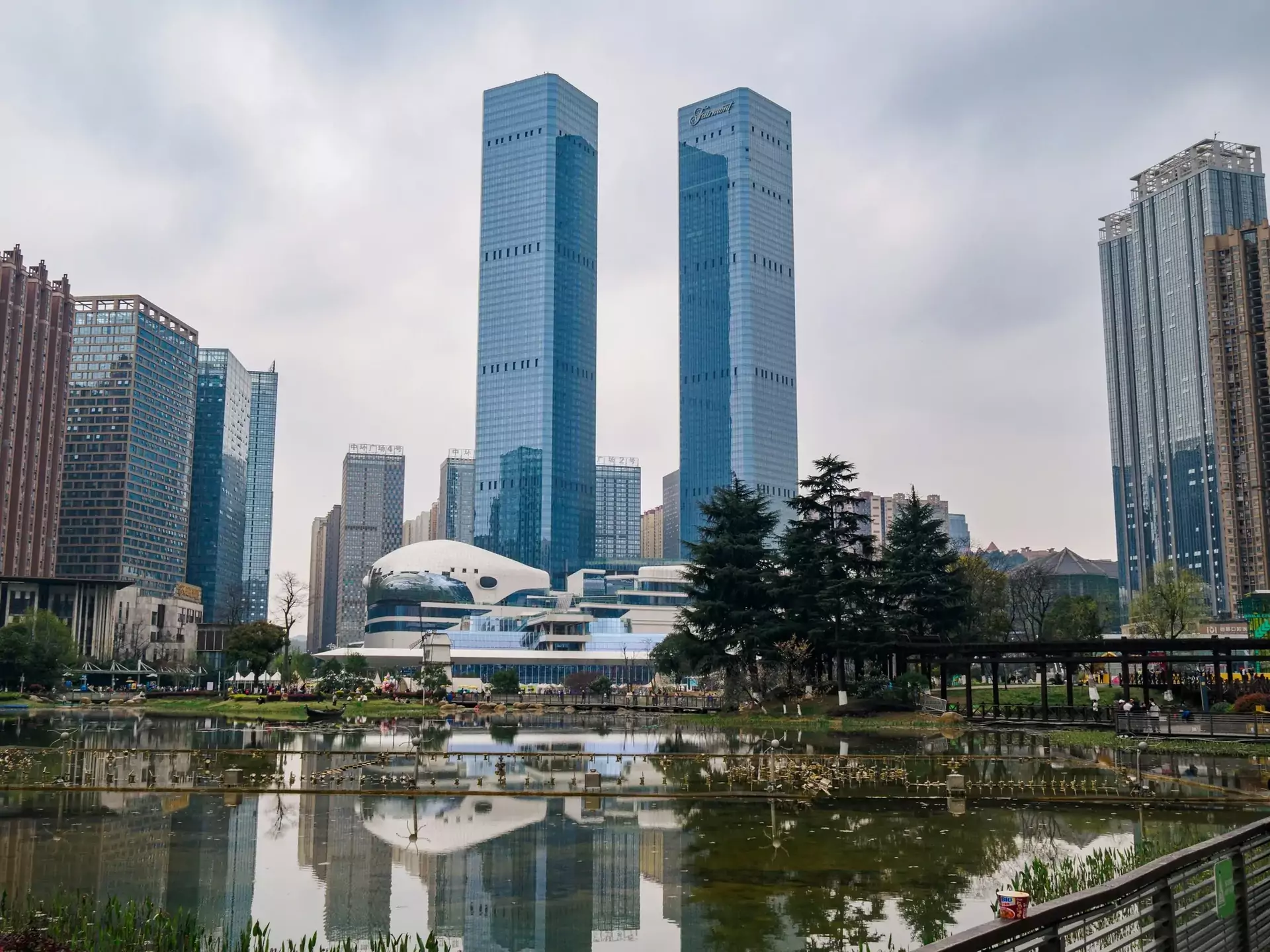
Guizhou offers a quiet, authentic glimpse into China’s diverse cultural tapestry. The province’s highland terrain – rolling misty mountains, deep gorges and terraced fields – creates a landscape that feels both dramatic and serene. Visitors can explore the ancient town of Zhenyuan, where stone streets wind past traditional Ming‑style houses or hike in the Wulingyuan Scenic Area, home to towering sandstone pillars that inspired the set design for “Avatar.” The region’s ethnic diversity is another draw. The Miao, Dong and Buyi peoples maintain vibrant traditions: colorful festivals, intricate embroidery and distinctive music. A guided tour of a local village can reveal how these communities blend modern life with centuries‑old customs. Guizhou also offers culinary delights that differ from the more famous Sichuan or Cantonese cuisines. Try “stinky tofu” in its original form, spicy hot pot with regional herbs or the sweet, fermented rice wine made by local farmers. The province’s relatively low tourist density means travelers can enjoy these experiences without crowds, allowing for deeper immersion and meaningful interactions with residents. Finally, Guizhou’s climate – cooler than many southern provinces – provides a comfortable escape from the heat of summer, making it an ideal destination for those seeking natural beauty, cultural depth and relaxed exploration.
Guizhou, a province in southwestern China, is accessible via several transportation routes. The primary entry point is through Kunming Changshui International Airport, which connects to major Chinese cities and select international destinations. For rail access, the high-speed rail network links Guizhou to neighboring provinces like Yunnan and Sichuan, with Guiyang serving as a key hub. The province also has an extensive highway system, including the Guiyang–Kunming Expressway, facilitating road travel. Additionally, long-distance buses operate from cities such as Chengdu and Kunming to Guizhou’s major urban centers like Guiyang and Zunyi. The region’s geography, characterized by mountainous terrain, is managed through tunnels and elevated roads, ensuring connectivity across provinces.
Guizhou offers a mix of rustic homestays and boutique guesthouses that highlight the region’s ethnic diversity. In towns such as Zunyi and Guiyang, you’ll find family-run inns where guests can sample local Miao cuisine while staying in traditional courtyard houses. Rural villages along the Liupanshui plateau feature eco-lodges built from bamboo and stone, often with guided tours of terraced fields. For travelers seeking comfort without sacrificing authenticity, several mid‑priced hotels provide modern amenities yet retain local architectural motifs. The province is renowned for its “water village” accommodations – small riverside cabins that offer serene views of misty karst landscapes. Whether you prefer a budget-friendly homestay or a modestly upscale boutique property, Guizhou’s lodging options cater to diverse tastes and budgets.
We calculate the average costs when travelling to destinations and compare those with the living costs at your home. With this you can get an estimate of how expensive or cheap the destination is for you.
To customise this, you can set up which location and price level are used for the calculations in your account settings.
The exchange rate price factor shows how expensive or cheap a currency currently is compared to its historical average. It's a quick way to see if a country is currently more or less affordable due to exchange rate changes.
To help you plan your trip, we provide estimated daily costs per person (when travelling as a pair) for different travel styles. These numbers give you an idea of what you might spend each day at this destination, including accommodation, food, transport and activities.
Additionally, we also provide average hotel costs for different travel styles to give you an estimate for the accommodation only.
Please note that these are only estimates. The real costs depend on booking times, season and other factors.
Travel style categories explained:
Backpacker:
Staying in hostels or budget hotels, cooking your own meals or eating cheap and choosing low-cost activities.
Mid-range:
Staying in mid-range hotels, eating at a mix of restaurants and casual spots and enjoying a variety of activities.
Luxury:
Staying in luxury hotels, dining out at high-end restaurants and enjoying premium experiences without worrying about the price.
| Backpacker | Mid-range | Luxury | |
|---|---|---|---|
| 💵 Total costs per day, including accommodation | |||
| 🏨 Accommodation per night, per person | |||
| 🍝 Food per day | |||
| 🚕 Transportation per day |
| 🍽️ Restaurant Dinner, per person | |
|---|---|
| 🍛 Lunch Set, per person | |
| 🍟 Fast food combo | |
| 🍝 Preparing your own food, per day | |
| ☕ Cappuccino | |
| 🍺 Beer in a restaurant, 0.5 l |
| 🚌 Public transport ticket | |
|---|---|
| 🚕 Taxi Ride, 10 km / 6 mi | |
| ⛽ Petrol, 1 l |
| 🎞️ Cinema ticket | |
|---|---|
| 👩⚕️ Doctor's consult | |
| 🤧 Cold medication | |
| 💇 Basic haircut |
Log in to add this place to a travel list and get a summary of all recommended items for your whole trip.
