Asia › China › Hunan › Zhangjiajie › Climate

Zhangjiajie climate data

Zhangjiajie, in Hunan Province, features a humid subtropical monsoon climate with four distinct seasons. The region is known for its mild, humid weather, lush vegetation, and frequent rain or mist. Summers are warm and wet, winters are cool with occasional snow, and spring and autumn offer comfortable temperatures and stunning natural scenery.

Best times to travel

The best times to travel section shows how the months compare for a visit, so you can find the time of year that fits what you want to do.

Background colours of the months:
The colour shows the typical temperature: yellow (hot), green (mild) and blue (cold). How strong the colour is shows the travel season: full colour means high season, soft colour means shoulder season and soft-striped means off season.

Weather symbols:
Each month has one symbol showing what the weather is typically like, such as hot and sunny, freezing or a rainy or snowy season. Use them to quickly spot months that match the weather you want, or to avoid the ones that don't.

Crowdedness:
The people icon shows how busy the place usually is. The more people, the more crowded it gets.

Additional notes:
The grey info boxes point out special things worth knowing, like recurring weather issues or seasonal events.

for Zhangjiajie, China
🌤️
Jan
🌤️
Feb
🌥️
Mar
🌦️
Apr
🌧️
May
⛈️
Jun
⛈️
Jul
🌦️
Aug
🌥️
Sep
🌤️
Oct
🌤️
Nov
🌤️
Dec
High season: May, July - Nov.
Shoulder season: April, June
Crowdedness: 8 (Very crowded)
Tap on a month for more info Hover over a month for more info
Chinese holidays (Labor Day 1 to 5 May, Golden Week 1 to 7 October) are extremely crowded, book tickets and hotels far ahead
Heavy rain and fog can close cable cars and hide the pillar views, especially June to July
Snow and ice from December to February can temporarily close Tianmen Mountain's road and cable car

The climate of Zhangjiajie

Zhangjiajie’s climate is shaped by its subtropical mountain monsoon setting, resulting in mild annual temperatures, abundant rainfall, and high humidity. The average annual temperature ranges from 16 to 17°C, with January being the coldest month (average lows around 1–4°C) and July the hottest (average highs of 28–33°C). Summers are long, hot, and humid, while winters are short, cool, and sometimes snowy – though heavy snow is rare. The region receives 1,200–1,600 mm of rain annually, with the majority falling from April to August. Rain and mist are frequent, creating the area’s iconic ethereal landscapes.

Spring (March to May) is the wettest season, bringing lush greenery and blooming flowers, with average temperatures rising from 7°C in March to 22°C in May. Summer (June to August) is warm and rainy, with daytime highs often reaching 32°C, though the forests and higher elevations provide a cooling effect. Autumn (September to November) is the driest and most comfortable season, featuring clear skies, pleasant temperatures (cooling from 28°C to 12°C), and vibrant foliage. Winter (December to February) is cold but not severe, with average highs of 8–12°C and lows near freezing, occasional snow dusting the peaks, and the least rainfall of the year. Sunshine averages about 1,440 hours annually, and the frost-free period lasts over 200 days.

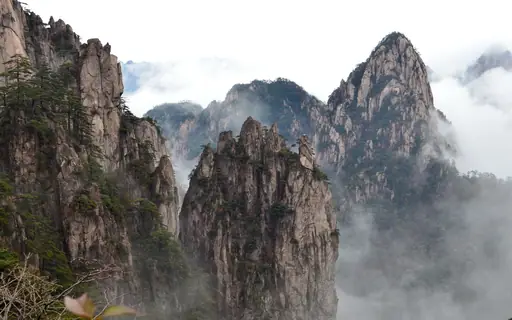
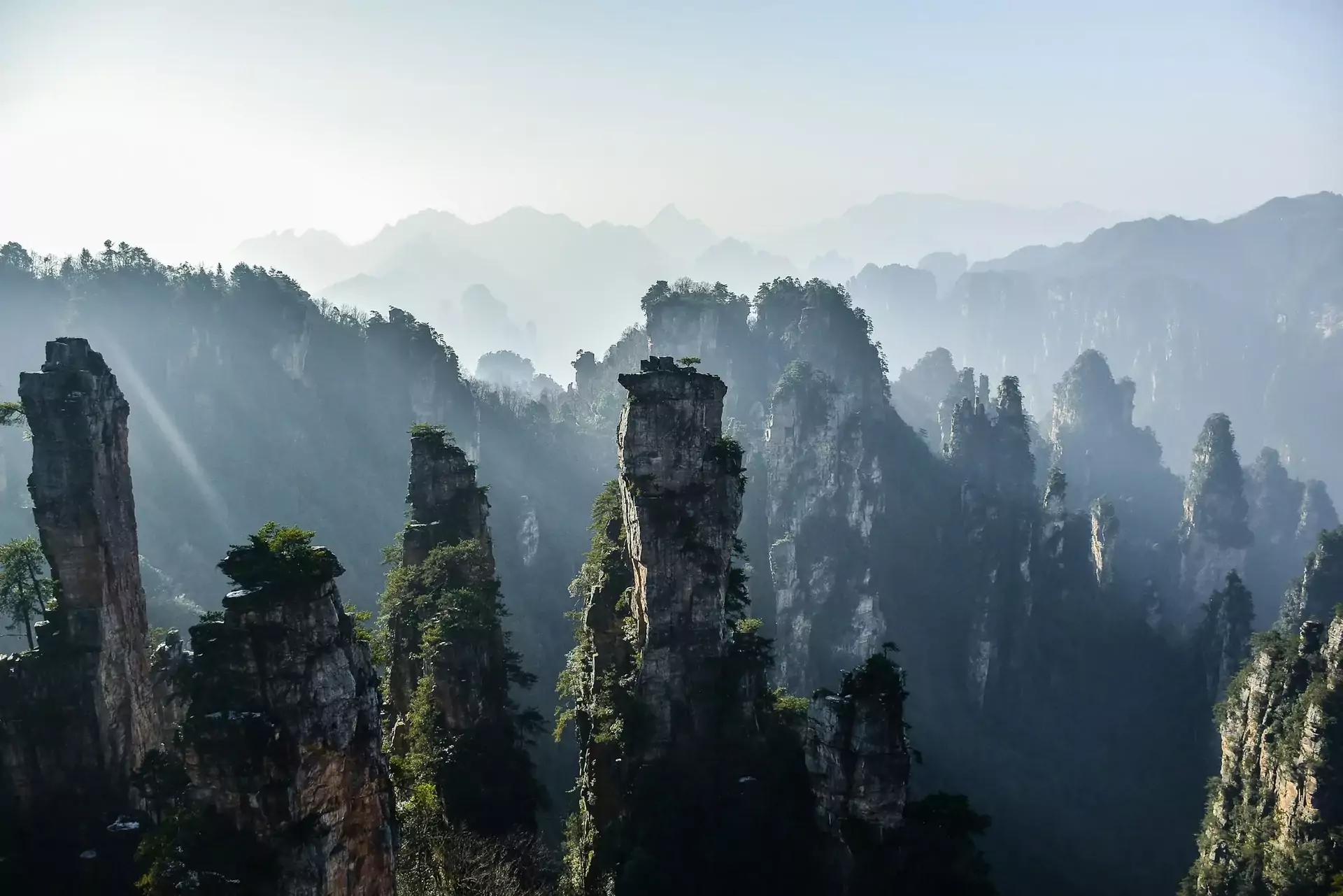
Frequent fog and mist – over 200 days per year – add to Zhangjiajie’s mystical atmosphere, especially after rain. Day-night temperature differences can be significant, especially in the mountains. Winds are generally light, but can feel brisk on higher trails in winter. The region’s climate, combined with its unique topography, creates dramatic and ever-changing scenery throughout the year.

Average climate data for Zhangjiajie, China
Month Jan Feb Mar Apr May Jun Jul Aug Sep Oct Nov Dec Year
Average maximum temperature (°C) 8 10 15 20 24 28 30 30 26 21 15 9 30
Average minimum temperature (°C) 0 2 7 11 15 18 21 20 17 12 7 2 0
Average precipitation (mm) 46 52 84 111 144 186 200 135 80 74 65 35 1,212
Average rainfall days (days) 11 13 18 19 19 20 23 22 15 14 14 9 196
Average snowfall (mm) 78 55 17 0 0 0 0 0 0 0 3 33 186
Average snowfall days (days) 4 3 1 0 0 0 0 0 0 0 0 2 11
Average relative humidity (%) 69 73 73 77 81 83 83 80 79 75 77 71 77
Average wind speed (km/h) 6 6 6 6 6 5 6 6 6 5 5 5 6
Average daily daylight hours (h) 10 11 12 12 13 14 13 13 12 11 10 10 12
Average daily sunshine hours (h) 5 6 6 6 7 7 8 7 6 6 4 5 6
Average cloud coverage (%) 47 51 53 54 56 58 51 47 55 45 50 40 51
Average UV index 2 3 4 5 5 6 7 6 5 4 2 2 4

Travel info

  • Spring (March–May): Wettest season, with lush vegetation, blooming flowers, and frequent mist. Temperatures range from 7°C to 22°C. Bring rain gear and antiskid shoes for slippery trails.
  • Summer (June–August): Warm, humid, and rainy, with highs of 28–33°C. Afternoon thunderstorms are common. Forests provide natural cooling. Pack light, breathable clothing and waterproof gear.
  • Autumn (September–November): Driest and most comfortable season, with mild temperatures (12–28°C), clear skies, and colourful foliage. Ideal for hiking and photography. Bring layers for cool nights.
  • Winter (December–February): Cool to cold, with highs of 8–12°C and lows near 1–4°C. Occasional snow creates stunning, tranquil landscapes. Fewer tourists and lower prices. Dress warmly and wear non-slip footwear.
  • Travel tip: April to October is the best travel period for pleasant weather and vibrant scenery. Avoid major Chinese holidays for fewer crowds. Always check the forecast – rain and fog can impact visibility and trail conditions.

The best time to visit Zhangjiajie

The best time to visit Zhangjiajie is from April to October, when temperatures are mild to warm, rainfall supports lush landscapes, and the region’s dramatic peaks are often shrouded in scenic mist. Spring and autumn are particularly favourable for hiking, photography, and enjoying the area’s natural beauty with fewer crowds than peak summer.

The worst time to visit Zhangjiajie

The least favourable time to visit is during the rainy season’s peak (May to August), especially July and August, when heavy rain, humidity, and crowds can make outdoor activities challenging. Winter (December to February) is cold and can be icy, but offers tranquillity and occasional snowy scenery for those seeking solitude.

Frequently asked questions

What is the climate like in Zhangjiajie throughout the year?

Zhangjiajie has a humid subtropical monsoon climate with four seasons. Summers are warm, rainy, and humid; winters are cool with occasional snow. Spring and autumn are mild and comfortable, making them ideal for outdoor activities.

When is the best time to visit Zhangjiajie?

The best time to visit is from April to October, especially in spring and autumn, when the weather is mild, the scenery is lush or colourful, and rainfall is moderate. Avoid major Chinese holidays for a more relaxed experience.

Does it rain a lot in Zhangjiajie?

Yes, Zhangjiajie receives 1,200–1,600 mm of rain annually, with the wettest months from April to August. Rain and mist are frequent, so pack rain gear and check forecasts before hiking or sightseeing.

How hot does it get in Zhangjiajie during summer?

Summer temperatures often reach 28–33°C, with high humidity and frequent rain. The forests and higher elevations offer some relief from the heat, but it can still feel muggy, especially in July and August.

Is Zhangjiajie suitable for winter travel?

Yes, winter is quieter with fewer tourists and occasional snow, creating beautiful, serene landscapes. Temperatures are cool to cold, ranging from 1–12°C, so dress warmly and wear non-slip shoes for icy trails.

What should I pack for a trip to Zhangjiajie?

Bring layers for changing temperatures, rain gear for spring and summer, and warm clothing for winter. Wear comfortable, antiskid shoes for hiking, and consider sun protection and insect repellent in warmer months.

Are there any unique weather phenomena in Zhangjiajie?

Frequent fog and mist—over 200 days a year—create the area’s mystical atmosphere, especially after rain. This enhances the dramatic scenery but can reduce visibility, so plan accordingly for photography and sightseeing.

Minimum and maximum temperatures in Zhangjiajie

The warmest month, with the highest average maximum temperature, is August (30.3 °C). The month with the lowest average maximum temperature is January (7.8 °C). Overall, the average maximum temperature over the whole year is 19.7 °C.

The month with the highest average minimum temperature is July (20.7 °C). The coldest month, with the lowest average minimum temperature, is January (0.1 °C). Overall, the average minimum temperature over the whole year is 10.9 °C.

Rainfall amount in Zhangjiajie

The wettest month, with the highest amount of precipitation, is July (199.6 mm). The driest month, with the least amount of precipitation, is December (35.5 mm). Over the whole year there are 1,212.1 mm of rainfall on average.

Rainfall days in Zhangjiajie

The month with the most days of rain is July (23.2 days). The month with the fewest days of rain is December (9.4 days). Over the whole year there are 195.7 days of rain on average.

Snowfall amount in Zhangjiajie

The month with the most snowfall is January (77.9 mm). The months with the least snowfall are April, May, June, July, August, September and October (0 mm). Over the whole year there are 186 mm of snowfall on average.

Snowfall days in Zhangjiajie

The month with the most days of snowfall is January (4.3 days). The months with the fewest days of snowfall are May, August and September (0 days). Over the whole year there are 10.7 days of snowfall on average.

Relative humidity in Zhangjiajie

The month with the highest average relative humidity is July (83.5 %). The month with the lowest average relative humidity is January (69.1 %). The overall average relative humidity over the whole year is 76.8 %.

Wind speed in Zhangjiajie

The windiest month, with the highest average wind speed, is March (6.2 km/h). The calmest month, with the lowest average wind speed, is November (5.1 km/h). The overall average wind speed over the whole year is 5.7 km/h.

Cloud coverage in Zhangjiajie

The month with the cloudiest skies, so the highest cloud coverage, is June (58.1 %). The month with the clearest skies, so the lowest cloud coverage, is December (40.3 %). Over the whole year there is an average cloud coverage of 50.6 %.

Daylight hours and sunshine hours in Zhangjiajie

The month with the longest days, so the most daylight, is June (Average daylight: 14 h). The month with the shortest days, so the least daylight, is December (Average daylight: 10 h). Over the whole year there are 11.8 h of daylight per day on average.

The month with the most sunshine per day is July (Average sunshine: 8.2 h). The month with the least sunshine per day is November (Average sunshine: 4 h). Over the whole year there are 6.1 h of sunlight per day on average.

UV index in Zhangjiajie

The month with the highest average UV index is July (UV index: 7). The months with the lowest average UV index are January, November and December (UV index: 2). Over the whole year the average UV index is 4.2.

Was this page helpful?
Feedback