








Was this page helpful?

These place ratings give you a quick overview of how well a destination matches different types of trips.
‘Best for’ scores:
The specific interest scores show where this place really shines – whether it's ideal for hiking, food & drink experiences, museums or other activities. These highlights help you understand what makes the destination special at a glance.
‘Your personal’ scores:
This reflects how well a place matches your personal preferences. You can adjust the importances of travel topics or other personal requirements categories in your account settings.
‘Suited for’ badges:
These give you a quick overview of how well a destination suits specific types of travellers, to help you find the places that match your lifestyle, preferences or travel situation.
| Power Grid: |
220 V, 50 Hz Plug: Type A , Type I
Type A:
  Read about power adapters |
|---|---|
| Currency: |
Chinese Yuan Renminbi (CNY) £1 ≈ CN¥8.88 |
| Cashless info: |
Rating 5/5
Cashless payments are widely accepted in China, particularly in urban areas. Mobile payment services like Alipay and WeChat Pay are commonly used.
Save with a travel credit card |
| eSIM providers: |
Best value: Saily Flexibility: Airalo Read our in-depth comparison |
| Tipping: | Tipping is not customary in China and is not expected, although it may be appreciated in high-end restaurants or by hotel staff for exceptional service. |
|---|---|
| Public drinking: | Public drinking is generally not allowed in many places in China, but it is common in restaurants and bars. |
| Public smoking: | Smoking is prohibited in many indoor public spaces, such as restaurants and public transport, but enforcement can vary. |
| Chinese New Year (January/February) |
Major holiday with family gatherings and public celebrations |
|---|---|
| National Day (1 October) |
National holiday with parades and festivities |
| Emergency contact: | Emergency Numbers: 110 (Police), 120 (Ambulance), 119 (Fire) |
|---|---|
| Taxi apps: | DiDi, Uber |
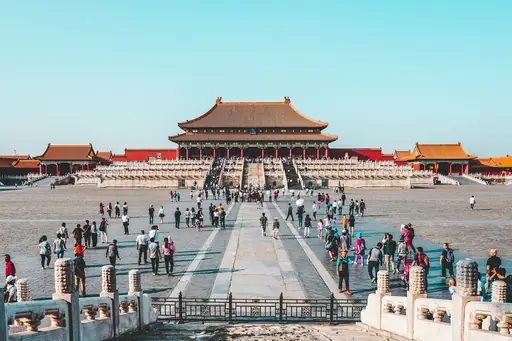
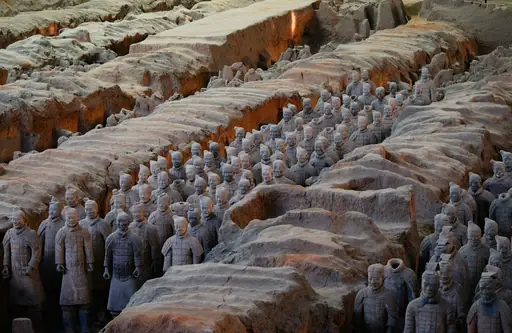
| Other: | China is known for its vast cultural heritage, including historical landmarks like the Great Wall, the Forbidden City, and the Terracotta Army. It offers diverse landscapes ranging from mountains to beaches. |
The best times to travel section shows how the months compare for a visit, so you can find the time of year that fits what you want to do.
Background colours of the months:
The colour shows the typical temperature: yellow (hot), green (mild) and blue (cold). How strong the colour is shows the travel season: full colour means high season, soft colour means shoulder season and soft-striped means off season.
Weather symbols:
Each month has one symbol showing what the weather is typically like, such as hot and sunny, freezing or a rainy or snowy season. Use them to quickly spot months that match the weather you want, or to avoid the ones that don't.
Crowdedness:
The people icon shows how busy the place usually is. The more people, the more crowded it gets.
Additional notes:
The grey info boxes point out special things worth knowing, like recurring weather issues or seasonal events.
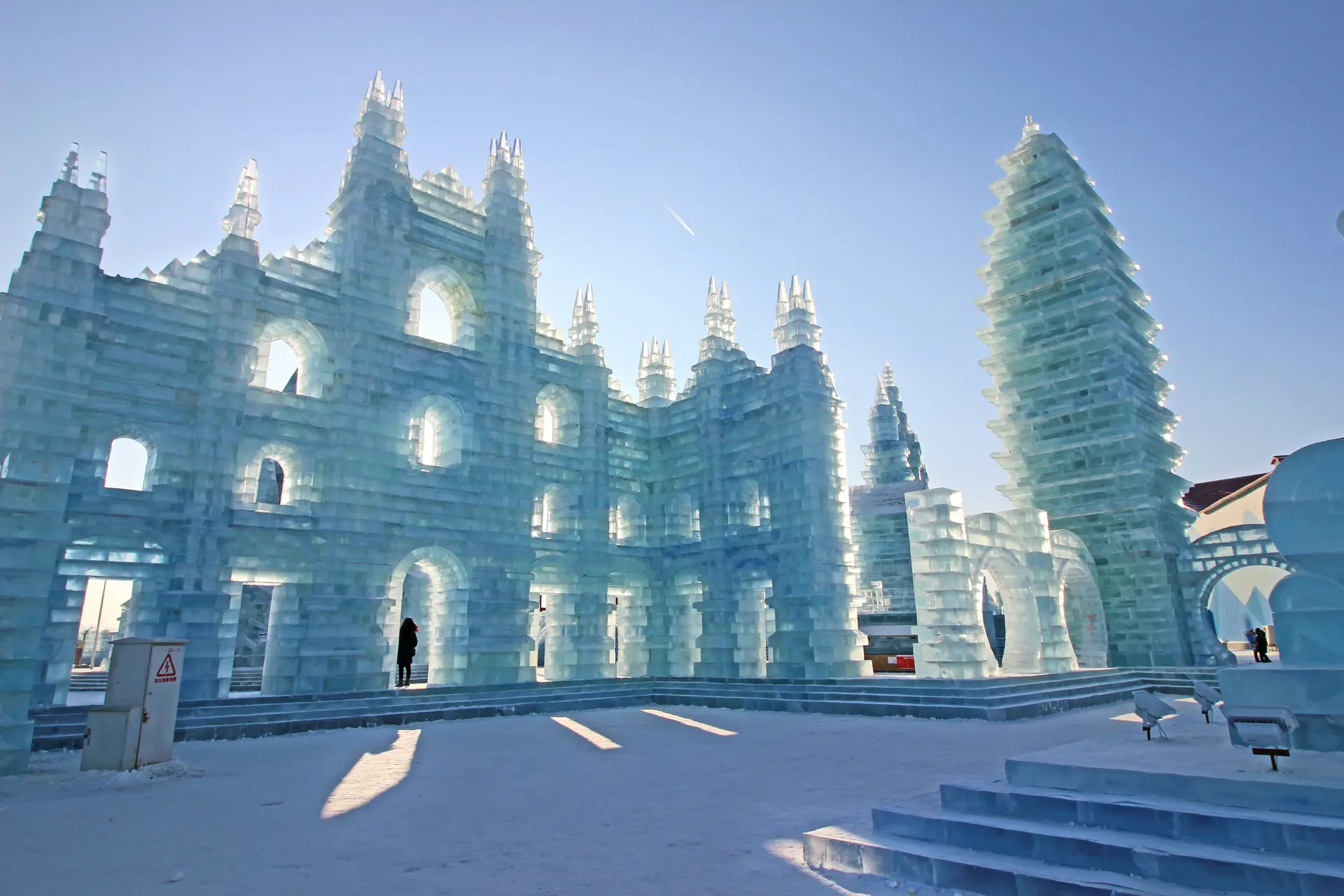
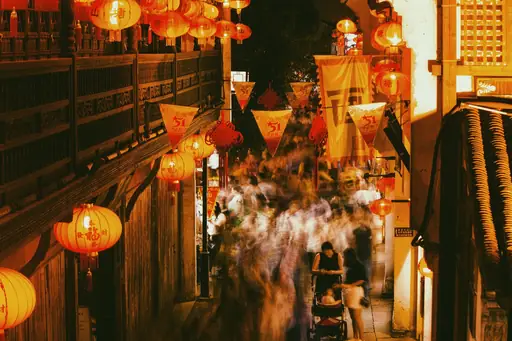
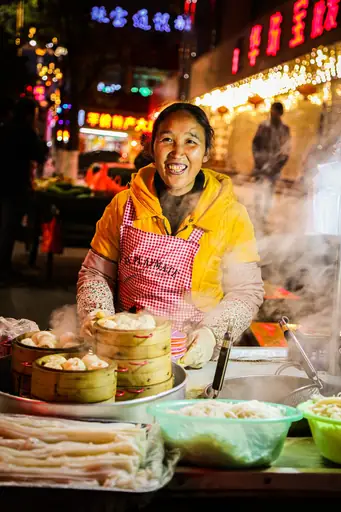
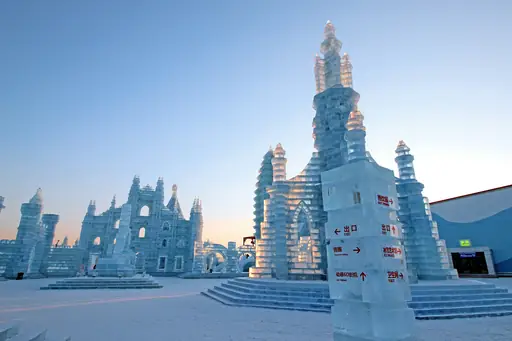
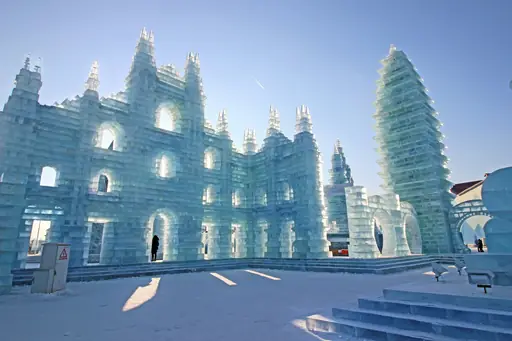
Harbin, the capital of Heilongjiang province in northeastern China, offers a unique blend of Russian influence, winter wonderland scenery and modern Chinese culture. The city’s most famous attraction is the Harbin International Ice and Snow Sculpture Festival held each February. Thousands of intricately carved ice structures illuminate the streets, creating an atmospheric experience that showcases local craftsmanship and international collaboration. Beyond the festival, visitors can stroll along Zhongyang Street, a pedestrian zone lined with historic European‑style buildings, cafés and boutiques that reflect the city’s colonial past. For those interested in history, the Harbin Jewish Museum and the St. Sophia Cathedral provide insight into the diverse communities that once thrived here. The nearby Sun Island Park offers lush gardens and a lake, ideal for leisurely walks during warmer months. Food enthusiasts will appreciate the local cuisine: Harbin‑style smoked sausage, soup dumplings and the famous Russian‑inspired borscht. Harbin’s transportation network is well developed, with an international airport and high‑speed rail connections to Beijing and Shanghai. The city’s relatively low cost of living makes it accessible for travelers on a budget while still offering comfortable accommodation options ranging from boutique hotels to modern chains.
Harbin, located in northeastern China’s Heilongjiang Province, is accessible via several transportation routes. The city has Harbin Taoxian International Airport, offering domestic and limited international flights from major Chinese cities such as Beijing, Shanghai and Guangzhou, as well as seasonal international connections to destinations like Seoul and Tokyo. For rail access, Harbin is a key node on the Beijing-Harbin Railway, with high-speed services linking it to Beijing in approximately five hours. The city’s central location within Heilongjiang Province makes it reachable by road via the G1111 and G3012 highways from nearby regions. Public transportation includes an extensive bus network and taxis for local travel.
Harbin offers a mix of budget-friendly hostels and mid-range boutique guesthouses that cater to travelers seeking comfort without extravagance. Many accommodations feature traditional Russian‑influenced décor, reflecting the city’s architectural heritage, while newer complexes boast modern amenities such as free Wi‑Fi, on‑site dining and fitness centers. Prices typically range from CN¥200 – 400 (£22.48 – 44.97) per night for standard rooms, with luxury options exceeding CN¥800 (£89.93), especially during the International Ice & Snow Festival when demand spikes. The Old Town area is renowned for its cozy homestays that provide a glimpse into local life, whereas the Central Business District hosts serviced apartments ideal for business visitors. Seasonal promotions and early‑booking discounts are common, making it easy to find value throughout the year.


We calculate the average costs when travelling to destinations and compare those with the living costs at your home. With this you can get an estimate of how expensive or cheap the destination is for you.
To customise this, you can set up which location and price level are used for the calculations in your account settings.
The exchange rate price factor shows how expensive or cheap a currency currently is compared to its historical average. It's a quick way to see if a country is currently more or less affordable due to exchange rate changes.
To help you plan your trip, we provide estimated daily costs per person (when travelling as a pair) for different travel styles. These numbers give you an idea of what you might spend each day at this destination, including accommodation, food, transport and activities.
Additionally, we also provide average hotel costs for different travel styles to give you an estimate for the accommodation only.
Please note that these are only estimates. The real costs depend on booking times, season and other factors.
Travel style categories explained:
Backpacker:
Staying in hostels or budget hotels, cooking your own meals or eating cheap and choosing low-cost activities.
Mid-range:
Staying in mid-range hotels, eating at a mix of restaurants and casual spots and enjoying a variety of activities.
Luxury:
Staying in luxury hotels, dining out at high-end restaurants and enjoying premium experiences without worrying about the price.
| Backpacker | Mid-range | Luxury | |
|---|---|---|---|
| 💵 Total costs per day, including accommodation | |||
| 🏨 Accommodation per night, per person | |||
| 🍝 Food per day | |||
| 🚕 Transportation per day |
| 🍽️ Restaurant Dinner, per person | |
|---|---|
| 🍛 Lunch Set, per person | |
| 🍟 Fast food combo | |
| 🍝 Preparing your own food, per day | |
| ☕ Cappuccino | |
| 🍺 Beer in a restaurant, 0.5 l |
| 🚌 Public transport ticket | |
|---|---|
| 🚕 Taxi Ride, 10 km / 6 mi | |
| ⛽ Petrol, 1 l |
| 🎞️ Cinema ticket | |
|---|---|
| 👩⚕️ Doctor's consult | |
| 🤧 Cold medication | |
| 💇 Basic haircut |
Log in to add this place to a travel list and get a summary of all recommended items for your whole trip.
