South America › Chile › Punta Arenas › Climate

Punta Arenas climate data

Punta Arenas, at the southern tip of Chile, features a cold oceanic climate with cool summers and chilly, windy winters. The city experiences moderate rainfall year-round, frequent cloud cover, and strong winds, especially in summer. Its southern latitude brings dramatic changes in daylight, making Punta Arenas a unique destination for adventure and nature lovers.

Best times to travel

The best times to travel section shows how the months compare for a visit, so you can find the time of year that fits what you want to do.

Background colours of the months:
The colour shows the typical temperature: yellow (hot), green (mild) and blue (cold). How strong the colour is shows the travel season: full colour means high season, soft colour means shoulder season and soft-striped means off season.

Weather symbols:
Each month has one symbol showing what the weather is typically like, such as hot and sunny, freezing or a rainy or snowy season. Use them to quickly spot months that match the weather you want, or to avoid the ones that don't.

Crowdedness:
The people icon shows how busy the place usually is. The more people, the more crowded it gets.

Additional notes:
The grey info boxes point out special things worth knowing, like recurring weather issues or seasonal events.

for Punta Arenas, Chile
🌤️
Jan
🌤️
Feb
🌤️
Mar
☁️
Apr
🌥️
May
❄️
Jun
❄️
Jul
🌥️
Aug
🌤️
Sep
🌤️
Oct
🌤️
Nov
🌤️
Dec
High season: Jan. - Feb., Dec.
Shoulder season: March, Oct. - Nov.
Crowdedness: 6 (Many tourists)
Tap on a month for more info Hover over a month for more info
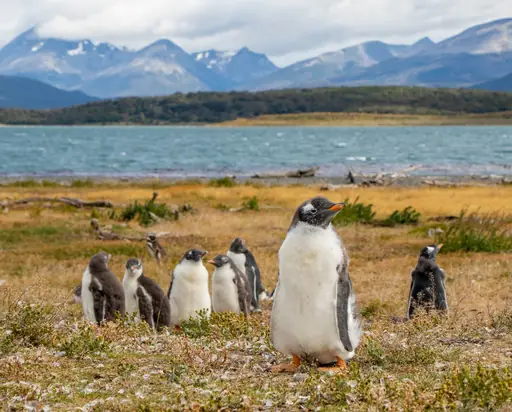
Penguin colonies (Isla Magdalena, Seno Otway) open October to March, whale watching in the Strait of Magellan December to March
Many tours, ferries and Patagonia lodges run reduced schedules or close April to September
Daylight lasts about 17 hours in December and only about 8 hours in June

The climate of Punta Arenas

Punta Arenas has a subpolar oceanic climate, marked by cool, stable temperatures, high humidity, and persistent winds. Summers (December to February) are short and cool, with average highs of 14–16°C and lows of 5–8°C. Even at the warmest, daytime temperatures rarely exceed 18°C, though record highs can reach up to 28°C. Sunshine is most abundant in summer, with up to 7–8 hours per day and daylight lasting over 16 hours at the solstice. Despite the long days, strong winds – often exceeding 20 km/h and sometimes reaching 130 km/h – are a defining feature, especially downtown, where ropes assist pedestrians during gusty periods. The sea remains cold year-round, with summer temperatures of 9–11°C, making swimming suitable only for the hardy.

Winters (June to August) are cold and cloudy, with average highs of 4–6°C and lows around -1 to 1°C. Snow is common but rarely heavy, and frost is frequent, though temperatures seldom drop far below freezing due to the ocean’s moderating effect. Rain and snow are possible throughout the year, with annual precipitation around 380–400 mm, evenly distributed but peaking slightly in April and May. Cloud cover is frequent, and winter days are short, with as little as 2–3 hours of sunshine and under 8 hours of daylight in June. Relative humidity is high (around 80–85%), and the Patagonian climate is famously unpredictable, so visitors should always be prepared for sudden changes. Punta Arenas is also notable for its exposure to high UV radiation due to the thinning ozone layer, especially in spring and early summer.

Average climate data for Punta Arenas, Chile
Month Jan Feb Mar Apr May Jun Jul Aug Sep Oct Nov Dec Year
Average maximum temperature (°C) 14 14 12 10 6 4 4 5 8 10 12 14 14
Average minimum temperature (°C) 7 7 5 4 1 -1 -1 -0 1 3 5 6 -1
Average precipitation (mm) 42 31 38 40 42 27 29 30 27 27 30 33 395
Average rainfall days (days) 15 14 15 14 13 11 11 12 11 10 13 14 153
Average relative humidity (%) 72 74 77 82 86 88 87 82 78 74 71 73 79
Average water temperature (°C) 10 10 10 9 8 7 6 6 6 7 8 9 8
Average daily daylight hours (h) 16 14 12 10 8 7 8 9 11 13 15 16 12
Average daily sunshine hours (h) 7 6 5 3 3 2 2 3 5 6 7 7 5
Average UV index 7 6 4 2 1 0 0 1 2 4 6 8 3

Travel info

  • Summer (December–February): Cool and windy, with highs of 14–16°C. Long daylight hours and up to 8 hours of sunshine. Strong winds are common – bring windproof clothing and sunglasses for UV protection.
  • Autumn (March–May): Temperatures cool from 12°C to 4°C, with increased rainfall in April and May. Days shorten, but the region’s colours and wildlife are appealing. Dress in layers for changeable weather.
  • Winter (June–August): Cold, cloudy, and windy, with highs of 4–6°C and lows near -1°C. Snow and frost are frequent, but rarely disruptive. Days are short – pack warm, waterproof clothing and prepare for limited daylight.
  • Spring (September–November): Gradual warming, with highs rising to 10–12°C. Winds remain strong, and UV levels are high due to ozone thinning. Great for wildlife watching and fewer tourists.
  • General tips: Weather is unpredictable year-round – dress in layers, bring windproof and waterproof gear, and use high-SPF sun cream. Swimming is not recommended due to cold sea temperatures.

The best time to visit Punta Arenas

The best time to visit Punta Arenas is during the southern summer, from December to February, when temperatures are mildest, days are longest, and outdoor activities are most accessible. This period offers the most pleasant weather for exploring Patagonia, wildlife watching, and enjoying the region’s unique daylight hours.

The worst time to visit Punta Arenas

The least favourable time to visit Punta Arenas is in winter (June to August), when temperatures are coldest, daylight is shortest, and strong winds and frequent precipitation can limit outdoor activities. However, winter offers a quieter atmosphere and the chance to experience snowy Patagonian landscapes.

Frequently asked questions

What is the climate like in Punta Arenas year-round?

Punta Arenas has a cold oceanic climate with cool summers, chilly winters, and strong winds year-round. Rain and snow are possible in any season, and the region is known for its high humidity and frequent cloud cover.

When is the best time to visit Punta Arenas?

The best time to visit is December to February, when temperatures are mildest, days are longest, and conditions are best for outdoor activities and exploring Patagonia’s unique landscapes.

Does it snow in Punta Arenas?

Yes, snow is common in Punta Arenas during winter and can occur in other seasons as well. However, snowfalls are usually light and rarely disrupt travel or daily life.

How windy is Punta Arenas?

Punta Arenas is famous for its strong winds, especially in summer, with average speeds over 20 km/h and gusts that can exceed 100 km/h. Windproof clothing is essential for visitors.

Is it possible to swim in the sea at Punta Arenas?

The sea in Punta Arenas is cold year-round, with summer temperatures of 9–11°C. Swimming is only recommended for experienced cold-water swimmers, and even then, only for short periods.

How much daylight does Punta Arenas get?

Daylight hours vary dramatically: up to 16–17 hours in summer and as little as 7–8 hours in winter. Summer offers the longest days, while winter days are short and often cloudy.

What should I pack for a trip to Punta Arenas?

Pack layers, windproof and waterproof clothing, a hat, gloves, and high-SPF sun cream. Weather is changeable and windy year-round, so be prepared for sudden shifts in conditions.

Minimum and maximum temperatures in Punta Arenas

The warmest month, with the highest average maximum temperature, is January (14.2 °C). The month with the lowest average maximum temperature is July (3.6 °C). Overall, the average maximum temperature over the whole year is 9.4 °C.

The month with the highest average minimum temperature is January (6.7 °C). The coldest month, with the lowest average minimum temperature, is July (-1.2 °C). Overall, the average minimum temperature over the whole year is 3 °C.

Water temperature in Punta Arenas

The month with the highest average water temperature is February (10.3 °C). The month with the lowest average water temperature is August (5.7 °C). Overall, the average water temperature over the whole year is 7.8 °C.

Rainfall amount in Punta Arenas

The wettest month, with the highest amount of precipitation, is January (42.1 mm). The driest month, with the least amount of precipitation, is June (26.6 mm). Over the whole year there are 394.9 mm of rainfall on average.

Rainfall days in Punta Arenas

The month with the most days of rain is January (15.1 days). The month with the fewest days of rain is October (10 days). Over the whole year there are 153.2 days of rain on average.

Relative humidity in Punta Arenas

The month with the highest average relative humidity is June (87.7 %). The month with the lowest average relative humidity is November (70.8 %). The overall average relative humidity over the whole year is 78.6 %.

Daylight hours and sunshine hours in Punta Arenas

The month with the longest days, so the most daylight, is December (Average daylight: 16.1 h). The month with the shortest days, so the least daylight, is June (Average daylight: 7.1 h). Over the whole year there are 11.6 h of daylight per day on average.

The month with the most sunshine per day is January (Average sunshine: 7.2 h). The month with the least sunshine per day is June (Average sunshine: 2 h). Over the whole year there are 4.7 h of sunlight per day on average.

UV index in Punta Arenas

The month with the highest average UV index is December (UV index: 8). The months with the lowest average UV index are June and July (UV index: 0). Over the whole year the average UV index is 3.4.

Was this page helpful?
Feedback