












Was this page helpful?

| Power Grid: |
127 V, 60 Hz Plug: Type C , Type N
Type C:
  Read about power adapters |
|---|---|
| Currency: |
Brazilian Real (BRL) £1 ≈ R$7.11 |
| Cashless info: |
Rating 4/5
Cashless payment is widely accepted in urban areas but less so in remote regions.
Save with a travel credit card |
| eSIM providers: |
Best value: Saily Flexibility: Airalo Read our in-depth comparison |
| Tipping: | Tipping is not customary in Brazil. Restaurants often include a 10% service charge. Additional tips are optional. |
|---|---|
| Public drinking: | Public drinking is generally allowed in Brazil, and it is common in social settings. |
| Public smoking: | Smoking is banned in enclosed public spaces, with designated outdoor areas. |
| Carnival (February/March) |
Expect parades and heavy crowds. |
|---|---|
| Independence Day (September) |
National celebrations occur. |
| Christmas (December) |
Family gatherings and public celebrations are common. |
| Emergency contact: | Emergency Numbers: 190 (Police), 192 (Ambulance), 193 (Fire) |
|---|---|
| Taxi apps: | 99, Uber, Cabify |
| Other: | Brazil is known for its natural beauty, vibrant culture, and Carnival celebrations. Avoid travelling alone in remote areas for safety. |
The best times to travel section shows how the months compare for a visit, so you can find the time of year that fits what you want to do.
Background colours of the months:
The colour shows the typical temperature: yellow (hot), green (mild) and blue (cold). How strong the colour is shows the travel season: full colour means high season, soft colour means shoulder season and soft-striped means off season.
Weather symbols:
Each month has one symbol showing what the weather is typically like, such as hot and sunny, freezing or a rainy or snowy season. Use them to quickly spot months that match the weather you want, or to avoid the ones that don't.
Crowdedness:
The people icon shows how busy the place usually is. The more people, the more crowded it gets.
Additional notes:
The grey info boxes point out special things worth knowing, like recurring weather issues or seasonal events.
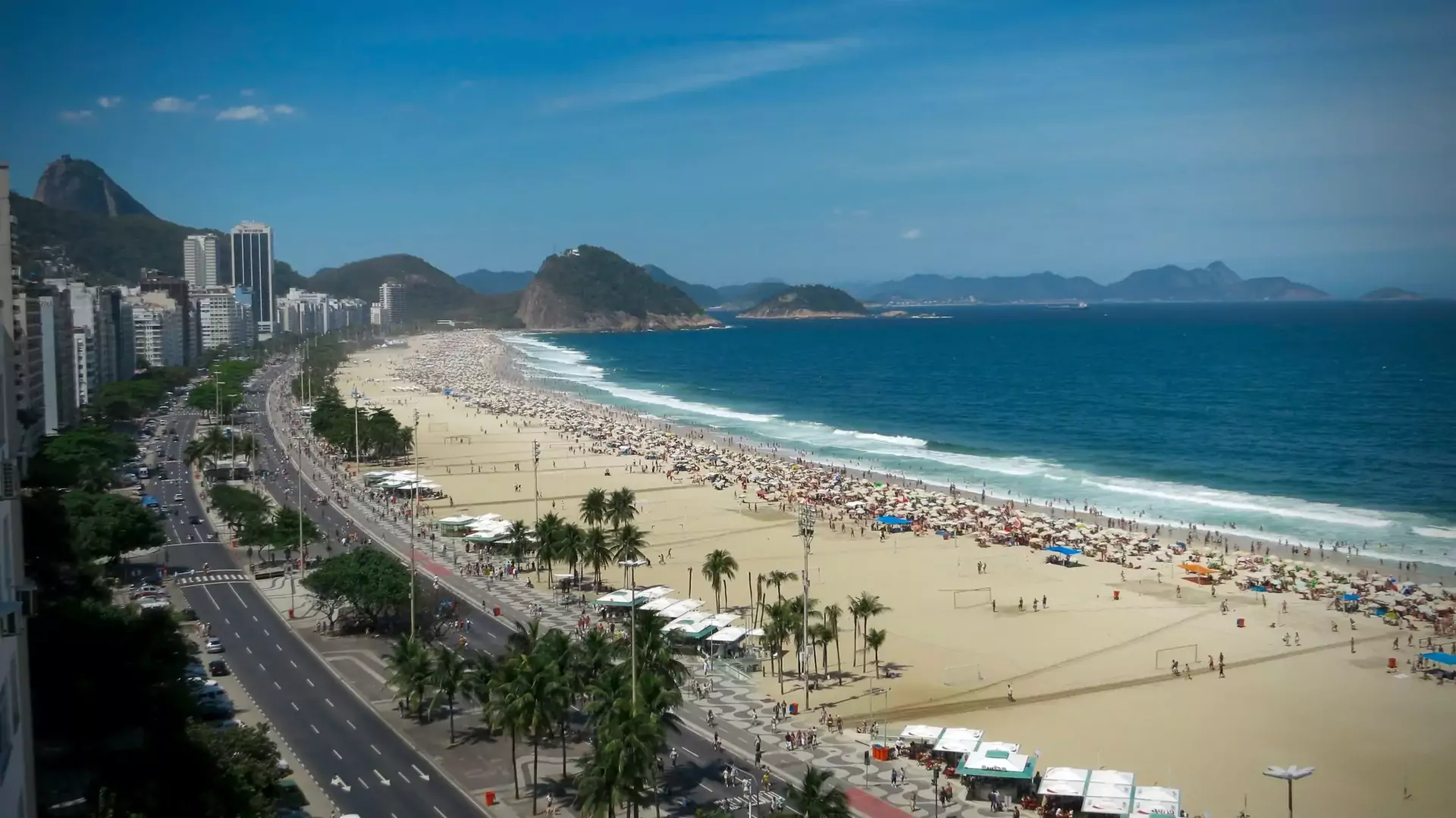
Copacabana Beach is an iconic Rio de Janeiro landmark and a vibrant hub of activity day and night. Spanning about 4 kilometers, it is renowned for its unique black-and-white mosaic promenade, designed by Roberto Burle Marx, which captures the essence of Rio’s lively culture. The beach is a lively gathering place where locals and tourists enjoy sunbathing, sports and socializing.
The beach is framed by the dramatic backdrop of Sugarloaf Mountain and offers numerous beach volleyball courts, surfing areas and kiosks selling refreshing coconut water and local snacks. The nearby Forte de Copacabana is a historic fort and museum, offering a quieter contrast to the energetic beach.
While Copacabana Beach is breathtakingly beautiful and vibrant, visitors should be cautious about personal belongings due to occasional theft, especially in crowded areas. It's also not ideal for swimming at times due to strong currents. Nighttime safety is improved by staying in well-lit areas and avoiding isolated spots.
Major events like the New Year's Eve fireworks and Carnival street parties transform the beach into a spectacular celebration space, attracting huge crowds and a festive atmosphere.
Copacabana Beach is located in the South Zone of Rio de Janeiro. From Galeão International Airport, a taxi or rideshare takes approximately 40 minutes depending on traffic. Public transport options include taking the metro to Cardeal Arcoverde or Siqueira Campos stations, both within walking distance to the beach.
Copacabana offers a wide range of accommodation, from luxury hotels with ocean views to more affordable hostels and guesthouses, making it suitable for all budgets while keeping visitors close to the beach action.
Log in to add this place to a travel list and get a summary of all recommended items for your whole trip.
We calculate the average costs when travelling to destinations and compare those with the living costs at your home. With this you can get an estimate of how expensive or cheap the destination is for you.
To customise this, you can set up which location and price level are used for the calculations in your account settings.
The exchange rate price factor shows how expensive or cheap a currency currently is compared to its historical average. It's a quick way to see if a country is currently more or less affordable due to exchange rate changes.
