










Was this page helpful?

| Public website: | www.darlingharbour.com |
|---|
| Power Grid: |
230 V, 50 Hz Plug: Type I
Type I:
 Read about power adapters |
|---|---|
| Currency: |
Australian Dollar (AUD) £1 ≈ A$1.89 |
| Cashless info: |
Rating 5/5
Cashless payment is widely accepted, even in rural areas. Digital wallets are commonly used.
Save with a travel credit card |
| eSIM providers: |
Best value: Saily Flexibility: Airalo Read our in-depth comparison |
| Tipping: | Tipping is not mandatory in Australia. Rounding up or 10% is appreciated in high-end restaurants. |
|---|---|
| Public drinking: | Public drinking is regulated and often prohibited, except in designated areas. |
| Public smoking: | Smoking is banned in public indoor spaces and most outdoor public areas. |
| Australia Day (January) |
Public events and celebrations occur nationwide. |
|---|---|
| ANZAC Day (April) |
Commemorations and closures happen. |
| Christmas (December) |
Festive events and closures occur. |
| Emergency contact: | Emergency Number: 000 (Police, Fire, Ambulance) |
|---|---|
| Taxi apps: | Uber, 13cabs, Ola |
| Other: | Australia's vast size requires careful planning for travel between regions. Be aware of wildlife and sun exposure. |
The best times to travel section shows how the months compare for a visit, so you can find the time of year that fits what you want to do.
Background colours of the months:
The colour shows the typical temperature: yellow (hot), green (mild) and blue (cold). How strong the colour is shows the travel season: full colour means high season, soft colour means shoulder season and soft-striped means off season.
Weather symbols:
Each month has one symbol showing what the weather is typically like, such as hot and sunny, freezing or a rainy or snowy season. Use them to quickly spot months that match the weather you want, or to avoid the ones that don't.
Crowdedness:
The people icon shows how busy the place usually is. The more people, the more crowded it gets.
Additional notes:
The grey info boxes point out special things worth knowing, like recurring weather issues or seasonal events.
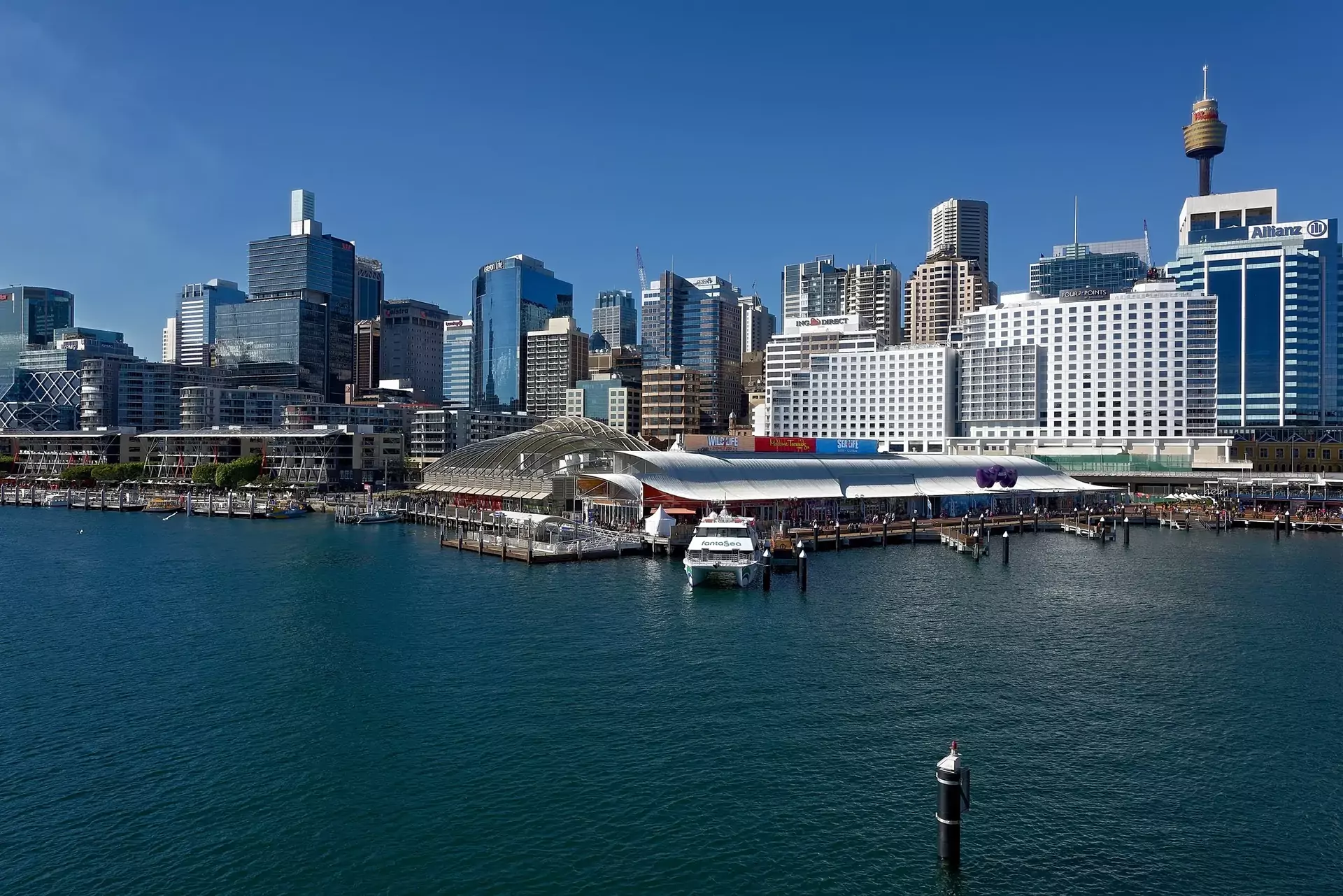
Darling Harbour has transformed from an industrial port into one of Sydney’s most popular leisure and entertainment districts. Stretching around Cockle Bay, it hosts a wide array of attractions including museums, an aquarium and the iconic Chinese Garden of Friendship.
The precinct offers a mix of shopping centers, fine dining, casual eateries and vibrant nightlife venues. Families appreciate Tumbalong Park with water play areas and playgrounds, while culture seekers enjoy the Powerhouse Museum with its interactive exhibits on science, technology and design.
Visitors should be mindful that Darling Harbour can be busy, especially during weekends, holidays and major events such as the Vivid Sydney light festival or New Year’s Eve fireworks, which might lead to crowded spaces and longer wait times.
Transport connections are excellent but navigating the area during peak times requires some patience. Overall, Darling Harbour remains a must-visit Sydney spot for its lively atmosphere, diverse attractions and beautiful waterfront setting.
Darling Harbour is centrally located adjacent to Sydney’s CBD and is easily accessible via light rail (Inner West Light Rail), ferry services from Circular Quay, buses or walking from nearby train stations such as Town Hall or Wynyard. International visitors typically arrive at Sydney Kingsford Smith Airport and can connect through public transport or taxis to the city center.
Accommodation is widely available in the Sydney CBD and nearby precincts, ranging from luxury hotels to boutique stays, offering direct access to Darling Harbour and its many attractions.
Log in to add this place to a travel list and get a summary of all recommended items for your whole trip.
We calculate the average costs when travelling to destinations and compare those with the living costs at your home. With this you can get an estimate of how expensive or cheap the destination is for you.
To customise this, you can set up which location and price level are used for the calculations in your account settings.
The exchange rate price factor shows how expensive or cheap a currency currently is compared to its historical average. It's a quick way to see if a country is currently more or less affordable due to exchange rate changes.
