







Was this page helpful?

These place ratings give you a quick overview of how well a destination matches different types of trips.
‘Best for’ scores:
The specific interest scores show where this place really shines – whether it's ideal for hiking, food & drink experiences, museums or other activities. These highlights help you understand what makes the destination special at a glance.
‘Your personal’ scores:
This reflects how well a place matches your personal preferences. You can adjust the importances of travel topics or other personal requirements categories in your account settings.
‘Suited for’ badges:
These give you a quick overview of how well a destination suits specific types of travellers, to help you find the places that match your lifestyle, preferences or travel situation.
| Power Grid: |
110 V, 60 Hz Plug: Type A , Type B
Type A:
  Read about power adapters |
|---|---|
| Currency: |
Cuban Peso (CUP) £1 ≈ CUP 31.96 |
| Cashless info: |
Rating 2/5
Cashless payments are not widely accepted in Cuba, and credit cards from U.S. banks do not work. Cash is essential. Most transactions are done in Cuban Pesos (CUP); the Convertible Peso (CUC) was abolished in 2021.
Save with a travel credit card |
| eSIM providers: | We cannot recommend an eSIM provider for this country. We advise getting a local SIM card. |
| Tipping: | Tipping is common in Cuba, especially in restaurants, with a typical tip ranging from 5-10%. It is also appreciated by hotel staff and tour guides. |
|---|---|
| Public drinking: | Public drinking is generally not allowed in Cuba, particularly in areas like streets and parks, though alcohol is served in licensed venues like bars and restaurants. |
| Public smoking: | Smoking is prohibited in indoor public spaces like restaurants and public transport, but smoking is allowed in designated outdoor areas. |
| Liberation Day (1 January) |
National holiday celebrating the triumph of the 1959 revolution |
|---|---|
| Christmas (25 December) |
Celebrated with family gatherings and local festivities |
| Emergency contact: | Emergency Numbers: 106 (Police), 104 (Ambulance), 105 (Fire) |
|---|---|
| Taxi apps: | Uber (limited availability in some areas) |
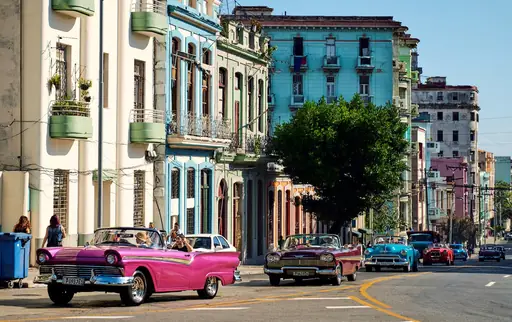
| Other: | Cuba is famous for its history, culture, and natural beauty, including pristine beaches and colonial architecture. While the country is still developing, it remains a popular destination for travellers. |
The best times to travel section shows how the months compare for a visit, so you can find the time of year that fits what you want to do.
Background colours of the months:
The colour shows the typical temperature: yellow (hot), green (mild) and blue (cold). How strong the colour is shows the travel season: full colour means high season, soft colour means shoulder season and soft-striped means off season.
Weather symbols:
Each month has one symbol showing what the weather is typically like, such as hot and sunny, freezing or a rainy or snowy season. Use them to quickly spot months that match the weather you want, or to avoid the ones that don't.
Crowdedness:
The people icon shows how busy the place usually is. The more people, the more crowded it gets.
Additional notes:
The grey info boxes point out special things worth knowing, like recurring weather issues or seasonal events.
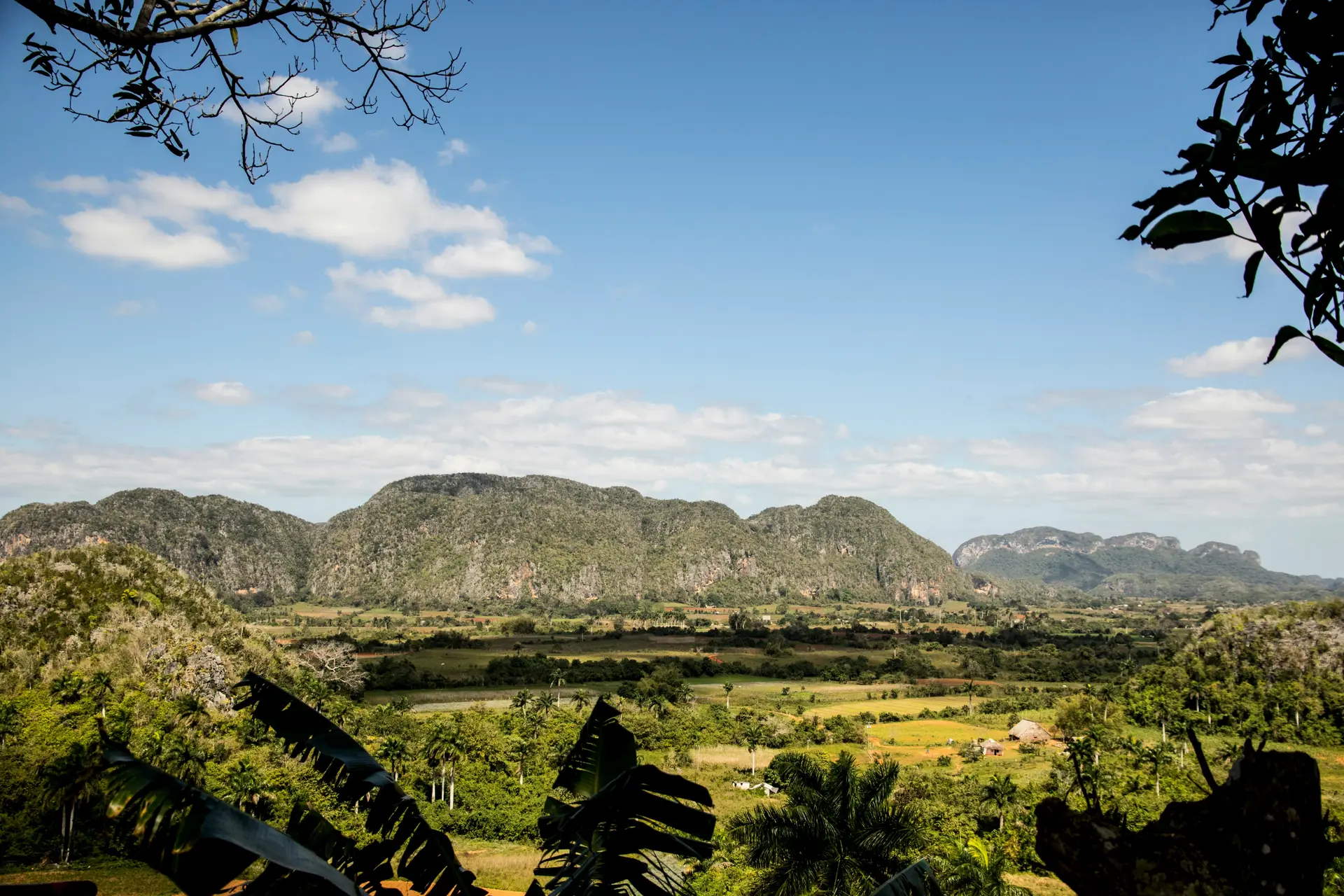
Vinales Valley, located in the western part of Cuba’s Pinar del Río province, offers a quiet yet vivid experience for travelers who appreciate natural beauty and cultural authenticity. The valley is renowned for its rolling hills covered with tobacco plantations, which have been cultivated by local families for generations. Visitors can walk through terraced fields, observe traditional cultivation methods and learn about the process of cigar production from seed to finished product. Beyond agriculture, Vinales boasts a network of limestone caves that reveal impressive stalactite formations. Guided tours provide insight into the valley’s geology while allowing travelers to explore underground chambers safely. The surrounding landscape is dotted with small villages where residents maintain their Spanish colonial architecture and offer homemade pastries and local music. The climate in Vinales is mild, making it suitable for hiking or cycling along scenic routes that pass through pine forests and riverbanks. Local guides can arrange visits to nearby waterfalls, giving travelers a chance to experience the valley’s freshwater ecosystems. For those interested in history, the area contains remnants of early colonial settlements, offering a glimpse into Cuba’s past. Overall, Vinales Valley presents an opportunity to engage with rural Cuban life, appreciate sustainable agriculture and explore unique geological features without the crowds found at more commercial destinations.
The Vinales Valley in Cuba is accessible primarily by road from Havana, with a drive taking approximately 4 to 5 hours via the Carretera Central and A1 highway. Private taxis or guided tours can be arranged through local agencies for direct transfers. Buses operate regularly but may require multiple transfers, making them less predictable. For those preferring rail, limited regional trains connect Havana to nearby towns, though schedules are infrequent. Rental cars offer flexibility, with international drivers’ licenses accepted; road conditions vary, requiring caution on rural routes. Domestic flights from Havana land at Bayento Airport (near Vinales), followed by a taxi or bus ride to the valley floor.
Vinales Valley offers a mix of rustic farm stays and boutique eco‑lodges that blend seamlessly with the rolling tobacco fields. Many guesthouses are family‑run, featuring traditional wooden architecture, local cuisine and guided tours of nearby plantations. Prices range from modest US$30 – 50 (£22.43 – 37.38) per night for basic rooms to US$80 – 120 (£59.81 – 89.71) for more upscale cabins equipped with private terraces overlooking the valley. The area is renowned for its “casas de campo” – cozy country houses that provide an authentic rural experience. For travelers seeking a touch of luxury, several eco‑resorts offer organic gardens, spa services and panoramic views, all while maintaining sustainable practices that honor the region’s heritage.
We calculate the average costs when travelling to destinations and compare those with the living costs at your home. With this you can get an estimate of how expensive or cheap the destination is for you.
To customise this, you can set up which location and price level are used for the calculations in your account settings.
The exchange rate price factor shows how expensive or cheap a currency currently is compared to its historical average. It's a quick way to see if a country is currently more or less affordable due to exchange rate changes.
To help you plan your trip, we provide estimated daily costs per person (when travelling as a pair) for different travel styles. These numbers give you an idea of what you might spend each day at this destination, including accommodation, food, transport and activities.
Additionally, we also provide average hotel costs for different travel styles to give you an estimate for the accommodation only.
Please note that these are only estimates. The real costs depend on booking times, season and other factors.
Travel style categories explained:
Backpacker:
Staying in hostels or budget hotels, cooking your own meals or eating cheap and choosing low-cost activities.
Mid-range:
Staying in mid-range hotels, eating at a mix of restaurants and casual spots and enjoying a variety of activities.
Luxury:
Staying in luxury hotels, dining out at high-end restaurants and enjoying premium experiences without worrying about the price.
| Backpacker | Mid-range | Luxury | |
|---|---|---|---|
| 💵 Total costs per day, including accommodation | |||
| 🏨 Accommodation per night, per person | |||
| 🍝 Food per day | |||
| 🚕 Transportation per day |
| 🍽️ Restaurant Dinner, per person | |
|---|---|
| 🍛 Lunch Set, per person | |
| 🍟 Fast food combo | |
| 🍝 Preparing your own food, per day | |
| ☕ Cappuccino | |
| 🍺 Beer in a restaurant, 0.5 l |
| 🚌 Public transport ticket | |
|---|---|
| 🚕 Taxi Ride, 10 km / 6 mi | |
| ⛽ Petrol, 1 l |
| 🎞️ Cinema ticket | |
|---|---|
| 👩⚕️ Doctor's consult | |
| 🤧 Cold medication | |
| 💇 Basic haircut |
Log in to add this place to a travel list and get a summary of all recommended items for your whole trip.
