





Was this page helpful?

| Opening hours: |
|
|---|
| Power Grid: |
110 V, 60 Hz Plug: Type A , Type B
Type A:
  Read about power adapters |
|---|---|
| Currency: |
Belize Dollar (BZD) £1 ≈ BZD 2.68 |
| Cashless info: |
Rating 4/5
Cashless payments are becoming more common in Belize, especially in tourist areas. However, cash is still often used in smaller businesses.
Save with a travel credit card |
| eSIM providers: |
Best value: Saily Flexibility: Airalo Read our in-depth comparison |
| Tipping: | Tipping is customary, with 10-15% being the standard in restaurants. Tipping taxi drivers and hotel staff is also appreciated. |
|---|---|
| Public drinking: | Public drinking is allowed in designated areas, including most beaches and public events. |
| Public smoking: | Smoking is prohibited indoors in public spaces, including restaurants and bars. |
| Independence Day (September) |
Expect public celebrations and some business closures. |
|---|---|
| Garifuna Settlement Day (November) |
Expect celebrations of Garifuna heritage, street events, and music. |
| Emergency contact: | Emergency Number: 911 |
|---|---|
| Taxi apps: | Uber |
| Other: | Belize is famous for its beautiful beaches, tropical wildlife, and the Great Blue Hole, attracting tourists interested in diving and nature activities. |
The best times to travel section shows how the months compare for a visit, so you can find the time of year that fits what you want to do.
Background colours of the months:
The colour shows the typical temperature: yellow (hot), green (mild) and blue (cold). How strong the colour is shows the travel season: full colour means high season, soft colour means shoulder season and soft-striped means off season.
Weather symbols:
Each month has one symbol showing what the weather is typically like, such as hot and sunny, freezing or a rainy or snowy season. Use them to quickly spot months that match the weather you want, or to avoid the ones that don't.
Crowdedness:
The people icon shows how busy the place usually is. The more people, the more crowded it gets.
Additional notes:
The grey info boxes point out special things worth knowing, like recurring weather issues or seasonal events.
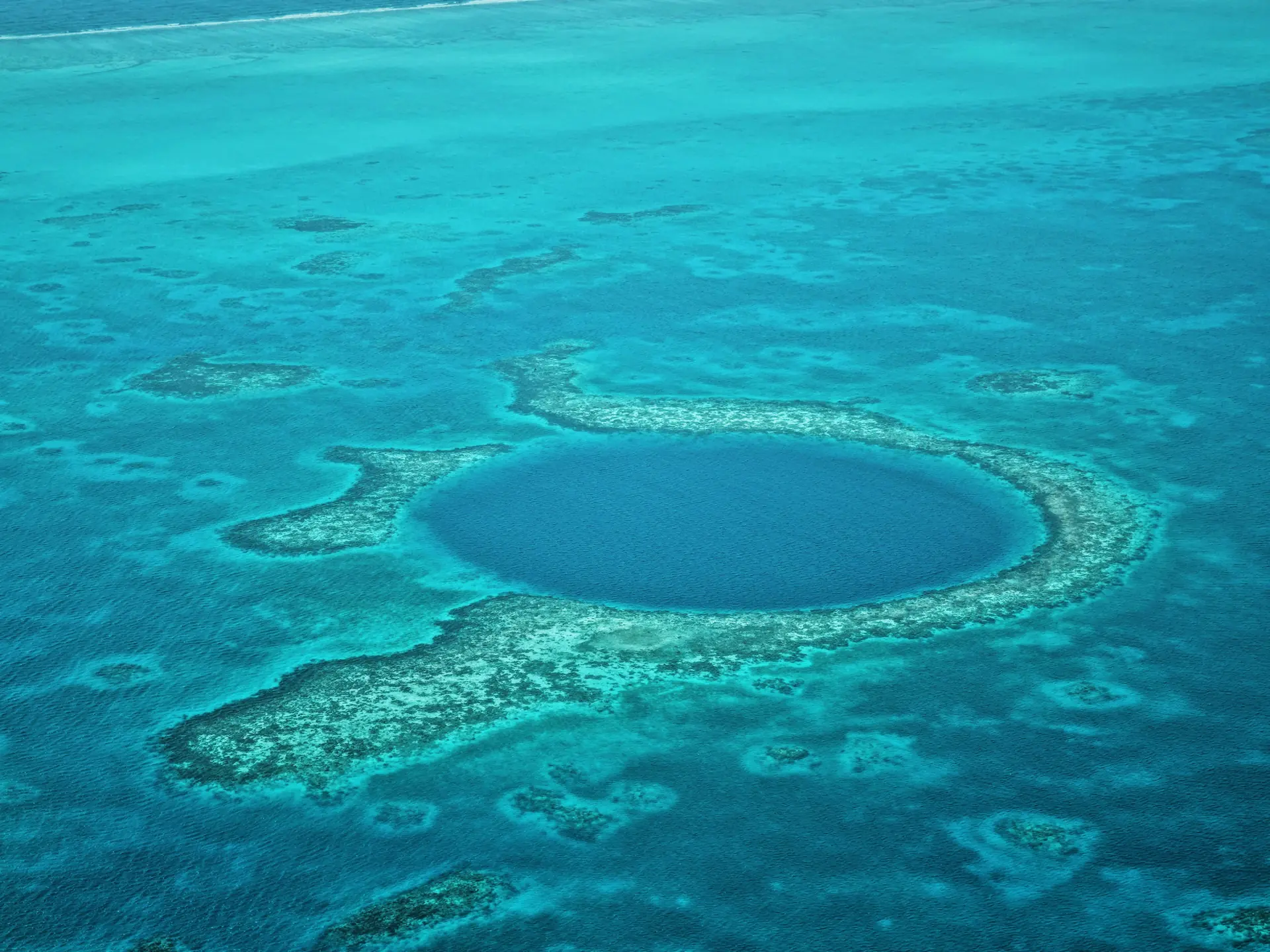
The Great Blue Hole is a striking underwater sinkhole located off the coast of Belize. It lies within the Belize Barrier Reef Reserve System a UNESCO World Heritage Site. This natural formation attracts divers and marine enthusiasts from around the globe due to its unique shape and depth. The hole stretches more than 300 meters across with vertical walls that drop sharply into dark waters.
Geologists say it formed during a period of lower sea levels thousands of years ago. As water receded limestone dissolved creating this massive cavity over time. Today sunlight filters through the surface illuminating layers of sediment and marine life below. The site provides clear visibility for those willing to explore its depths though proper training is required.
Marine biologists observe diverse species thriving in surrounding reefs including groupers barracudas and colorful corals. Seasonal currents influence water movement making certain months better for diving. Visitors often notice schools of fish darting near the edge while larger predators patrol deeper zones. The area supports conservation efforts aimed at protecting fragile ecosystems.
Access to the Great Blue Hole typically involves boat trips from nearby towns such as San Pedro or Caye Caulker. Local operators offer guided tours that include equipment and safety briefings. Photography opportunities abound for those interested in capturing geological wonders above and below water. Respecting environmental guidelines ensures this site remains preserved for future study and adventure.
The Great Blue Hole, located off the coast of Belize in the Caribbean Sea, is accessible primarily by boat. Travelers typically reach it via guided day trips departing from San Pedro, Ambergris Caye or Caye Caulker. These tours often combine snorkeling and diving excursions to explore the site’s unique underwater formations. The nearest international airport is Philip S. W. Goldson International Airport (BZE) in Belize City, followed by a 1‑hour drive or short flight to coastal towns before boat transfers to the Blue Hole. Some private charters also offer direct access for those seeking flexibility. Visibility and water conditions may affect accessibility during certain seasons.
Accommodations around the Great Blue Hole range from rustic eco‑lodges to upscale beachfront resorts, catering to both budget travelers and luxury seekers. Most visitors stay in San Pedro or Hopkins on Ambergris Caye, where boutique inns offer sea‑view rooms at mid‑range rates BZD 160 – 300 (£59.41 – 111.40) per night. For those desiring a more secluded experience, the mainland’s Placencia Peninsula hosts eco‑villages with private plunge pools, typically priced between BZD 240 – 500 (£89.12 – 185.67). The area is renowned for its marine‑themed suites featuring glass walls to observe local reef life. Many properties emphasize sustainable practices, using solar power and locally sourced materials, ensuring a comfortable stay while preserving the region’s natural beauty.
Log in to add this place to a travel list and get a summary of all recommended items for your whole trip.
We calculate the average costs when travelling to destinations and compare those with the living costs at your home. With this you can get an estimate of how expensive or cheap the destination is for you.
To customise this, you can set up which location and price level are used for the calculations in your account settings.
The exchange rate price factor shows how expensive or cheap a currency currently is compared to its historical average. It's a quick way to see if a country is currently more or less affordable due to exchange rate changes.
