
Bernard Gagnon, CC BY-SA 3.0, via Wikimedia Commons
Europe › Spain › Madrid › Royal Palace

Royal Palace

Scroll
Majestic heart of Spanish royalty

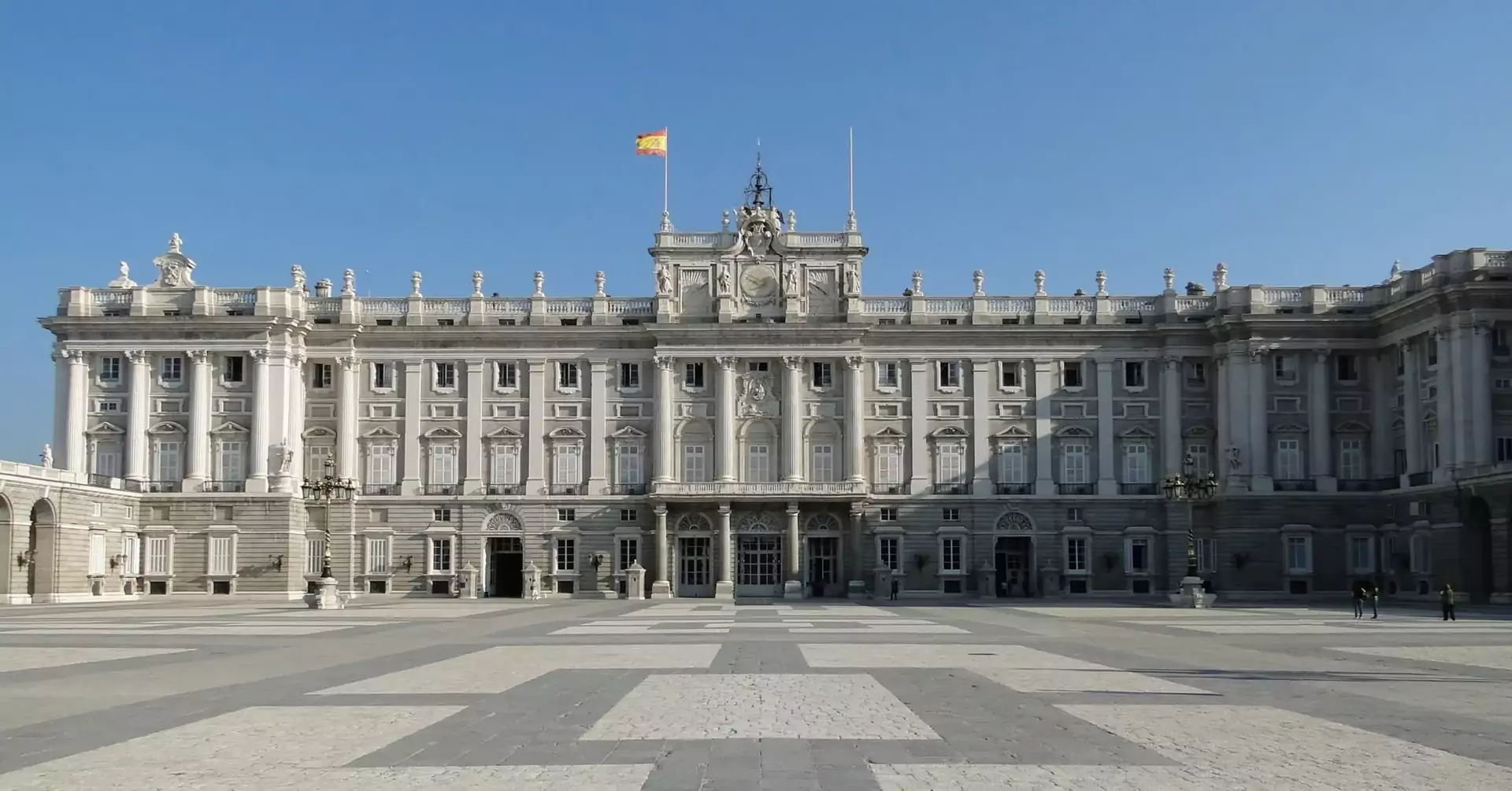
Madrid’s Royal Palace stands as a symbol of Spain’s royal heritage and architectural ambition. Built in the 18th century, it showcases grand Baroque design with lavish interiors featuring ornate ceilings and intricate woodwork. Visitors explore opulent state rooms adorned with historic artworks and ceremonial armor. The palace grounds include lush gardens open to the public, offering quiet spaces for reflection away from city noise. Its location near central landmarks makes it easy to combine a visit with nearby cultural sites like museums and tapas bars serving traditional Spanish dishes.

Palace in Madrid
Climate zone: Mediterranean

Mediterranean: Mid-latitude climates with hot, dry summers and mild, wet winters, typical of coastal regions around the Mediterranean Basin.

See climate table
Ticket price: $$$
$Cheap
$$Medium
$$$Expensive, upscale
$$$+Very expensive, luxury
Safety: 7.8
General Safety:8
Accessibility:7
Read details
Tourist English: 4/5
Most staff at the Royal Palace and around central Madrid speak good English, making it easy for English-speaking visitors to navigate tours and information.
Last update: 12 Oct 2026
* We earn a commission from some links on this page.
Royal Palace Summary
Famous for royal architecture and history. Walk lavish state rooms, admire historic décor and explore ceremonial halls.
Opening hours:
Mon-Sat:10:00 - 18:00
Sun:10:00 - 15:00
Public website: www.patrimonionacional.es
Spain – Quick facts
Power Grid: 230 V, 50 Hz
Plug: Type C , Type F
Type C:
Diagram of a Type C power plug
Type F:
Diagram of a Type F power plug

Read about power adapters
Currency: Euro (EUR)
£1 ≈ €1.19
Cashless info: Rating 5/5
Cashless payment is widely accepted in Spain, particularly in urban areas and tourist destinations. Credit and debit cards are commonly used, and mobile payment options are available in many establishments.

Save with a travel credit card
eSIM providers: Best value: Saily
Flexibility: Airalo
Read our in-depth comparison
Tipping: Tipping is not mandatory in Spain but appreciated for good service. In restaurants, rounding up the bill or leaving 5-10% is customary. Taxi drivers and hotel staff may also be tipped, though it is less common.
Public drinking: Public drinking is restricted in some regions, particularly in tourist-heavy cities. Local laws may vary.
Public smoking: Smoking is banned indoors in public places but allowed in designated outdoor areas.
La Tomatina
(August)
A famous tomato-throwing festival, expect large crowds in Buñol.
Semana Santa
(March/April)
Religious parades and events make this a busy time in major cities.
Christmas
(December)
Markets and festive celebrations, with tourist areas becoming busier.
Emergency contact: Emergency Number: 112 (Police, Fire, Ambulance)
Taxi apps: Cabify, Bolt, Uber
Other: Spain is known for its diverse culture, stunning architecture, and vibrant festivals. Public transport is reliable and efficient, making it easy to explore.
Best times to travel

The best times to travel section shows how the months compare for a visit, so you can find the time of year that fits what you want to do.

Background colours of the months:
The colour shows the typical temperature: yellow (hot), green (mild) and blue (cold). How strong the colour is shows the travel season: full colour means high season, soft colour means shoulder season and soft-striped means off season.

Weather symbols:
Each month has one symbol showing what the weather is typically like, such as hot and sunny, freezing or a rainy or snowy season. Use them to quickly spot months that match the weather you want, or to avoid the ones that don't.

Crowdedness:
The people icon shows how busy the place usually is. The more people, the more crowded it gets.

Additional notes:
The grey info boxes point out special things worth knowing, like recurring weather issues or seasonal events.

for Royal Palace, Spain
🌤️
Jan
🌤️
Feb
🌤️
Mar
🌤️
Apr
☀️
May
🔥
Jun
🔥
Jul
🔥
Aug
☀️
Sep
☀️
Oct
🌤️
Nov
🌤️
Dec
High season: April - June, Sep. - Oct.
Shoulder season: March, July - Aug., Dec.
Tap on a month for more info Hover over a month for more info
Palace closes without notice for state ceremonies and official events, check the schedule before visiting
Free entry in the last two hours before closing on weekdays, with long queues
Changing of the Guard on the first Wednesday of each month, except August and September

The Royal Palace of Madrid is the official residence of the Spanish royal family, though it is now used primarily for state ceremonies and official events. It is the largest royal palace in Western Europe, boasting over 3,400 rooms and occupying an area of approximately 135,000 square meters. Built in the mid-18th century, the palace impresses with its majestic Baroque style and lavish interior decorations.

A highlight for visitors includes the Throne Room, with its red velvet walls and grand frescoes and the Hall of Mirrors, reminiscent of Versailles with stunning crystal chandeliers and marble finishes. The palace also features the splendid Royal Chapel and the remarkable armory collection, though the armory is sometimes closed for renovations. The gasparini Room displays Rococo extravagance and the crown room houses symbolic royal regalia.

Outside, visitors can relax in the beautifully maintained Sabatini Gardens and the expansive Campo del Moro Gardens. Photography inside the palace is restricted, so capturing the grandeur is best done outside. It's advised to book tickets online in advance to avoid long queues, especially during peak season.

While the palace fee is reasonable for its cultural value, some visitors find the price slightly high compared to similar attractions in Europe. Summers can get quite hot, so an early visit is recommended. Although English is widely spoken at the palace, some visitors have noted a lack of multilingual guides, particularly in languages like Chinese.

Knowledge before you go

  • Book tickets online in advance to skip long entry lines.
  • Opt for a guided tour or audio guide to uncover rich history and hidden details of opulent rooms.
  • Visit early morning or late afternoon to dodge peak crowds and enjoy gardens peacefully.
  • Check for free entry times for EU citizens on select afternoons, but arrive extra early as lines build fast.

How to travel to Royal Palace

The Royal Palace is located in central Madrid, easily accessible from Madrid-Barajas Adolfo Suárez Airport via taxi, airport buses or the metro network. From the airport, a taxi ride takes about 20-30 minutes. Visitors can also take metro line 5 to the Opera station, which is a short walk from the palace.

Access summary

  • From Madrid-Barajas (MAD): Metro via Nuevos Ministerios–Plaza de España, about 40 min.
  • From Atocha Station: Metro via Sol–Ópera, about 15–20 min.
  • From central Madrid hotels: Walk or short metro ride to Ópera station, 5–20 min.

Where to stay near Royal Palace

Madrid offers a wide range of accommodations near the Royal Palace, including boutique hotels, luxury stays and mid-range options. Staying in the historic city center offers easy walking access to the palace and other cultural sites.

Budget snapshot
Costs compared to home

We calculate the average costs when travelling to destinations and compare those with the living costs at your home. With this you can get an estimate of how expensive or cheap the destination is for you.

To customise this, you can set up which location and price level are used for the calculations in your account settings.

-17 %
Daily expenses in the region are around 17% lower than the average across United States. That means you'll spend considerably less on meals and getting around.
Exchange rate trend

The exchange rate price factor shows how expensive or cheap a currency currently is compared to its historical average. It's a quick way to see if a country is currently more or less affordable due to exchange rate changes.

-3 %
Your exchange rate (GBP to EUR) is 3% better than in recent years. That means travelling now costs around the same compared to the past.

Safety information overview

General safety
8
Madrid’s Royal Palace is very safe for visitors, with robust security and well‑trained staff. Crime rates in the area are low and tourist spots are monitored closely. Follow standard precautions: keep valuables secure, stay aware of pickpockets and respect local etiquette.
Accessi­bility
7
Madrid’s Royal Palace offers mixed accessibility: elevators and ramps serve main halls, but many historic rooms remain steep or narrow. Signage is clear in Spanish and English, yet some stairways lack handrails. Visitors with mobility aids should plan ahead for limited wheelchair access.

Looking for inspiration?

Discover
Best castle destinations in Europe
Europe contains the world's greatest concentration of castle and fortress architecture, with surviving structures ranging from the Norman tower keeps and Crusader citadels of the…
Read more
Discover
Top castle destinations and historic fortresses
Castle travel spans an enormous range of surviving structures, from the intact hilltop fortresses and walled palace complexes that have been continuously inhabited or maintained to…
Read more
Discover
Top museum destinations and cultural institutions
Museum travel has developed a dedicated following built around the world's great permanent collections, blockbuster exhibition programmes and the architecturally significant…
Read more
Discover
Top historical destinations and historic sites
The most compelling history destinations are places where the past is still physically present and legible in the landscape, the architecture and the daily life of the people who…
Read more
Discover
Best museum destinations in Europe
Europe holds the world's greatest concentration of significant museum collections, accumulated over centuries of patronage, scientific inquiry and in many cases imperial…
Read more
Discover
Best historical destinations in Europe
Europe is one of the most historically dense regions on earth, where the evidence of successive civilisations, empires, conflicts and cultural movements is layered into the…
Read more
Discover
Most beautiful beaches and coastal escapes
For a lot of people, a beach is the whole point of a holiday, but what makes a beach day perfect really depends on personal taste. Some travellers want isolation and the feeling…
Read more
Discover
Stunning national parks and wilderness areas
National parks exist because someone decided that certain landscapes were too important to lose. The best of them protect ecosystems, wildlife and natural processes that would…
Read more
Discover
Intimate escapes and romantic getaways
The most memorable trips for couples tend to have less to do with luxury and more to do with the quality of shared experience. A place that slows you down, removes the usual…
Read more
Was this page helpful?
Feedback