







Was this page helpful?

| Opening hours: |
|
||||
|---|---|---|---|---|---|
| Public website: | www.museusemonumentos.pt |
| Power Grid: |
230 V, 50 Hz Plug: Type C , Type F
Type C:
  Read about power adapters |
|---|---|
| Currency: |
Euro (EUR) £1 ≈ €1.19 |
| Cashless info: |
Rating 4/5
Portugal has widespread acceptance of cashless payments, particularly in urban areas and larger businesses. Cards are commonly used, and mobile payment options are increasingly available.
Save with a travel credit card |
| eSIM providers: |
Best value: Saily Flexibility: Airalo Read our in-depth comparison |
| Tipping: | Tipping is customary but not mandatory in Portugal. In restaurants, leaving a 5-10% tip is common, especially if the service is exceptional. Taxi drivers usually expect a small tip of around 5-10%, and hotel staff appreciate tips for their services. |
|---|---|
| Public drinking: | Public drinking is generally accepted in most public spaces, such as parks and beaches. However, certain municipalities may enforce restrictions in specific areas. |
| Public smoking: | Smoking is prohibited indoors in public places like restaurants and bars. Designated smoking areas are available in many public spaces. |
| Portuguese Republic Day (October) |
National holiday with public celebrations and some closures, particularly in Lisbon. |
|---|---|
| Christmas (December) |
Holiday celebrations and increased tourism, expect crowded areas and higher accommodation prices. |
| Carnival (February) |
Festive celebrations with parades and events, especially in Lisbon and Madeira. Expect lively crowds. |
| Emergency contact: | Emergency Number: 112 (Police, Fire, Ambulance) |
|---|---|
| Taxi apps: | Bolt, Uber |
| Other: | Portugal boasts rich cultural heritage, beautiful beaches, and historic landmarks. Public transport is reliable, and the country is known for its mild climate, especially in the southern regions. |
The best times to travel section shows how the months compare for a visit, so you can find the time of year that fits what you want to do.
Background colours of the months:
The colour shows the typical temperature: yellow (hot), green (mild) and blue (cold). How strong the colour is shows the travel season: full colour means high season, soft colour means shoulder season and soft-striped means off season.
Weather symbols:
Each month has one symbol showing what the weather is typically like, such as hot and sunny, freezing or a rainy or snowy season. Use them to quickly spot months that match the weather you want, or to avoid the ones that don't.
Crowdedness:
The people icon shows how busy the place usually is. The more people, the more crowded it gets.
Additional notes:
The grey info boxes point out special things worth knowing, like recurring weather issues or seasonal events.
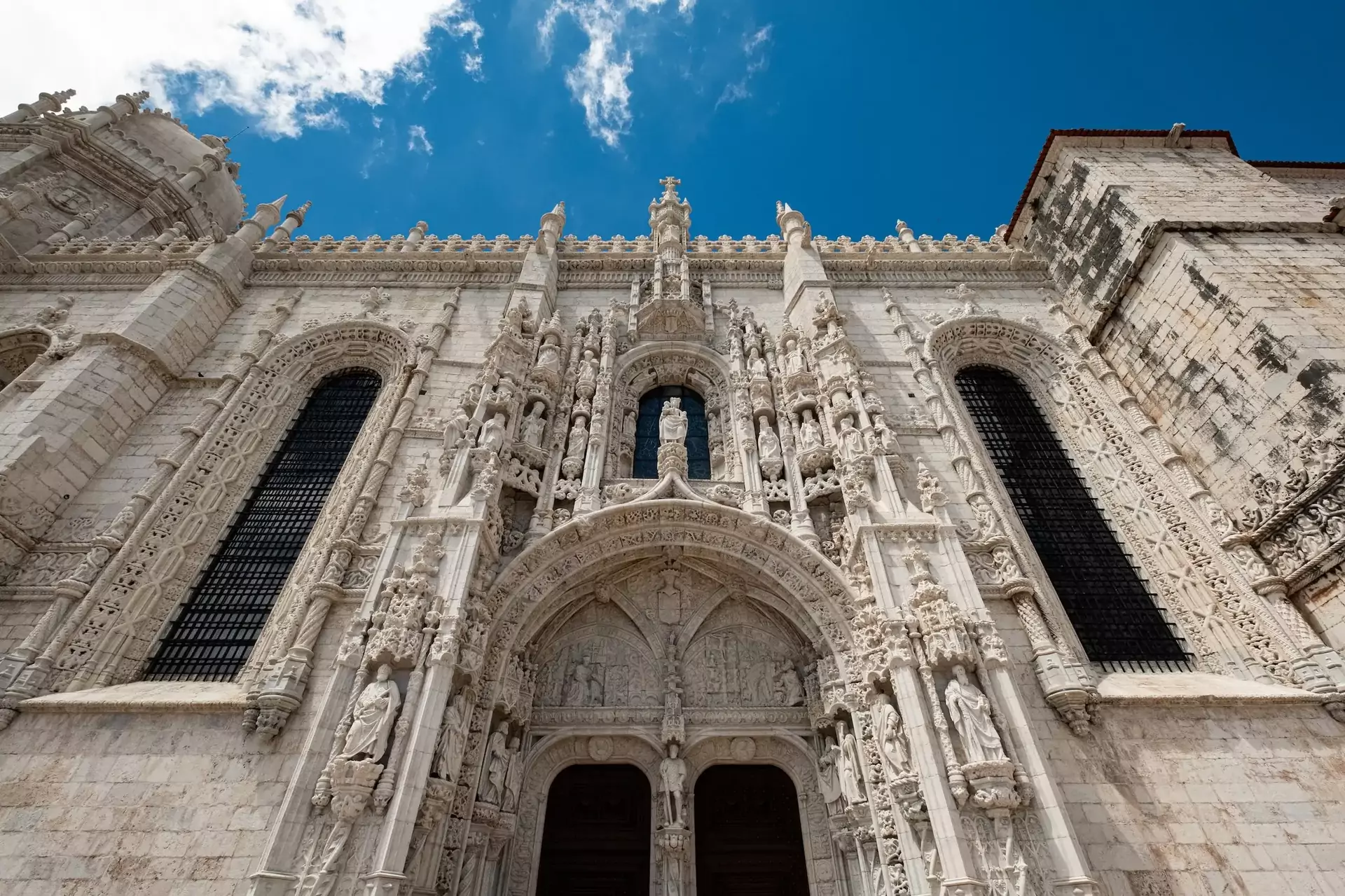
Constructed in the early 16th century, the Jerónimos Monastery celebrates Portugal's maritime discoveries with elaborate Manueline and Gothic architecture. The ornate façade dazzles with maritime symbols like ropes, sea monsters and shells, emphasizing Portugal’s seafaring legacy. This UNESCO World Heritage Site was originally a monastery for Hieronymite monks and served as a spiritual send-off point for sailors headed to distant lands.
The monastery's interiors are equally impressive, featuring vaulted ceilings, intricate stonework and azulejo tile panels telling biblical stories. The magnificent cloisters offer a serene space to wander amid beautifully carved arches and columns. Notable areas include the Church of Santa Maria de Belém, home to the tombs of Vasco da Gama and poet Luís de Camões, the chapter house and the picturesque refectory.
Many visitors enjoy guided tours or audio guides to appreciate the history and symbolism embedded throughout. Around the monastery lies the Jardim da Praça do Império, a charming garden showcasing trimmed hedges shaped like Portuguese municipal coats of arms, offering a peaceful spot after exploring the historic site.
Note: The monastery is incredibly popular, so long queues are common, especially in peak season. Booking skip-the-line tickets in advance is strongly recommended. The site is closed on Mondays and some holidays. Wear comfortable shoes as exploring the extensive grounds involves quite a bit of walking and be mindful of the respectful behavior expected in this religious setting.
Jerónimos Monastery is located in the Belém district of Lisbon, near the Tagus River. Visitors arriving internationally most often land at Lisbon Humberto Delgado Airport, about 15 km away, which offers taxi, shuttle and public transport options to Belém. From central Lisbon, public buses 727, 28, 729 and 714 connect directly to stops near the monastery, making it easily reachable without a car. For a more scenic arrival, consider traveling by tram or river cruise that stops in Belém.
Most visitors stay in central Lisbon or the Belém district where various accommodation options range from charming boutique hotels to mid‑range and luxury stays, all within easy reach of the monastery and other cultural sights.


Log in to add this place to a travel list and get a summary of all recommended items for your whole trip.
We calculate the average costs when travelling to destinations and compare those with the living costs at your home. With this you can get an estimate of how expensive or cheap the destination is for you.
To customise this, you can set up which location and price level are used for the calculations in your account settings.
The exchange rate price factor shows how expensive or cheap a currency currently is compared to its historical average. It's a quick way to see if a country is currently more or less affordable due to exchange rate changes.
