








Was this page helpful?

| Opening hours: |
|
||||||
|---|---|---|---|---|---|---|---|
| Public website: | cultura.comune.fi.it |
| Power Grid: |
230 V, 50 Hz Plug: Type C , Type F
Type C:
  Read about power adapters |
|---|---|
| Currency: |
Euro (EUR) £1 ≈ €1.19 |
| Cashless info: |
Rating 5/5
Cashless payments are widely accepted in Italy, particularly in cities. While larger establishments and chains are fully cashless, smaller shops may still prefer cash.
Save with a travel credit card |
| eSIM providers: |
Best value: Saily Flexibility: Airalo Read our in-depth comparison |
| Tipping: | Tipping is customary in Italy, especially in restaurants where 10-15% is typical. Tipping for taxi drivers is usually rounded up or 5-10%. Small tips for hotel staff are also appreciated. |
|---|---|
| Public drinking: | Public drinking is allowed in Italy, especially in public squares and during festivals. In some regions, it is illegal to drink alcohol in certain areas like public transport or near schools. |
| Public smoking: | Smoking is banned in indoor public spaces and on public transport. Designated smoking areas are available outside. |
| Ferragosto (August) |
Many businesses close, and Italians take holidays. It’s very busy in tourist areas. |
|---|---|
| Christmas (December) |
Christmas markets and festivities are popular, expect higher prices and crowded attractions. |
| La Befana (January) |
Celebrated on January 6, the Epiphany is a public holiday with festive events, and some businesses close. |
| Emergency contact: | Emergency Number: 112 (Police, Fire, Ambulance) |
|---|---|
| Taxi apps: | Uber, Free Now, ItTaxi |
| Other: | Italy's tourist infrastructure is well-developed, but some rural or historical areas may require extra planning for accessibility. |
The best times to travel section shows how the months compare for a visit, so you can find the time of year that fits what you want to do.
Background colours of the months:
The colour shows the typical temperature: yellow (hot), green (mild) and blue (cold). How strong the colour is shows the travel season: full colour means high season, soft colour means shoulder season and soft-striped means off season.
Weather symbols:
Each month has one symbol showing what the weather is typically like, such as hot and sunny, freezing or a rainy or snowy season. Use them to quickly spot months that match the weather you want, or to avoid the ones that don't.
Crowdedness:
The people icon shows how busy the place usually is. The more people, the more crowded it gets.
Additional notes:
The grey info boxes point out special things worth knowing, like recurring weather issues or seasonal events.
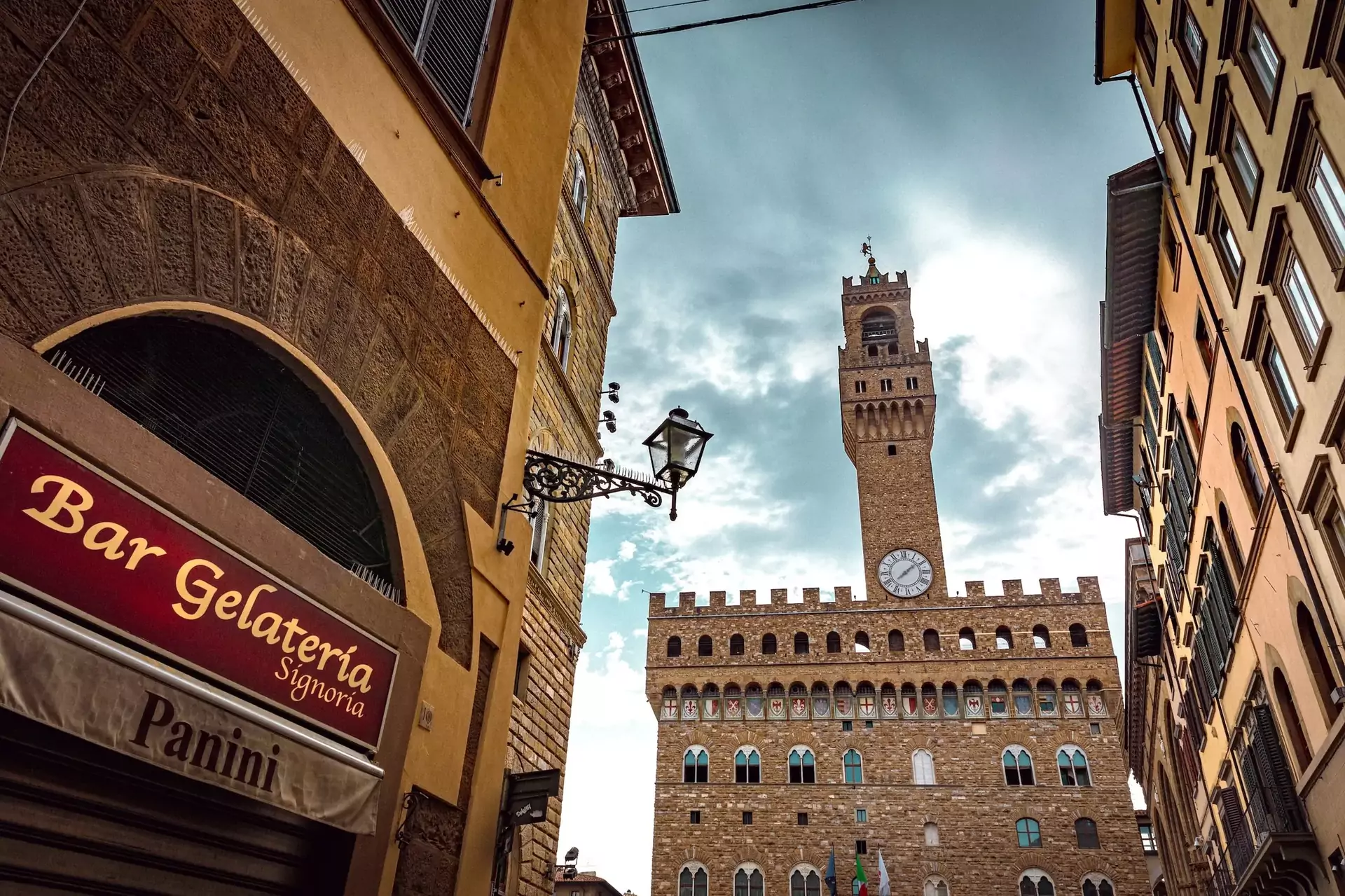
Palazzo Vecchio stands as a testament to Florence’s political history and Renaissance grandeur. Originally built at the end of the 13th century as a city hall, it later became the residence of the powerful Medici family, complete with lavish frescoes by Giorgio Vasari and other Renaissance masters.
The palace features the vast Salone dei Cinquecento, adorned with monumental frescoes depicting Medici victories and Florentine power. Visitors can explore decorated private chambers, the Hall of Lilies and climb the Torre di Arnolfo for panoramic city views.
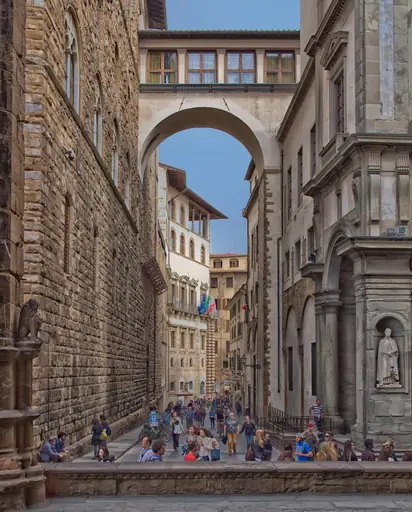
An intriguing highlight is the Secret Passages tour, which uncovers hidden staircases and tunnels used by the Medici to move secretly within the palace. The palace continues to serve as Florence’s town hall, blending its civic role with its museum function.
Be mindful that the palace can get busy during peak seasons and the tower climb involves steep stairs that might not suit those with mobility issues. Booking tickets and tours in advance is recommended to avoid long lines.
Palazzo Vecchio is located in the heart of Florence and is within walking distance from the Santa Maria Novella train station and central bus stops. Visitors arriving by plane at Florence Airport Peretola can take taxis or shuttle services into the city center easily.
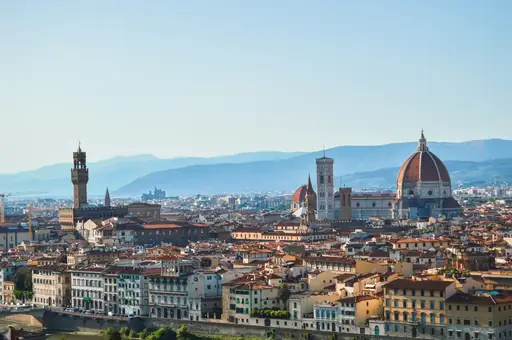
Florence’s historic center around Piazza della Signoria offers a variety of accommodation options, from luxury hotels to charming guesthouses, perfect for easy access to Palazzo Vecchio and the city’s Renaissance wonders.
Log in to add this place to a travel list and get a summary of all recommended items for your whole trip.
We calculate the average costs when travelling to destinations and compare those with the living costs at your home. With this you can get an estimate of how expensive or cheap the destination is for you.
To customise this, you can set up which location and price level are used for the calculations in your account settings.
The exchange rate price factor shows how expensive or cheap a currency currently is compared to its historical average. It's a quick way to see if a country is currently more or less affordable due to exchange rate changes.
