








Was this page helpful?

| Opening hours: |
|
||
|---|---|---|---|
| Public website: | colosseo.it |
| Power Grid: |
230 V, 50 Hz Plug: Type C , Type F
Type C:
  Read about power adapters |
|---|---|
| Currency: |
Euro (EUR) £1 ≈ €1.19 |
| Cashless info: |
Rating 5/5
Cashless payments are widely accepted in Italy, particularly in cities. While larger establishments and chains are fully cashless, smaller shops may still prefer cash.
Save with a travel credit card |
| eSIM providers: |
Best value: Saily Flexibility: Airalo Read our in-depth comparison |
| Tipping: | Tipping is customary in Italy, especially in restaurants where 10-15% is typical. Tipping for taxi drivers is usually rounded up or 5-10%. Small tips for hotel staff are also appreciated. |
|---|---|
| Public drinking: | Public drinking is allowed in Italy, especially in public squares and during festivals. In some regions, it is illegal to drink alcohol in certain areas like public transport or near schools. |
| Public smoking: | Smoking is banned in indoor public spaces and on public transport. Designated smoking areas are available outside. |
| Ferragosto (August) |
Many businesses close, and Italians take holidays. It’s very busy in tourist areas. |
|---|---|
| Christmas (December) |
Christmas markets and festivities are popular, expect higher prices and crowded attractions. |
| La Befana (January) |
Celebrated on January 6, the Epiphany is a public holiday with festive events, and some businesses close. |
| Emergency contact: | Emergency Number: 112 (Police, Fire, Ambulance) |
|---|---|
| Taxi apps: | Uber, Free Now, ItTaxi |
| Other: | Italy's tourist infrastructure is well-developed, but some rural or historical areas may require extra planning for accessibility. |
The best times to travel section shows how the months compare for a visit, so you can find the time of year that fits what you want to do.
Background colours of the months:
The colour shows the typical temperature: yellow (hot), green (mild) and blue (cold). How strong the colour is shows the travel season: full colour means high season, soft colour means shoulder season and soft-striped means off season.
Weather symbols:
Each month has one symbol showing what the weather is typically like, such as hot and sunny, freezing or a rainy or snowy season. Use them to quickly spot months that match the weather you want, or to avoid the ones that don't.
Crowdedness:
The people icon shows how busy the place usually is. The more people, the more crowded it gets.
Additional notes:
The grey info boxes point out special things worth knowing, like recurring weather issues or seasonal events.
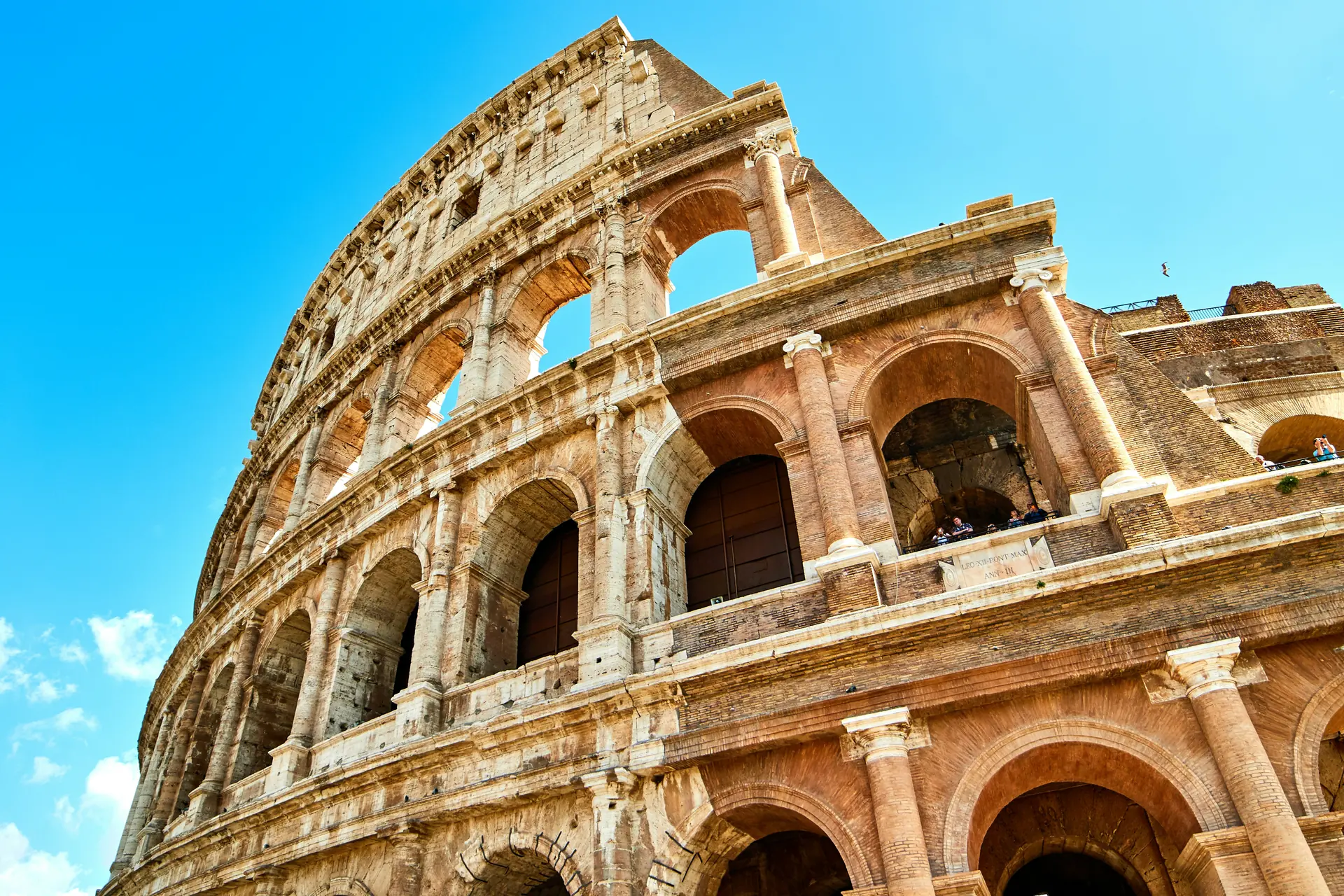
Rome stands as a living museum where ancient history and modern life overlap. The Colosseum rises at the heart of this city, drawing millions who seek to understand its past. Built nearly two thousand years ago it once held gladiatorial contests and public spectacles. Today visitors walk through its arches and imagine the roar of crowds long gone. The structure’s design shows advanced engineering skills that still impress engineers today.
Surrounding areas include museums and cafes where travelers can rest after exploring. Guides explain how the arena worked with underground tunnels and lifts that moved animals and performers above ground. Some sections remain under restoration while others stay open for public access. Walking around offers a chance to study stone carvings and learn about daily life in ancient Rome.
Nearby landmarks such as the Roman Forum and Palatine Hill provide extra context about how people lived work and governed centuries ago. Paths connect these sites allowing easy movement between ruins without long walks. Local guides share stories that bring each stone to life making facts feel closer to reality. Many visitors choose early morning visits to avoid crowds and enjoy quieter moments.
Rome’s food scene adds another layer to any trip. Simple trattorias serve pasta dishes that have changed little over generations. Coffee breaks happen at historic squares where locals gather. The city’s rhythm feels steady yet welcoming for those who take time to observe daily routines. Whether exploring ancient walls or tasting local meals Rome invites curiosity and respect for its layered past.
The Colosseum in Rome is accessible via several transportation methods. The nearest metro station is *Colosseo* on Line B, which connects to Rome’s central Termini Station. Bus lines 85 and 64 also stop nearby, offering routes across the city. For rail travelers, Roma Termini (Rome’s main train station) provides regional and high-speed services, with a 20-minute walk or short taxi ride to the Colosseum. Taxis are readily available from major transit hubs. Visitors may use the Roma Pass for discounted access to public transport and attractions. The site is centrally located within Rome’s historic center, reachable by walking from landmarks like the Roman Forum (5 minutes) or Piazza Venezia (10 minutes).
Near the Colosseum, Rome offers a spectrum of lodging that caters to every budget and taste. Boutique guesthouses line the cobblestone streets, boasting intimate rooms with historic décor and personalized service; prices typically range from €120 (£101.09) to €200 (£168.48) per night. Mid‑range hotels provide modern amenities such as free Wi‑Fi, breakfast buffets and rooftop terraces overlooking ancient ruins, usually costing between €150 (£126.36) and €250 (£210.60). For travelers seeking luxury, upscale properties feature opulent suites, spa facilities and Michelin‑starred dining, with rates starting at €300 (£252.72) and climbing to from €600 (£505.44). Many accommodations emphasize Roman heritage, offering themed rooms or guided tours of nearby archaeological sites, ensuring a stay that feels as timeless as the Colosseum itself.
Log in to add this place to a travel list and get a summary of all recommended items for your whole trip.
We calculate the average costs when travelling to destinations and compare those with the living costs at your home. With this you can get an estimate of how expensive or cheap the destination is for you.
To customise this, you can set up which location and price level are used for the calculations in your account settings.
The exchange rate price factor shows how expensive or cheap a currency currently is compared to its historical average. It's a quick way to see if a country is currently more or less affordable due to exchange rate changes.
