








Was this page helpful?

| Opening hours: |
|
||
|---|---|---|---|
| Public website: | www.milanocastello.it |
| Power Grid: |
230 V, 50 Hz Plug: Type C , Type F
Type C:
  Read about power adapters |
|---|---|
| Currency: |
Euro (EUR) £1 ≈ €1.19 |
| Cashless info: |
Rating 5/5
Cashless payments are widely accepted in Italy, particularly in cities. While larger establishments and chains are fully cashless, smaller shops may still prefer cash.
Save with a travel credit card |
| eSIM providers: |
Best value: Saily Flexibility: Airalo Read our in-depth comparison |
| Tipping: | Tipping is customary in Italy, especially in restaurants where 10-15% is typical. Tipping for taxi drivers is usually rounded up or 5-10%. Small tips for hotel staff are also appreciated. |
|---|---|
| Public drinking: | Public drinking is allowed in Italy, especially in public squares and during festivals. In some regions, it is illegal to drink alcohol in certain areas like public transport or near schools. |
| Public smoking: | Smoking is banned in indoor public spaces and on public transport. Designated smoking areas are available outside. |
| Ferragosto (August) |
Many businesses close, and Italians take holidays. It’s very busy in tourist areas. |
|---|---|
| Christmas (December) |
Christmas markets and festivities are popular, expect higher prices and crowded attractions. |
| La Befana (January) |
Celebrated on January 6, the Epiphany is a public holiday with festive events, and some businesses close. |
| Emergency contact: | Emergency Number: 112 (Police, Fire, Ambulance) |
|---|---|
| Taxi apps: | Uber, Free Now, ItTaxi |
| Other: | Italy's tourist infrastructure is well-developed, but some rural or historical areas may require extra planning for accessibility. |
The best times to travel section shows how the months compare for a visit, so you can find the time of year that fits what you want to do.
Background colours of the months:
The colour shows the typical temperature: yellow (hot), green (mild) and blue (cold). How strong the colour is shows the travel season: full colour means high season, soft colour means shoulder season and soft-striped means off season.
Weather symbols:
Each month has one symbol showing what the weather is typically like, such as hot and sunny, freezing or a rainy or snowy season. Use them to quickly spot months that match the weather you want, or to avoid the ones that don't.
Crowdedness:
The people icon shows how busy the place usually is. The more people, the more crowded it gets.
Additional notes:
The grey info boxes point out special things worth knowing, like recurring weather issues or seasonal events.
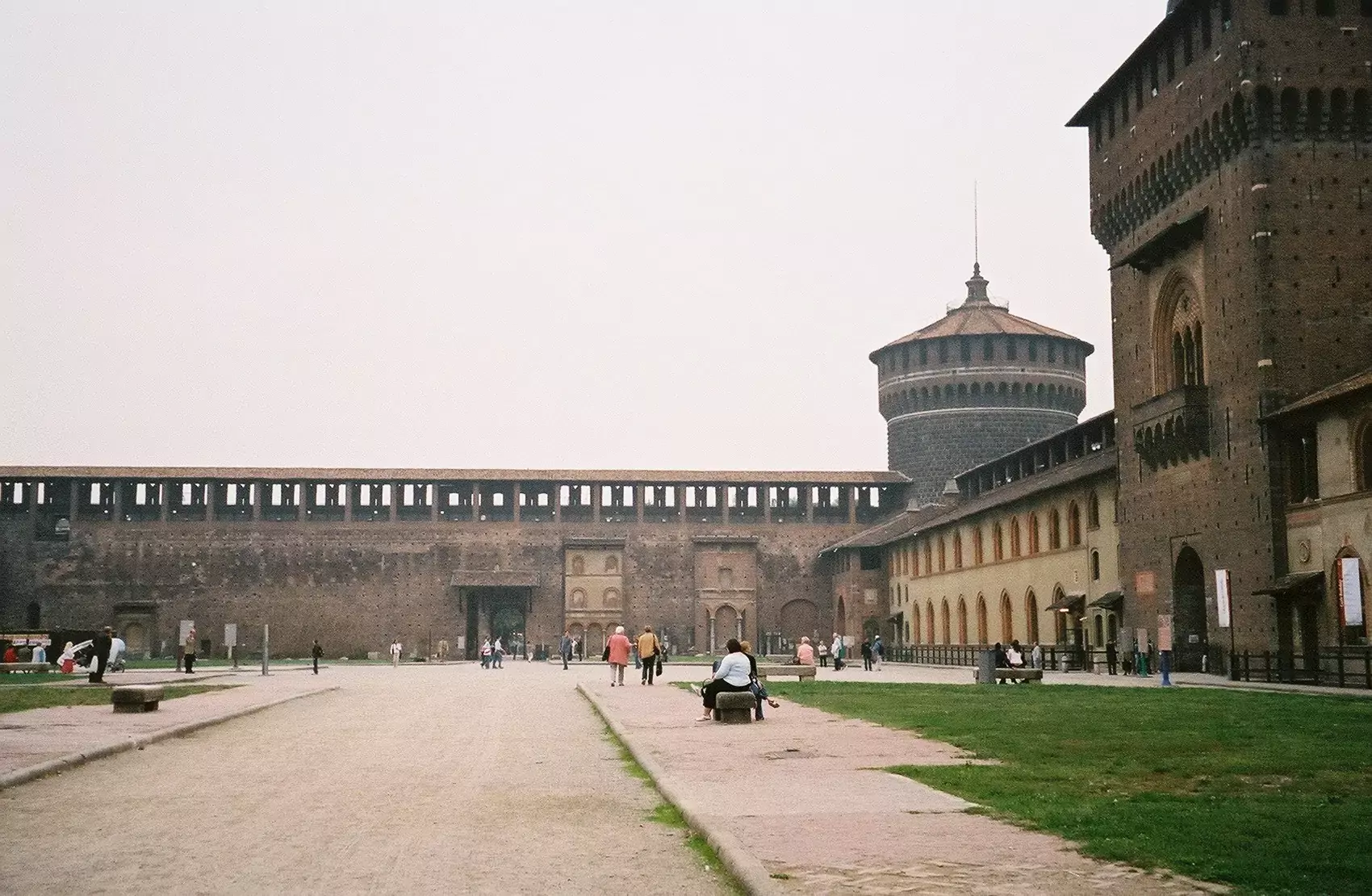
Sforza Castle, originally built in the 15th century by Francesco Sforza, Duke of Milan, is one of the largest fortresses in Europe and a symbol of Milanese power and culture. It was rebuilt multiple times and transformed into a cultural complex housing several museums and galleries.
The castle complex features extensive courtyards, bastions and towers, including the iconic Torre del Filarete. Inside, it hosts rich collections of art, including Renaissance masterpieces like Michelangelo’s last sculpture, the Rondanini Pietà and Leonardo da Vinci’s famous Sala delle Asse ceiling frescoes.
The surrounding Parco Sempione offers a beautiful green space perfect for walks or picnics, enhancing the visitor experience with nature alongside history. Visitors should be prepared for large crowds during peak seasons and consider early arrival to avoid long lines.
Some areas of the castle involve climbing stairs and uneven surfaces, which can be challenging for people with mobility issues. Ticket prices are reasonable and guided tours provide rich historical context to fully appreciate the site.
The castle is located in central Milan, easily reachable from Milan Malpensa or Linate airports via taxi, bus or train to the city center. Accessible by Milan Metro lines M1 and M2 at the Cairoli or Cadorna stations. Numerous tram and bus lines also stop nearby.
Central Milan offers a wide variety of accommodations close to Sforza Castle, ranging from luxury hotels to cozy boutique inns, making it easy to explore the castle and nearby attractions on foot.
Log in to add this place to a travel list and get a summary of all recommended items for your whole trip.
We calculate the average costs when travelling to destinations and compare those with the living costs at your home. With this you can get an estimate of how expensive or cheap the destination is for you.
To customise this, you can set up which location and price level are used for the calculations in your account settings.
The exchange rate price factor shows how expensive or cheap a currency currently is compared to its historical average. It's a quick way to see if a country is currently more or less affordable due to exchange rate changes.
