








Was this page helpful?

| Public website: | www.hundertwasserhaus.info |
|---|
| Power Grid: |
230 V, 50 Hz Plug: Type C , Type F
Type C:
  Read about power adapters |
|---|---|
| Currency: |
Euro (EUR) £1 ≈ €1.19 |
| Cashless info: |
Rating 5/5
Austria is a highly cashless society, particularly in urban areas. Credit and debit cards are widely accepted, and mobile payment services such as Apple Pay and Google Pay are increasingly popular.
Save with a travel credit card |
| eSIM providers: |
Best value: Saily Flexibility: Airalo Read our in-depth comparison |
| Tipping: | Tipping is customary in Austria. In restaurants, it is common to leave a 5-10% tip, though rounding up to the nearest euro is also acceptable. Taxi drivers typically expect a small tip, around 10% of the fare. Hotel staff and tour guides appreciate small gratuities. |
|---|---|
| Public drinking: | Public drinking is generally permitted in Austria, though some areas may have restrictions. Drinking in public spaces such as parks and squares is socially accepted but may be subject to local laws in specific municipalities. |
| Public smoking: | Smoking is prohibited in most indoor public spaces, including restaurants, bars, and public transport. Designated smoking areas are available in many locations. |
| National Day (October) |
A national holiday with many closures, celebrations, and increased domestic tourism. |
|---|---|
| Christmas (December) |
Festive celebrations across the country, with crowded tourist spots and higher prices for accommodation. |
| Austrian Wine Harvest Festival (September) |
Celebration of local wines, especially in wine-producing regions, with festivals and events. |
| Emergency contact: | Emergency Number: 112 (Police, Fire, Ambulance) |
|---|---|
| Taxi apps: | Bolt, Uber |
| Other: | Austria is known for its rich cultural heritage, with historical sites, museums, and nature reserves. Its well-developed infrastructure, particularly in transport, makes it a comfortable destination for travellers. |
The best times to travel section shows how the months compare for a visit, so you can find the time of year that fits what you want to do.
Background colours of the months:
The colour shows the typical temperature: yellow (hot), green (mild) and blue (cold). How strong the colour is shows the travel season: full colour means high season, soft colour means shoulder season and soft-striped means off season.
Weather symbols:
Each month has one symbol showing what the weather is typically like, such as hot and sunny, freezing or a rainy or snowy season. Use them to quickly spot months that match the weather you want, or to avoid the ones that don't.
Crowdedness:
The people icon shows how busy the place usually is. The more people, the more crowded it gets.
Additional notes:
The grey info boxes point out special things worth knowing, like recurring weather issues or seasonal events.
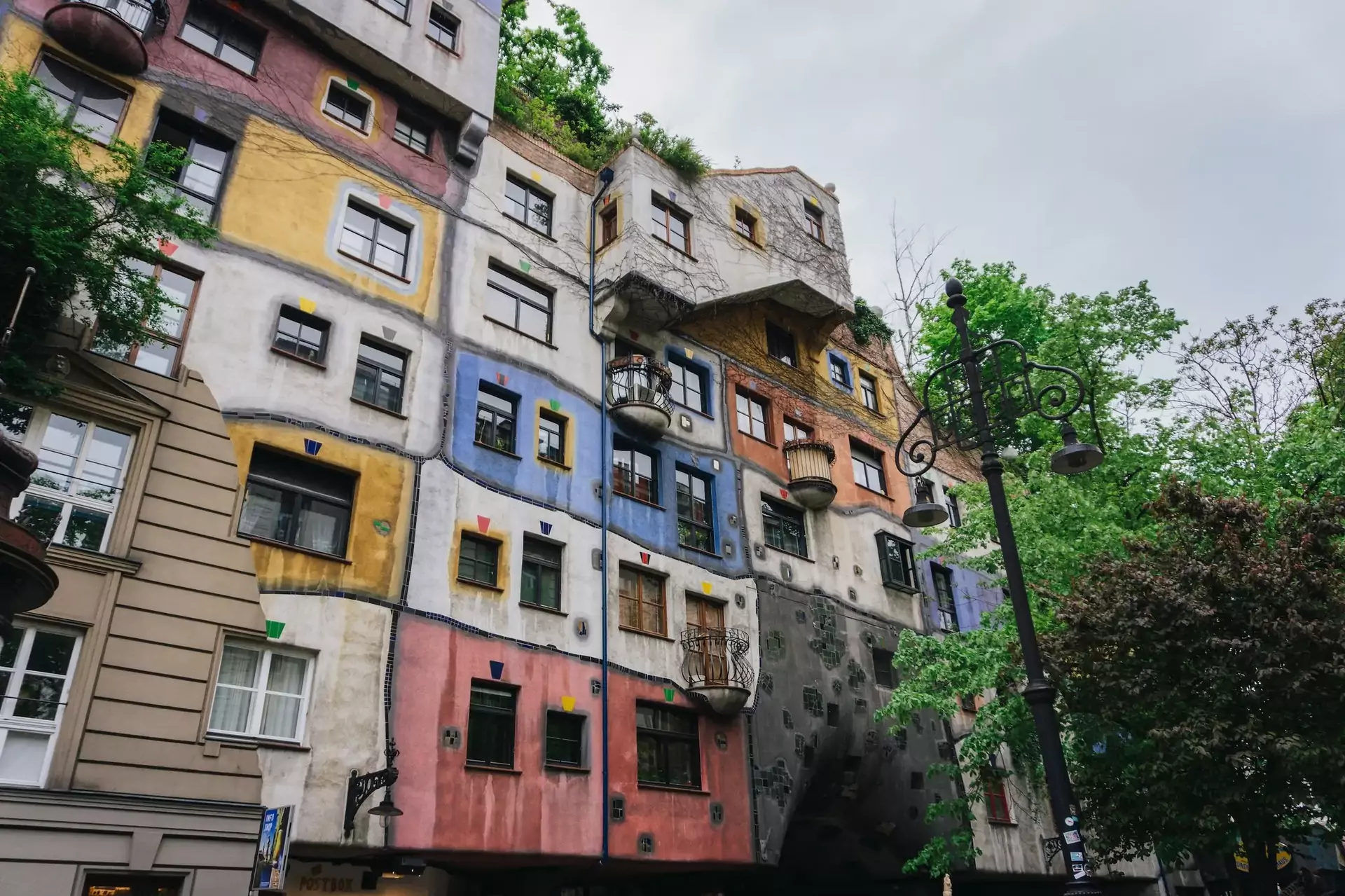
Hundertwasserhaus stands as one of Vienna's most iconic landmarks, renowned for its unconventional and imaginative design by the Austrian artist Friedensreich Hundertwasser. Completed between 1983 and 1985, the building redefines urban living with its organic shapes, irregular lines and bold use of colors that break away from traditional architectural norms.
The building embraces Hundertwasser's philosophy of harmony between humans and nature, featuring rooftop gardens, uneven floors and trees integrated into the apartments themselves, often referred to as "tree tenants." This artistic vision turned a simple residential building into a celebrated work of art representing creativity and environmental consciousness.
Despite its charm, visitors should be mindful that the Hundertwasserhaus is a functioning residential building, meaning some areas are private and the constant flow of tourists can intrude on residents' privacy. The building is somewhat tucked within a dense urban setting, which limits the ability to fully appreciate it from afar. Additionally, some critics mention that the maintenance of the exterior could be improved to keep the vibrant facade in peak condition.
Whether admired for its artistic boldness or explored as a photo opportunity, the Hundertwasserhaus offers a unique glimpse into Vienna’s cultural and creative spirit, making it a must-see for those interested in art and architecture.
The Hundertwasserhaus is located in the 3rd district of Vienna. From Vienna International Airport, visitors can take a direct train or City Airport Train (CAT) to Wien Mitte station, then use tram or metro services to reach the district. The building is easily accessible via tram lines 1 and 71 or bus 4A, which stop nearby, making it convenient to reach from central Vienna.
Vienna features a broad range of accommodations from budget hostels to luxury hotels, especially around the city center and the 3rd district where Hundertwasserhaus is located. Staying centrally is ideal for exploring Vienna's artistic sites comfortably.
Log in to add this place to a travel list and get a summary of all recommended items for your whole trip.
We calculate the average costs when travelling to destinations and compare those with the living costs at your home. With this you can get an estimate of how expensive or cheap the destination is for you.
To customise this, you can set up which location and price level are used for the calculations in your account settings.
The exchange rate price factor shows how expensive or cheap a currency currently is compared to its historical average. It's a quick way to see if a country is currently more or less affordable due to exchange rate changes.
