










Was this page helpful?

| Opening hours: |
|
||
|---|---|---|---|
| Public website: | yerebatan.com |
| Power Grid: |
230 V, 50 Hz Plug: Type C , Type F
Type C:
  Read about power adapters |
|---|---|
| Currency: |
Turkish Lira (TRY) £1 ≈ TRY 66.29 |
| Cashless info: |
Rating 4/5
Cashless payment is common in urban areas, but smaller vendors in rural regions may only accept cash.
Save with a travel credit card |
| eSIM providers: |
Best value: Saily Flexibility: Airalo Read our in-depth comparison |
| Tipping: | Tipping is customary but not mandatory in Turkey. In restaurants, leaving 5-10% is typical. Tips for taxi drivers, hotel staff, and guides are also appreciated. |
|---|---|
| Public drinking: | Public drinking is not widely accepted, though it is allowed in some urban areas and tourist zones. |
| Public smoking: | Smoking is banned in indoor public areas and transport, with designated outdoor smoking zones available. |
| Republic Day (October) |
Expect parades and national celebrations. |
|---|---|
| Eid al-Fitr (Varies) |
Closures and family gatherings are common. |
| Eid al-Adha (Varies) |
Similar closures and festive activities across the country. |
| Emergency contact: | Emergency Number: 112 (Police, Fire, Ambulance) |
|---|---|
| Taxi apps: | BiTaksi, Uber |
| Other: | Turkey offers a rich blend of history, culture, and natural beauty. Bargaining is common in markets, and modest dress is appreciated in religious sites. |
The best times to travel section shows how the months compare for a visit, so you can find the time of year that fits what you want to do.
Background colours of the months:
The colour shows the typical temperature: yellow (hot), green (mild) and blue (cold). How strong the colour is shows the travel season: full colour means high season, soft colour means shoulder season and soft-striped means off season.
Weather symbols:
Each month has one symbol showing what the weather is typically like, such as hot and sunny, freezing or a rainy or snowy season. Use them to quickly spot months that match the weather you want, or to avoid the ones that don't.
Crowdedness:
The people icon shows how busy the place usually is. The more people, the more crowded it gets.
Additional notes:
The grey info boxes point out special things worth knowing, like recurring weather issues or seasonal events.
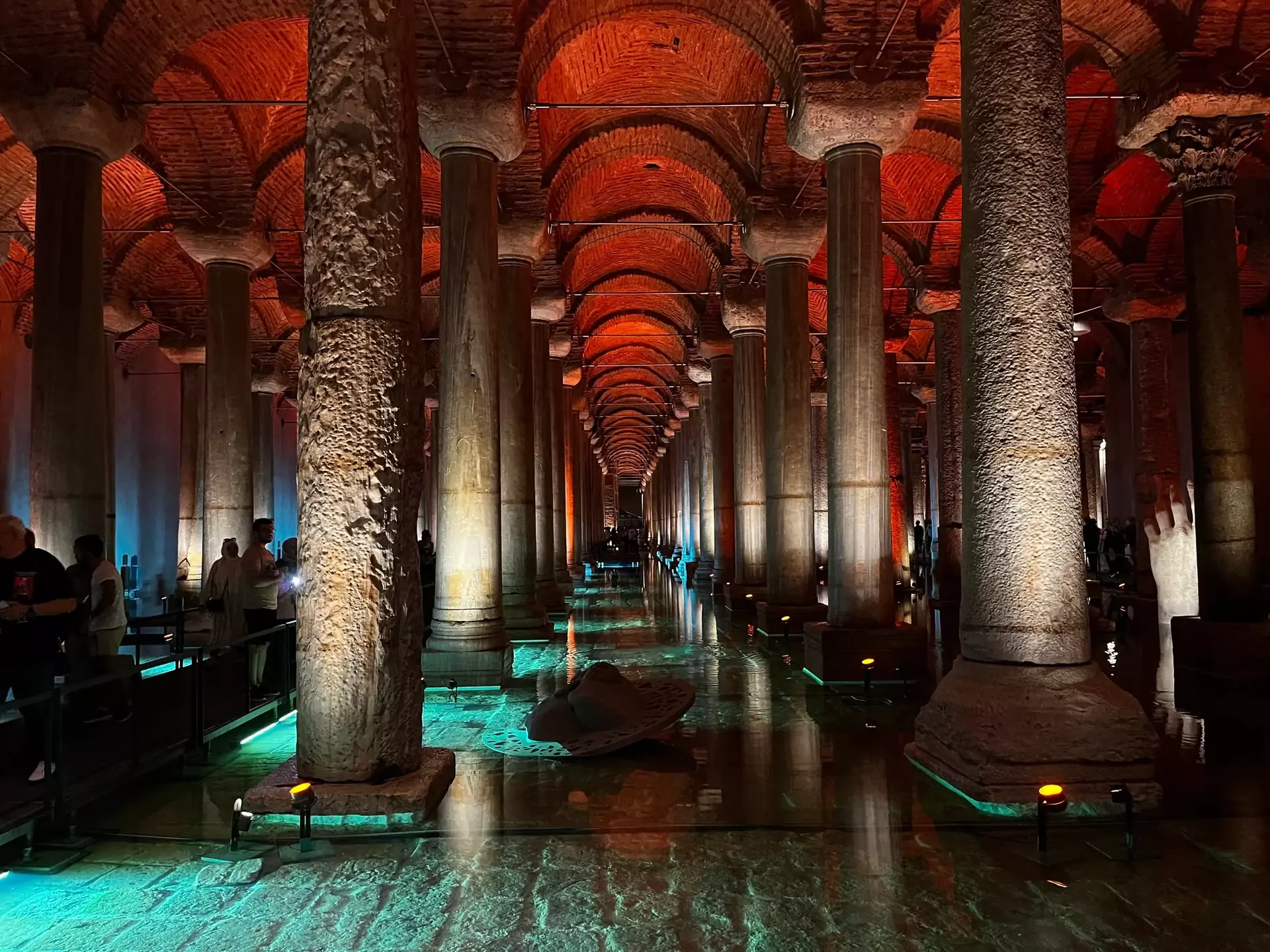
The Basilica Cistern, also called the Yerebatan Sarnıcı or "Sunken Palace," was constructed in the 6th century under Emperor Justinian I to provide water for the Great Palace of Constantinople. It spans approximately 138 by 64 meters and holds about 80,000 cubic meters of water, supported by 336 marble columns, many repurposed from earlier Roman buildings.
This masterpiece of Byzantine engineering was rediscovered in the 16th century and has been restored for public visits. Its dimly lit paths, mysterious reflections and tranquil waters create an otherworldly ambiance that captures the imagination. Iconic features include the two Medusa heads used as column bases and the evocative Weeping Column.
Visitors should wear comfortable, non-slip shoes as the floors can be damp and slippery and dress in layers due to the cool underground temperature. The cistern can get crowded, particularly near the Medusa heads, so visiting early or late is recommended.
The site occasionally hosts unique night concerts, blending history with live music in a magical setting, enhancing the visitor experience. Though not a large space, the cistern’s uniqueness and atmosphere make it a memorable stop in Istanbul.
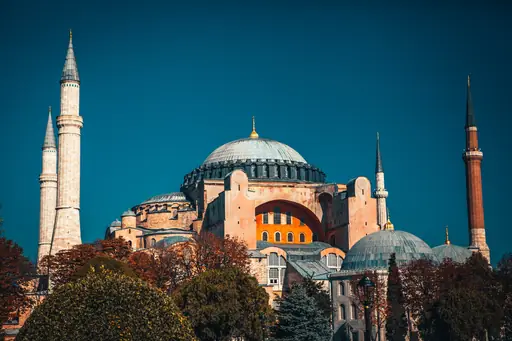
The Basilica Cistern is located in Istanbul’s Sultanahmet district near major landmarks like Hagia Sophia and the Blue Mosque. Visitors typically arrive via Istanbul Airport and connect to the old city using taxi, tram or shuttle. The closest tram stop is Sultanahmet and the cistern is a short walk from there.
The Sultanahmet area, close to the Basilica Cistern, offers a wide array of accommodations from charming boutique hotels to mid-range and luxury options, perfect for exploring Istanbul’s historic sites on foot.
Log in to add this place to a travel list and get a summary of all recommended items for your whole trip.
We calculate the average costs when travelling to destinations and compare those with the living costs at your home. With this you can get an estimate of how expensive or cheap the destination is for you.
To customise this, you can set up which location and price level are used for the calculations in your account settings.
The exchange rate price factor shows how expensive or cheap a currency currently is compared to its historical average. It's a quick way to see if a country is currently more or less affordable due to exchange rate changes.
