Asia › Turkey › Istanbul › Climate

Istanbul climate data

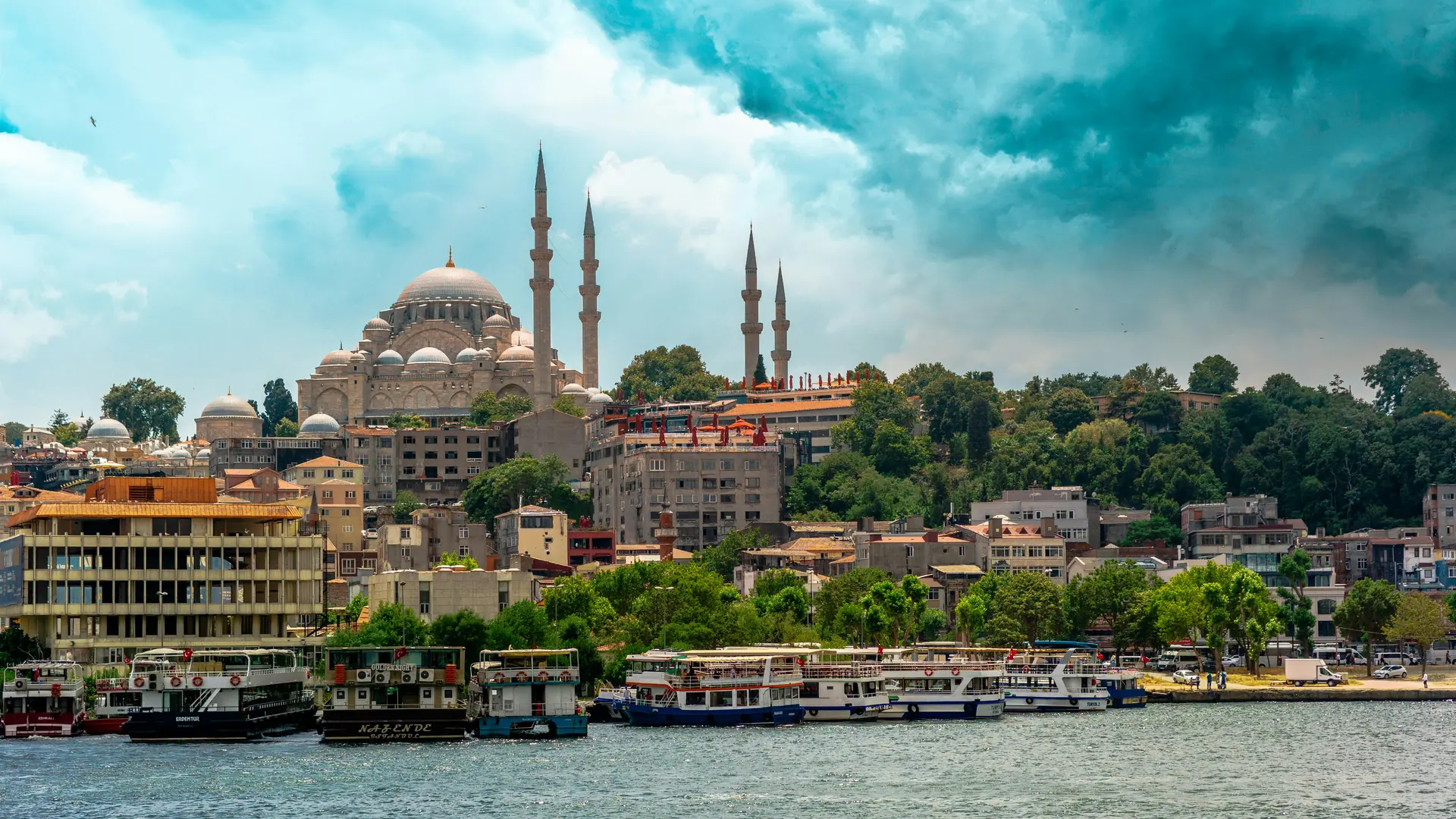
Istanbul features a dynamic climate blending Mediterranean, oceanic, and subtropical influences. The city experiences hot, humid summers and cool, wet winters, with mild, pleasant springs and autumns in between. Seasonal shifts bring varying temperatures, rainfall, and sunshine, making Istanbul a year-round destination with distinct weather patterns for every traveller.

Best times to travel

The best times to travel section shows how the months compare for a visit, so you can find the time of year that fits what you want to do.

Background colours of the months:
The colour shows the typical temperature: yellow (hot), green (mild) and blue (cold). How strong the colour is shows the travel season: full colour means high season, soft colour means shoulder season and soft-striped means off season.

Weather symbols:
Each month has one symbol showing what the weather is typically like, such as hot and sunny, freezing or a rainy or snowy season. Use them to quickly spot months that match the weather you want, or to avoid the ones that don't.

Crowdedness:
The people icon shows how busy the place usually is. The more people, the more crowded it gets.

Additional notes:
The grey info boxes point out special things worth knowing, like recurring weather issues or seasonal events.

for Istanbul, Turkey
🌥️
Jan
🌥️
Feb
🌤️
Mar
☀️
Apr
☀️
May
☀️
Jun
☀️
Jul
☀️
Aug
☀️
Sep
🌤️
Oct
🌤️
Nov
🌤️
Dec
High season: April - July, Sep. - Oct.
Shoulder season: March, Aug.
Crowdedness: 9 (Very crowded)
Tap on a month for more info Hover over a month for more info
Istanbul Tulip Festival runs April, with millions of tulips blooming in the city's parks
Ramadan: daytime food options limited, some restaurants closed until sunset, major sights stay open
Kurban Bayramı (Eid al-Adha): many shops closed for several days, transport and hotels heavily booked as locals travel

The climate of Istanbul

Istanbul’s climate is classified as a mix of Mediterranean, oceanic, and humid subtropical, resulting in notable seasonal contrasts. The city enjoys four distinct seasons: hot, humid summers; cool, wet winters; and mild, comfortable springs and autumns. Average annual temperatures hover around 14–15°C, with summer highs reaching 28–30°C in July and August, and winter lows dipping to 5–6°C in January and February. While extreme temperatures are rare, humidity levels – often above 70% – can make both heat and cold feel more intense.

Rainfall is unevenly distributed throughout the year, peaking in late autumn and winter (especially November and December, with over 80–100 mm monthly) and dropping to its lowest in summer, particularly July and August. Snowfall occurs occasionally, mostly between December and March, but heavy accumulations are rare and short-lived. Istanbul receives about 2,200 hours of sunshine annually, with long, bright days in summer (up to 12 hours of sunshine) and short, cloudier days in winter. Winds are a constant feature, averaging 17 km/h, often providing a refreshing breeze, especially along the Bosphorus. Microclimates exist within the city, with coastal districts generally milder and more humid than inland areas.

Overall, Istanbul’s climate offers a blend of moderate temperatures, occasional rain or snow, and a healthy dose of sunshine, making it suitable for a range of activities year-round. However, travellers should be prepared for sudden weather changes and pack accordingly, especially in transitional seasons.

Average climate data for Istanbul, Turkey
Month Jan Feb Mar Apr May Jun Jul Aug Sep Oct Nov Dec Year
Average maximum temperature (°C) 9 10 12 15 21 25 28 28 24 19 15 11 28
Average minimum temperature (°C) 5 6 8 10 15 20 22 23 20 16 13 8 5
Average precipitation (mm) 49 38 39 29 38 32 13 11 26 43 33 51 401
Average rainfall days (days) 13 12 14 13 12 10 6 4 10 12 11 14 131
Average snowfall (mm) 24 15 3 0 0 0 0 0 0 0 0 7 49
Average snowfall days (days) 4 2 1 0 0 0 0 0 0 0 0 1 8
Average relative humidity (%) 78 79 75 70 69 68 67 67 69 73 72 74 72
Average wind speed (km/h) 19 19 17 15 14 15 17 21 18 18 17 19 17
Average water temperature (°C) 8 8 8 10 16 21 25 25 23 18 14 11 16
Average daily daylight hours (h) 9 10 12 13 14 15 14 13 12 11 9 9 12
Average daily sunshine hours (h) 5 6 7 8 10 11 11 9 8 7 5 4 8
Average cloud coverage (%) 54 52 45 34 28 20 13 13 23 37 37 50 34
Average UV index 2 2 4 4 5 6 7 6 5 4 3 2 4

Travel info

  • Spring (March–May): Mild and blooming, with temperatures from 10°C to 20°C. Occasional showers – pack a light jacket and umbrella. Ideal for sightseeing and outdoor festivals, such as the Tulip Festival in April.
  • Summer (June–August): Hot and humid, 26°C to 30°C. Rain is rare, but humidity can make it feel warmer. Wear light clothing, stay hydrated, and use sun protection. Great for Bosphorus cruises and evening strolls.
  • Autumn (September–November): Cooler and comfortable, 14°C to 25°C. Rain increases from late October. Layer clothing for variable temperatures and carry an umbrella. Fewer crowds make it perfect for exploring historic sites.
  • Winter (December–February): Cool to cold, 5°C to 11°C, with frequent rain and occasional snow. Days are short and cloudy. Pack warm layers, waterproof outerwear, and sturdy shoes. Enjoy indoor attractions and festive city lights.
  • General Tips: Istanbul is windy year-round – bring a windproof jacket. Weather can change quickly in spring and autumn. Most attractions are open year-round, but hours may be shorter in winter.

The best time to visit Istanbul

The best time to visit Istanbul is during spring (April–June) and autumn (September–October), when temperatures are mild (16–25°C), rainfall is moderate, and the city’s parks and gardens are vibrant. These periods offer ideal conditions for sightseeing, outdoor activities, and cultural festivals, with fewer crowds compared to the summer peak.

The worst time to visit Istanbul

The least favourable time to visit is winter (December–February), when Istanbul is at its coldest and wettest. Temperatures often range from 5°C to 11°C, with frequent rain, occasional snow, and limited sunshine. While the city is quieter and accommodation prices drop, outdoor exploration can be less comfortable.

Frequently asked questions

What is the climate like in Istanbul?

Istanbul has a temperate climate with hot, humid summers and cool, wet winters. The city experiences all four seasons, with mild springs and autumns, and occasional snowfall in winter.

Does it snow in Istanbul?

Yes, snowfall occurs in Istanbul, mainly between December and March. Snow is usually light and short-lived, but some winters can bring heavier snow, especially in higher or inland areas.

What are the average temperatures in Istanbul?

Average temperatures range from 5–6°C in the coldest months (January–February) to 28–30°C in the warmest months (July–August). Spring and autumn offer milder temperatures between 16–25°C.

When is the rainiest season in Istanbul?

The rainiest period is from October to December, with November and December seeing the highest rainfall. Summer months are much drier, especially July and August.

Is Istanbul humid?

Yes, humidity is generally high year-round, often exceeding 70%. This can make summer heat feel more intense and winter cold feel sharper, so dress accordingly.

How many hours of sunshine does Istanbul get?

Istanbul enjoys about 2,200 hours of sunshine annually. Summers are sunniest, with up to 12 hours of sunshine per day, while winters are cloudier and have fewer daylight hours.

What should I pack for a trip to Istanbul?

Pack layers for changing temperatures, a waterproof jacket and umbrella for rain, and comfortable shoes for walking. In summer, bring light clothing and sun protection; in winter, pack warm, windproof layers.

Minimum and maximum temperatures in Istanbul

The warmest month, with the highest average maximum temperature, is July (27.9 °C). The month with the lowest average maximum temperature is January (8.6 °C). Overall, the average maximum temperature over the whole year is 18.1 °C.

The month with the highest average minimum temperature is August (23.3 °C). The coldest month, with the lowest average minimum temperature, is January (5.2 °C). Overall, the average minimum temperature over the whole year is 13.8 °C.

Water temperature in Istanbul

The month with the highest average water temperature is August (24.9 °C). The month with the lowest average water temperature is February (7.9 °C). Overall, the average water temperature over the whole year is 15.6 °C.

Rainfall amount in Istanbul

The wettest month, with the highest amount of precipitation, is December (51.4 mm). The driest month, with the least amount of precipitation, is August (11 mm). Over the whole year there are 401.1 mm of rainfall on average.

Rainfall days in Istanbul

The month with the most days of rain is March (14.4 days). The month with the fewest days of rain is August (3.7 days). Over the whole year there are 130.8 days of rain on average.

Snowfall amount in Istanbul

The month with the most snowfall is January (24.3 mm). The months with the least snowfall are April, May, June, July, August, September, October and November (0 mm). Over the whole year there are 49.4 mm of snowfall on average.

Snowfall days in Istanbul

The month with the most days of snowfall is January (3.8 days). The months with the fewest days of snowfall are April, May, August, September and November (0 days). Over the whole year there are 7.5 days of snowfall on average.

Relative humidity in Istanbul

The month with the highest average relative humidity is February (78.9 %). The month with the lowest average relative humidity is August (67.2 %). The overall average relative humidity over the whole year is 71.8 %.

Wind speed in Istanbul

The windiest month, with the highest average wind speed, is August (20.7 km/h). The calmest month, with the lowest average wind speed, is May (14 km/h). The overall average wind speed over the whole year is 17.4 km/h.

Cloud coverage in Istanbul

The month with the cloudiest skies, so the highest cloud coverage, is January (53.8 %). The month with the clearest skies, so the lowest cloud coverage, is July (12.6 %). Over the whole year there is an average cloud coverage of 33.8 %.

Daylight hours and sunshine hours in Istanbul

The month with the longest days, so the most daylight, is June (Average daylight: 15 h). The month with the shortest days, so the least daylight, is December (Average daylight: 9 h). Over the whole year there are 11.8 h of daylight per day on average.

The month with the most sunshine per day is July (Average sunshine: 11.2 h). The month with the least sunshine per day is December (Average sunshine: 4.2 h). Over the whole year there are 7.6 h of sunlight per day on average.

UV index in Istanbul

The month with the highest average UV index is July (UV index: 7). The months with the lowest average UV index are January, February and December (UV index: 2). Over the whole year the average UV index is 4.2.

Was this page helpful?
Feedback