











Was this page helpful?

| Power Grid: |
220 V, 50 Hz Plug: Type A , Type B
Type A:
  Read about power adapters |
|---|---|
| Currency: |
Thai Baht (THB) £1 ≈ THB 44.95 |
| Cashless info: |
Rating 5/5
Cashless payments are widely accepted in Thailand, especially in major cities. Mobile payments such as Line Pay, GrabPay, and Apple Pay are common.
Save with a travel credit card |
| eSIM providers: |
Best value: Saily Flexibility: Airalo Read our in-depth comparison |
| Tipping: | Tipping is not mandatory in Thailand, but it is appreciated. In restaurants, leaving 10% is common. Taxi fares are rounded up, and small tips for hotel staff are encouraged. |
|---|---|
| Public drinking: | Public drinking is generally not allowed in Thailand, though alcohol is available in licensed venues like bars and restaurants. Laws around drinking in public can be strictly enforced in some areas. |
| Public smoking: | Smoking is prohibited in many indoor public spaces, including shopping centres and restaurants, but designated smoking areas are common. |
| Songkran (13–15 April) |
Thai New Year celebrated with water fights |
|---|---|
| Father's Day (King Bhumibol Memorial Day) (5 December) |
Honours the late King Bhumibol, with ceremonies across the country |
| Emergency contact: | Emergency Numbers: 191 (Police), 1155 (Tourist Police), 1669 (Ambulance), 199 (Fire) |
|---|---|
| Taxi apps: | Grab, Bolt |
| Other: | Thailand is known for its vibrant culture, beautiful beaches, and rich history. Popular activities include visiting temples, experiencing the vibrant nightlife, and enjoying the country’s diverse cuisine. |
The best times to travel section shows how the months compare for a visit, so you can find the time of year that fits what you want to do.
Background colours of the months:
The colour shows the typical temperature: yellow (hot), green (mild) and blue (cold). How strong the colour is shows the travel season: full colour means high season, soft colour means shoulder season and soft-striped means off season.
Weather symbols:
Each month has one symbol showing what the weather is typically like, such as hot and sunny, freezing or a rainy or snowy season. Use them to quickly spot months that match the weather you want, or to avoid the ones that don't.
Crowdedness:
The people icon shows how busy the place usually is. The more people, the more crowded it gets.
Additional notes:
The grey info boxes point out special things worth knowing, like recurring weather issues or seasonal events.
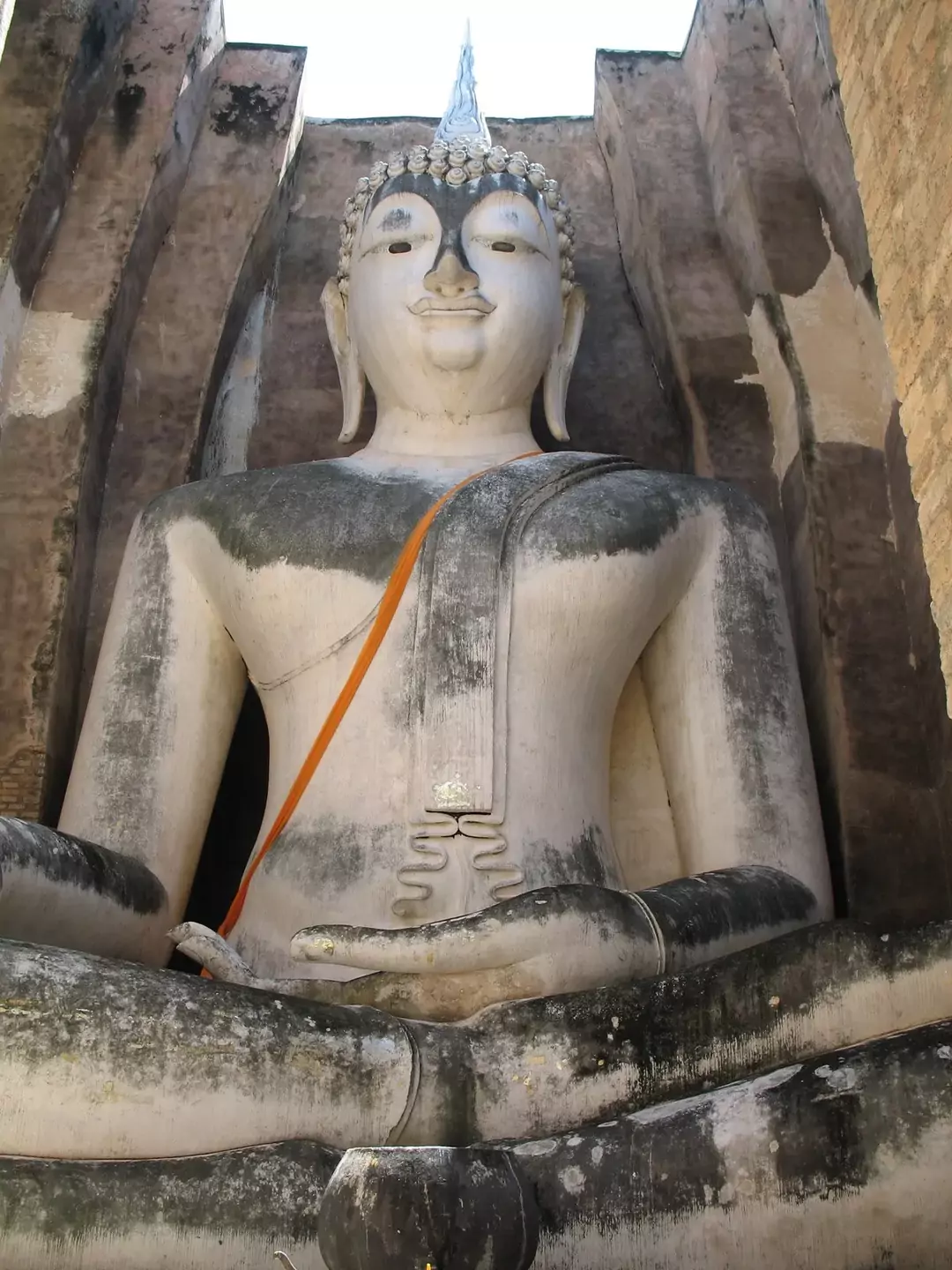
Sukhothai is a historic site in Thailand where ancient ruins tell stories of an early kingdom that shaped Thai culture. The area was once the heart of a powerful state around the 13th and 14th centuries. Today, visitors walk among stone walls and crumbling towers that mark the remains of temples and royal buildings. These structures show how people lived, prayed and organized their society long ago.
The most striking feature is the central zone with a large Buddha statue inside a circular wall. This space was likely used for community gatherings and religious ceremonies. Nearby ruins include smaller shrines and statues that hint at daily life in Sukhothai’s peak years. Many of these buildings are made from local materials like brick and laterite, showing how builders adapted to the environment.
Exploring Sukhothai feels like stepping into a museum without walls. Paths wind through open fields where locals still grow crops near ancient foundations. The site includes museums with artifacts such as pottery shards and old tools that explain daily routines from centuries ago. Guides often point out carvings on temple gates that depict myths or historical events important to the kingdom’s identity.
Visitors can spend a full day walking between ruins, learning about Sukhothai’s role in Thai history through signs and simple displays. The site is open year-round with basic facilities for travelers. Local guides share details about how this place influenced later Thai kingdoms. Its mix of preserved structures and quiet surroundings makes it a place to reflect on the past while enjoying fresh air under wide skies.
Access to Sukhothai, an archaeological site in Thailand, is primarily via road from major cities like Bangkok or Chiang Mai. The nearest airport is Phitsanulok, approximately 50 km away, with regular shuttle services and taxis available to the historic park. Public transportation includes songthaews (shared red trucks) or buses operated by local companies, departing from Bangkok’s Mo Chit Bus Station to Sukhothai. Private car rentals are an option for flexibility, with well-maintained highways connecting key destinations. The site is also reachable via motorbike taxis or guided tours offering door-to-door service. Taxis and tuk-tuks are available locally for short trips within the park area.
Sukhothai’s lodging scene blends historic charm with modern comfort. Boutique guesthouses line the riverfront, offering traditional Thai décor and private balconies overlooking ancient ruins, typically priced between THB 1,200 – 2,500 (£26.69 – 55.60) per night. Mid‑range hotels provide spacious rooms, free Wi‑Fi and on‑site restaurants serving local specialties; rates hover around THB 3,000 – 4,500 (£66.72 – 100.08). For travelers seeking luxury, upscale resorts feature spa services, infinity pools and panoramic views of the surrounding forest, with nightly tariffs ranging from THB 6,000 (£133.45) to THB 10,000 (£222.41). Many accommodations emphasize eco‑friendly practices, using solar power and locally sourced materials. The area is renowned for its heritage‑themed inns that preserve traditional architecture while offering contemporary amenities.
Log in to add this place to a travel list and get a summary of all recommended items for your whole trip.
We calculate the average costs when travelling to destinations and compare those with the living costs at your home. With this you can get an estimate of how expensive or cheap the destination is for you.
To customise this, you can set up which location and price level are used for the calculations in your account settings.
The exchange rate price factor shows how expensive or cheap a currency currently is compared to its historical average. It's a quick way to see if a country is currently more or less affordable due to exchange rate changes.
