








Was this page helpful?

| Opening hours: |
|
||
|---|---|---|---|
| Public website: | www.shwedagonpagoda.org.mm |
| Power Grid: |
230 V, 50 Hz Plug: Type C , Type D
Type C:
  Read about power adapters |
|---|---|
| Currency: |
Myanmar Kyat (MMK) £1 ≈ MMK 2,795 |
| Cashless info: |
Rating 2/5
Cashless payments are not widely accepted in Myanmar, and cash is preferred in most places. However, credit cards are accepted in larger hotels and tourist areas.
Save with a travel credit card |
| eSIM providers: | We cannot recommend an eSIM provider for this country. We advise getting a local SIM card. |
| Tipping: | Tipping is appreciated in Myanmar, with 5-10% being the usual amount in restaurants. Taxi drivers expect small tips, and hotel staff may be tipped a few kyats for their service. |
|---|---|
| Public drinking: | Public drinking is not common in Myanmar, and alcohol consumption is generally restricted to licensed venues. |
| Public smoking: | Smoking is allowed in designated areas, but it may be restricted in certain public places and enclosed spaces. |
| Thingyan (April) |
Myanmar New Year Festival, celebrated with water fights and various cultural events |
|---|
| Emergency contact: | Emergency Number: 199 (Police), 192 (Ambulance) |
|---|---|
| Taxi apps: | Grab |
| Other: | Myanmar offers rich cultural and historical experiences but is best visited with caution due to ongoing political and safety concerns. |
The best times to travel section shows how the months compare for a visit, so you can find the time of year that fits what you want to do.
Background colours of the months:
The colour shows the typical temperature: yellow (hot), green (mild) and blue (cold). How strong the colour is shows the travel season: full colour means high season, soft colour means shoulder season and soft-striped means off season.
Weather symbols:
Each month has one symbol showing what the weather is typically like, such as hot and sunny, freezing or a rainy or snowy season. Use them to quickly spot months that match the weather you want, or to avoid the ones that don't.
Crowdedness:
The people icon shows how busy the place usually is. The more people, the more crowded it gets.
Additional notes:
The grey info boxes point out special things worth knowing, like recurring weather issues or seasonal events.
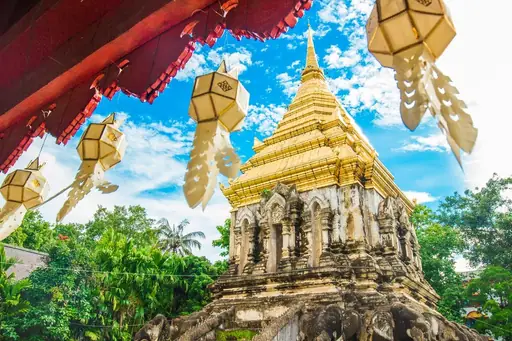
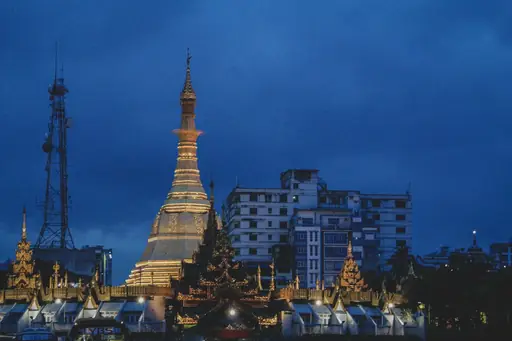
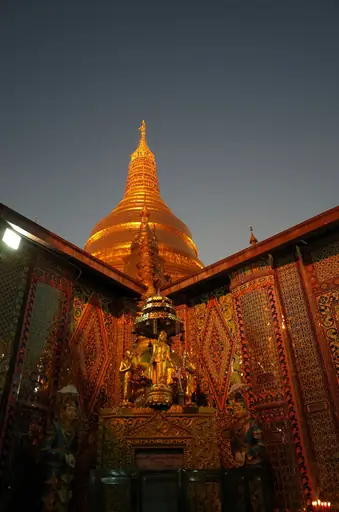
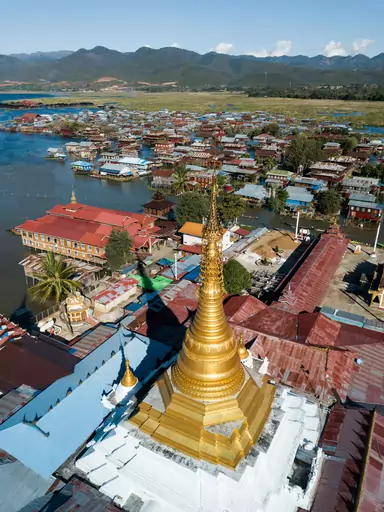
Shwedagon Pagoda stands as one of Yangon’s most recognizable landmarks. Its golden spire rises above the city skyline making it a constant presence in daily life for locals and visitors alike. The structure dates back centuries serving as both a spiritual center and a symbol of cultural identity. Visitors often notice how the pagoda glows softly during sunrise or sunset when sunlight reflects off its gilded surface creating a calm atmosphere that feels timeless.
The site features intricate mosaics and thousands of smaller shrines arranged around the main stupa. Each element carries meaning from Buddhist teachings to local traditions. The grounds are maintained by communities who contribute through donations and volunteer work ensuring preservation for future generations. Walking paths wind through gardens where people sit quietly or meditate reflecting on personal intentions.
Surrounding areas include markets street food stalls and smaller temples offering a glimpse into everyday life in Yangon. Local vendors sell lotus flowers incense sticks and souvenirs while children play nearby adding to the site’s lively yet respectful energy. The pagoda remains active throughout the year hosting festivals where communities gather for music dance and shared meals strengthening social bonds.
Exploring Shwedagon Pagoda provides insight into Myanmar’s religious practices and historical continuity. Its presence reminds people of resilience through periods of change including colonial rule modernization and political shifts. For travelers seeking to understand cultural depth beyond surface attractions this place invites reflection on how traditions evolve while maintaining core values over generations.
The Shwedagon Pagoda in Yangon, Myanmar, is accessible via several transportation methods. The nearest major airport, Yangon International Airport (YSP), offers domestic and international flights to the city, followed by a 30–45 minute taxi or ride-hailing ride to the pagoda. Public buses from central Yangon stations provide affordable access, with routes terminating near the site. Taxis and motorbike taxis are widely available for short trips within the city. The pagoda is located on Singuttara Hill, visible from various parts of Yangon, guiding visitors via local landmarks like Bogyoke Aung San Road. Entry is free, though donations are encouraged. Accessibility includes wheelchair-friendly pathways at the base, while the main stupa requires climbing steps.
Near the Shwedagon Pagoda, accommodations range from modest guesthouses to upscale boutique hotels, catering to all budgets. Budget travelers can find clean, basic rooms in local homestays for US$20 – 40 (£14.95 – 29.90) per night, often including free Wi‑Fi and a communal kitchen. Mid‑range options – such as serviced apartments or small inns – offer private bathrooms, air conditioning and complimentary breakfast around US$60 – 90 (£44.86 – 67.28). Luxury lodgings feature contemporary design, rooftop terraces and concierge services, with rates starting at US$120 (£89.71) and climbing to US$250 (£186.90)+. Yangon’s historic colonial district is renowned for its heritage boutique hotels that blend traditional Burmese décor with modern comforts, while newer developments provide sleek, minimalist rooms with panoramic city views. All options are within walking distance of the pagoda, making daily visits convenient.
Log in to add this place to a travel list and get a summary of all recommended items for your whole trip.
We calculate the average costs when travelling to destinations and compare those with the living costs at your home. With this you can get an estimate of how expensive or cheap the destination is for you.
To customise this, you can set up which location and price level are used for the calculations in your account settings.
The exchange rate price factor shows how expensive or cheap a currency currently is compared to its historical average. It's a quick way to see if a country is currently more or less affordable due to exchange rate changes.
