


Asia › Japan › Sendai

Sendai

Scroll
Tohoku's biggest city with samurai roots

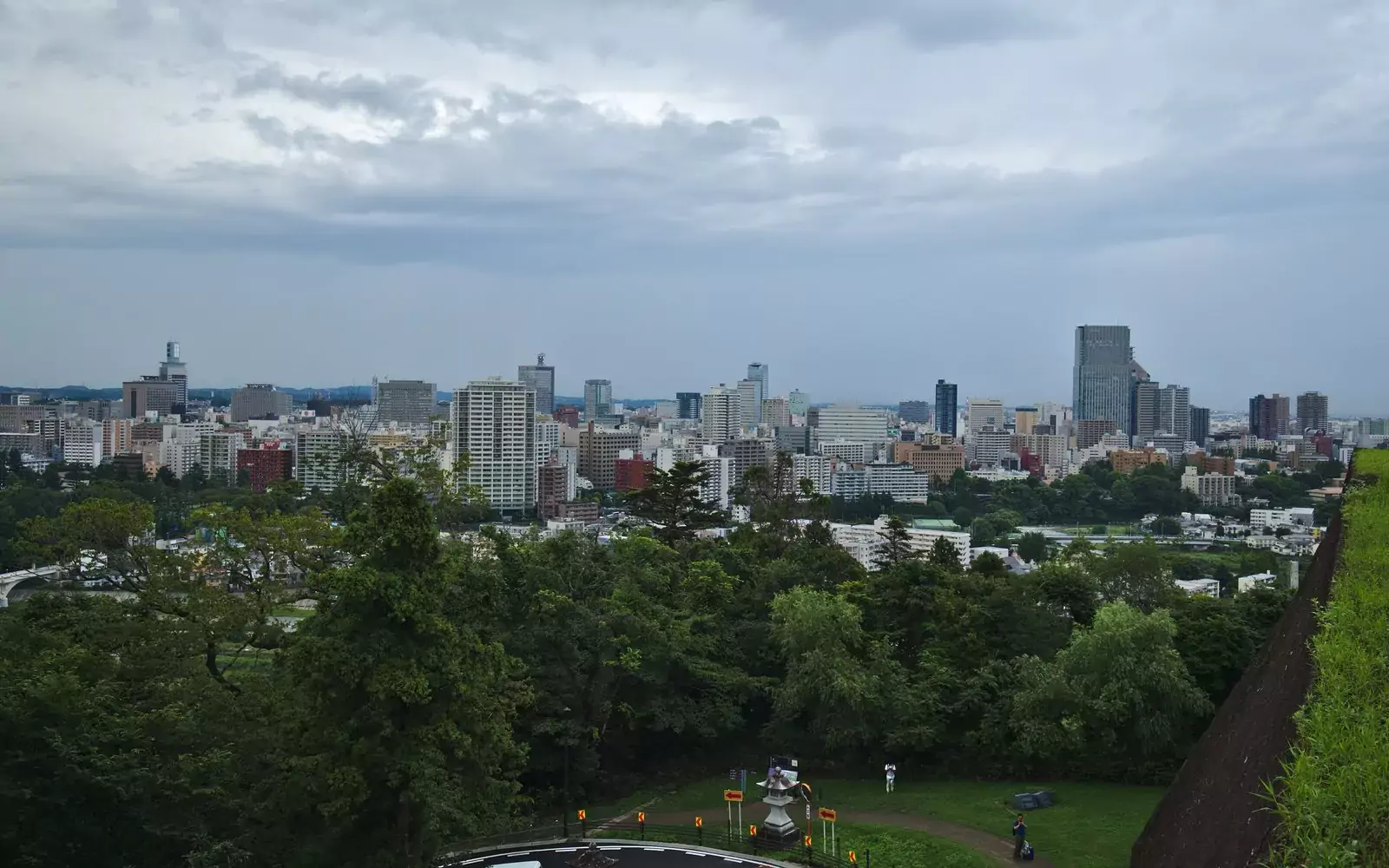
Sendai is the largest city in Tohoku and the capital of Miyagi Prefecture. It grew around the castle of Date Masamune, the first lord of Sendai Domain. Zelkova trees line Jozenji-dori and Aoba-dori. The castle ruins and the Zuihoden mausoleum are tied to the Date clan. Visitors can eat grilled beef tongue or see the Tanabata decorations fill the shopping arcades in early August. Matsushima Bay and the hot spring village of Akiu Onsen make easy day trips. The centre is compact enough to cover on foot and by underground, so it works as a city break or as a base for Miyagi.

City in Japan
Climate zone: Humid subtropical

Humid subtropical: Warm temperate climates with hot, humid summers, mild winters and evenly distributed rainfall, common on eastern continental margins.

See climate table
Price level: $$$
$Cheap
$$Medium
$$$Expensive, upscale
$$$+Very expensive, luxury
See price details
Safety: 9.6
General Safety:10
Health & medical:9
Accessibility:8
Tap water:10
Read details
Tourist English: 2/5
English is spoken at major hotels and tourist spots, but less so in local shops and restaurants. Signage is improving and translation apps are useful. Locals are friendly and helpful to visitors.
Last update: 20 Oct 2026
* We earn a commission from some links on this page.
Sendai Summary

These place ratings give you a quick overview of how well a destination matches different types of trips.

‘Best for’ scores:
The specific interest scores show where this place really shines – whether it's ideal for hiking, food & drink experiences, museums or other activities. These highlights help you understand what makes the destination special at a glance.

‘Your personal’ scores:
This reflects how well a place matches your personal preferences. You can adjust the importances of travel topics or other personal requirements categories in your account settings.

‘Suited for’ badges:
These give you a quick overview of how well a destination suits specific types of travellers, to help you find the places that match your lifestyle, preferences or travel situation.

Read how our scores work
Good for city culture and nearby nature. Visit historic mausoleums, explore shopping streets, enjoy local food specialities and take trips to coastal scenery.
Place score
7.3
Best at:
Spotless
9
Large cities
8
Spirits
8
Festivals
8
Walkable
7
Personal score
?
Log in to see how this place matches your personal travel interests.
Suited for
👶 7
Families
🧓 8
Seniors
👩 9
Solo
🛡️ 7
Travel Beginners
Japan – Quick facts
Power Grid: 100 V, 50 Hz
Plug: Type A
Type A:
Diagram of a Type A power plug

Read about power adapters
Currency: Japanese Yen (JPY)
£1 ≈ JP¥210
Cashless info: Rating 4/5
Cashless payments are becoming more common, especially in cities, with some shops still preferring cash. Be prepared for occasional cash-only situations in rural areas.

Save with a travel credit card
eSIM providers: Best value: Saily
Flexibility: Airalo
Read our in-depth comparison
Tipping: Tipping is not customary in Japan and can be considered rude. Excellent service is the norm, and tipping is unnecessary in most places.
Public drinking: Public drinking is legal and commonly accepted, particularly during festivals and events.
Public smoking: Smoking is prohibited in indoor public places but allowed in designated outdoor areas. Some restaurants may have smoking sections.
New Year
(January)
One of the most important holidays, expect crowded temples and high prices. Plan ahead.
Golden Week
(April-May)
The busiest travel time, expect high demand for accommodation and transport.
Obon
(August)
A time to honour ancestors, many businesses close, and transport can be crowded.
Emergency contact: Emergency Number: 110 (Police), 119 (Fire & Ambulance)
Taxi apps: Uber, JapanTaxi, DiDi
Other: Japan is a country of respect, so understanding local customs and etiquette is important. Public transport is efficient, but can be crowded during peak hours.
Best times to travel

The best times to travel section shows how the months compare for a visit, so you can find the time of year that fits what you want to do.

Background colours of the months:
The colour shows the typical temperature: yellow (hot), green (mild) and blue (cold). How strong the colour is shows the travel season: full colour means high season, soft colour means shoulder season and soft-striped means off season.

Weather symbols:
Each month has one symbol showing what the weather is typically like, such as hot and sunny, freezing or a rainy or snowy season. Use them to quickly spot months that match the weather you want, or to avoid the ones that don't.

Crowdedness:
The people icon shows how busy the place usually is. The more people, the more crowded it gets.

Additional notes:
The grey info boxes point out special things worth knowing, like recurring weather issues or seasonal events.

for Sendai, Japan
❄️
Jan
❄️
Feb
🌤️
Mar
🌤️
Apr
🌤️
May
🌤️
Jun
🌦️
Jul
🌤️
Aug
🌤️
Sep
🌦️
Oct
🌤️
Nov
🌤️
Dec
High season: April - May, Aug., Nov.
Shoulder season: July, Sep. - Oct., Dec.
Crowdedness: 4 (Moderate tourist numbers)
Tap on a month for more info Hover over a month for more info
Sendai Tanabata Festival 6 to 8 August, huge streamer decorations, hotels book out early
Pageant of Starlight illuminations along Jozenji Street, early December to 31 December
Matsushima Bay oysters in season November to March

Why travel to Sendai?

Sendai was founded by Date Masamune and the city still has sights tied to him, mainly the Zuihoden mausoleum and the site of Sendai Castle with its view over the city. Osaki Hachimangu Shrine is a little further out. A loop bus from the station links all of them, which makes the history easy to cover in a day. Sendai is also known for its food. Gyutan, grilled beef tongue, is the city's most famous dish. Zunda edamame sweets, bamboo-leaf fish cakes and a winter hot pot with Japanese parsley are also on the local menu. Tanabata fills the centre with huge paper decorations from 6 to 8 August and the festival brings more than two million visitors a year. Jozenji-dori, lined with zelkova trees, is a pleasant street for walking in any season. The city also works as a base. Matsushima Bay, with more than 260 small islands, is about 35 minutes away by train. Akiu Onsen, a hot spring village with a 55 m waterfall nearby, is around 1 hour 10 minutes away. Plan one or two days in the city itself and add a day trip if you have time.

🏯Places worth seeing
  • 1 The Miyagi Museum of Art
  • 2 Sendai Mediatheque
  • 3 Mausoleum Zuihoden
  • 4 Sendai Daikannon Statue
  • 5 Jozenji-dori Avenue Greenery Area
  • 6 Aoba-dōri
🎡Places for activities
  • 1 Sendai City Museum
  • 2 Site of Kitame Castle
  • 3 Yagiyama Zoological Park
🏞️Natural landmarks
  • 1 Akiu Great Falls
  • 2 Nishi Park
🛍️Shopping
  • 1 Don Quijote
  • 2 Yodobashi Camera
  • 3 Sendai Asaichi (Morning Market)
  • 4 S-PAL仙台II
  • 5 SUN MALL ICHIBANCHO
  • 6 VLANDOME
  • 7 Mitsui Outlet Park Sendai Port
🍽️Eat & Drink
  • 1 Umami Tasuke Honten
    Gyutan, beef tongue salted and grilled over charcoal, with barley rice and oxtail soup. This restaurant started the Sendai beef tongue tradition more than 75 years ago. It is a 3-minute walk from Kotodai-koen Station.
  • 2 Gyutan Sumiyaki Rikyu Nishiguchi Honten
    Gyutan, thick-cut beef tongue grilled over charcoal, in sets with barley rice and oxtail soup. The company began in Sendai and this flagship is a 5-minute walk from the station's west exit.
  • 3 Kisuke
    Gyutan, beef tongue salted and grilled over charcoal, at a restaurant opened by a cook who trained at the first gyutan shop. The restaurant has run for about 50 years and has a branch on Gyutan Street in the station.
  • 4 Zunda Saryo
    Zunda shake, a thick edamame milkshake, and zunda mochi sets with green tea. The shop began in Sendai and has a flagship in the basement of Sendai Station. Zunda sweets are also sold to take away.
  • 5 Abe Kamaboko-ten
    Sasa kamaboko, white fish paste shaped like a bamboo leaf and grilled, a Miyagi speciality named by this shop. The shop is in central Sendai and has several branches in the city.
🎈Events
  • Sendai Tanabata Festival (August)
  • Jozenji Street Jazz Festival (September)
  • Sendai Aoba Festival (May)
  • SENDAI Pageant of Starlight (December)
  • Michinoku YOSAKOI Festival (October)
  • Sendai International Half Marathon (May)
  • Sendai Tanabata Fireworks (August)
  • Toro Nagashi Lantern Festival (August)
  • Sendai Cherry Blossom Festival (April)
  • Sendai Oktoberfest (September)

Knowledge before you go

  • Tanabata runs 6 to 8 August, so book hotels early.
  • Loople Sendai is a one-way loop bus from the station's west exit and accepts IC cards.
  • Some museums and sights along the Loople route close on Mondays, so check before you go.
  • Sendai celebrates Tanabata a month after the traditional date to match the season of the original festival.

How to travel to Sendai

The shinkansen is the main way to reach Sendai. From Tokyo, Hayabusa, Hayate and Komachi trains take about 100 minutes and need seat reservations. Slower Yamabiko trains take around two hours. A highway bus from Tokyo takes about 5.5 hours, with several companies serving the route. Sendai Airport (SDJ) is about 20 km southeast of the city, with domestic flights from Sapporo, Osaka and other Japanese cities. A direct train from Sendai Station takes 15 to 25 minutes. Driving from Tokyo is about 350 km on the Tohoku Expressway and takes several hours depending on traffic. Most visitors skip the car in the city itself, since parking is expensive and the underground and buses reach the main sights.

Access summary

  • From Sendai Airport (SDJ): Airport Access Line train to Sendai Station, about 25 minutes.
  • From Tokyo: Tohoku Shinkansen from Tokyo Station to Sendai, roughly 1.5–2 hours.
  • From Osaka (Shin-Osaka): Tokaido + Tohoku Shinkansen via Tokyo, around 4–4.5 hours.

Where to stay in Sendai

Most travellers stay around Sendai Station, where business hotels cluster within walking distance of the shinkansen, the underground and the airport train. The Ichibancho and Kokubuncho area is closer to the shopping streets and the nightlife and has a mix of mid-range hotels. Both areas put Jozenji-dori and the Loople route within easy reach. For a hot spring stay, Akiu Onsen is the nearest option, about 1 hour 10 minutes from the city by train and bus. Ryokan and guesthouses there make sense if you want to combine a night in the mountains with the waterfall and gorge walks. Rooms fill up fast during the Tanabata festival, so book ahead for early August. Outside festival weeks, availability is generally good.

How to get around Sendai

Central Sendai is compact and the main ways to get around are the underground, buses and walking. A loop bus links the main sights. A car isn't needed within the city.

Underground and buses:
Two underground lines, the Namboku and Tozai, cover the centre and the Aobayama area.
Regular city buses fill the gaps, though their routes are harder for first-time visitors to follow.

Loople Sendai:
The Loople Sendai tourist bus is the most useful option for sightseeing.
It runs one way on a loop of about 70 minutes from the west exit bus terminal at Sendai Station and stops at Zuihoden, the castle ruins, Osaki Hachimangu Shrine and Jozenji-dori. Buses run roughly every 15 to 20 minutes until mid-afternoon. IC cards such as Suica are accepted and one-day passes cover Loople alone or Loople plus the underground.

Taxis and cars:
Taxis are widely available and useful for short hops or late evenings.
A car can help for Akiu Onsen and the mountains west of Sendai, where buses are less frequent. For Matsushima, the JR train is faster than driving.

Food in Sendai

Food in Sendai centres on local specialities and seafood from nearby bays. Local beef is also served as yakiniku.

Gyutan:
Charcoal-grilled beef tongue served with pickles is the signature dish.
It's available in set meals across the centre.

Zunda:
Zunda is a paste of mashed edamame served in mochi, shakes and soft serve.
It's one of the city's best-known sweets.

Seri nabe:
Winter brings seri nabe, a soy-based hot pot with Japanese parsley.
The parsley is eaten with its roots and stems.

Sasa kamaboko are fish cakes shaped like bamboo leaves, often grilled on sticks. Oysters from the nearby Matsushima area are another highlight. Hiyashi chuka, chilled noodles, are said to have originated in Sendai. Sendai Station and the streets around it have plenty of restaurants and shops that sell gyutan, zunda and kamaboko as souvenirs. Convenience stores and supermarkets are everywhere in the centre.

Budget snapshot
Costs compared to home

We calculate the average costs when travelling to destinations and compare those with the living costs at your home. With this you can get an estimate of how expensive or cheap the destination is for you.

To customise this, you can set up which location and price level are used for the calculations in your account settings.

-46 %
Daily expenses in Sendai are around 46% lower than the average across United States. That means you'll spend a lot less on meals and getting around.
Exchange rate trend

The exchange rate price factor shows how expensive or cheap a currency currently is compared to its historical average. It's a quick way to see if a country is currently more or less affordable due to exchange rate changes.

-20 %
Your exchange rate (GBP to JPY) is 20% better than in recent years. That means travelling now is considerably cheaper compared to the past.

Travel costs

To help you plan your trip, we provide estimated daily costs per person (when travelling as a pair) for different travel styles. These numbers give you an idea of what you might spend each day at this destination, including accommodation, food, transport and activities.

Additionally, we also provide average hotel costs for different travel styles to give you an estimate for the accommodation only.

Please note that these are only estimates. The real costs depend on booking times, season and other factors.

Daily cost summary

Travel style categories explained:

Backpacker:
Staying in hostels or budget hotels, cooking your own meals or eating cheap and choosing low-cost activities.

Mid-range:
Staying in mid-range hotels, eating at a mix of restaurants and casual spots and enjoying a variety of activities.

Luxury:
Staying in luxury hotels, dining out at high-end restaurants and enjoying premium experiences without worrying about the price.

Backpacker Mid-range Luxury
💵 Total costs per day, including accommodation
£44
£96
£247
🏨 Accommodation per night, per person
£23
£56
£113
🍝 Food per day
£16
£33
£107
🚕 Transportation per day
£5
£7
£27
Food & Drink
🍽️ Restaurant Dinner, per person
£12
🍛 Lunch Set, per person
£4.20
🍟 Fast food combo
£3.30
🍝 Preparing your own food, per day
£6
☕ Cappuccino
£2.90
🍺 Beer in a restaurant, 0.5 l
£2.90
Transportation
🚌 Public transport ticket
£1.20
🚕 Taxi Ride, 10 km / 6 mi
£17
⛽ Petrol, 1 l
£0.80
Other
🎞️ Cinema ticket
£8
👩‍⚕️ Doctor's consult
£48
🤧 Cold medication
£8
💇 Basic haircut
£10

Safety information overview

General safety
10
Sendai is very safe, with low street crime even at night. The main risks are natural. The area is prone to earthquakes. Low coastal areas east of the city are exposed to tsunami, so follow evacuation signs. Winter brings occasional snow and icy pavements.
Health & Medical
9
Medical care is very good, with large university and city hospitals plus many clinics and pharmacies. English-speaking care is limited, so a translation app and travel insurance help. Summer heat and humidity can be strong in July and August.
Accessi­bility
8
Central Sendai is flat and compact. The underground and Loople bus make the main sights manageable. Underground stations generally have lifts. The castle ruins and Zuihoden involve slopes and stairs. Snow or ice can make winter pavements hard going.
Tap water
10
Tap water in Sendai is safe to drink, as across Japan. Convenience stores and vending machines sell bottled water throughout the city. A refillable bottle is useful on hot summer sightseeing days when you walk between the main sights.

Packing recommendations for Sendai

Log in to add this place to a travel list and get a summary of all recommended items for your whole trip.

Looking for inspiration?

Discover
Best couple vacation destinations in Asia
Asia is perfect for couples who want their holiday to feel like a shared adventure rather than just a change of scenery. Few continents offer so many ways to be amazed together.…
Read more
Discover
Best destinations for first-time travelers in Asia
Asia has one of the best established beginner travel routes anywhere, largely because so many first time travelers have worn the path before you. Southeast Asia in particular…
Read more
Discover
Best destinations to visit in April
April is when spring really takes hold across the Northern Hemisphere, while the Southern Hemisphere settles further into cooler, quieter months. Some travellers plan trips…
Read more
Discover
Best solo travel destinations in Asia
Asia is where most solo travelers figure out they can actually do this. The backpacker trails through Southeast Asia have been running for decades, and the infrastructure along…
Read more
Discover
Top solo travel destinations and safe hubs
Travelling alone sounds like a bigger deal than it is. The first day feels strange – eating dinner by yourself, navigating without someone to double-check the map with, making…
Read more
Discover
Best couple holiday destinations
Travelling as a couple sounds simple enough, yet the best couple holiday destinations mean something different to almost every pair. What feels romantic to one couple can feel like…
Read more
Discover
Best travel destinations for seniors in Asia
Asia offers some of the most senior friendly infrastructure anywhere, alongside destinations that still call for a bit more independence and stamina. Japan in particular stands…
Read more
Discover
Best destinations to visit in April in Asia
April brings some of the hottest weather of the year to parts of Asia, along with one of the region's biggest celebrations. Thailand and several neighboring countries mark their…
Read more
Discover
Best destinations for first-time travellers
A first trip abroad works best somewhere that eases you in, rather than throwing every possible culture shock and logistical headache at you at once. Some first-time travellers…
Read more
Discover
Top food destinations and culinary hotspots
Food travel has matured into a sophisticated circuit built around the world's great culinary traditions, restaurant destinations and producer landscapes that offer experiences…
Read more
Discover
Best travel destinations for seniors
Senior travel covers a wide range, from slow, low effort trips built around comfort to more independent trips for travellers who still want to cover plenty of ground. Some…
Read more
Discover
Best food destinations in Asia
Asia's food cultures are among the most diverse and sophisticated on earth, with distinct culinary traditions across dozens of regional cuisines that developed largely…
Read more
Discover
Most beautiful beaches and coastal escapes
For a lot of people, a beach is the whole point of a holiday, but what makes a beach day perfect really depends on personal taste. Some travellers want isolation and the feeling…
Read more
Discover
Stunning national parks and wilderness areas
National parks exist because someone decided that certain landscapes were too important to lose. The best of them protect ecosystems, wildlife and natural processes that would…
Read more
Discover
Intimate escapes and romantic getaways
The most memorable trips for couples tend to have less to do with luxury and more to do with the quality of shared experience. A place that slows you down, removes the usual…
Read more
Feedback
