








Was this page helpful?

| Opening hours: |
|
|
|---|---|---|
| Public website: | www.naraijuku.com |
| Power Grid: |
100 V, 50 Hz Plug: Type A
Type A:
 Read about power adapters |
|---|---|
| Currency: |
Japanese Yen (JPY) £1 ≈ JP¥210 |
| Cashless info: |
Rating 4/5
Cashless payments are becoming more common, especially in cities, with some shops still preferring cash. Be prepared for occasional cash-only situations in rural areas.
Save with a travel credit card |
| eSIM providers: |
Best value: Saily Flexibility: Airalo Read our in-depth comparison |
| Tipping: | Tipping is not customary in Japan and can be considered rude. Excellent service is the norm, and tipping is unnecessary in most places. |
|---|---|
| Public drinking: | Public drinking is legal and commonly accepted, particularly during festivals and events. |
| Public smoking: | Smoking is prohibited in indoor public places but allowed in designated outdoor areas. Some restaurants may have smoking sections. |
| New Year (January) |
One of the most important holidays, expect crowded temples and high prices. Plan ahead. |
|---|---|
| Golden Week (April-May) |
The busiest travel time, expect high demand for accommodation and transport. |
| Obon (August) |
A time to honour ancestors, many businesses close, and transport can be crowded. |
| Emergency contact: | Emergency Number: 110 (Police), 119 (Fire & Ambulance) |
|---|---|
| Taxi apps: | Uber, JapanTaxi, DiDi |
| Other: | Japan is a country of respect, so understanding local customs and etiquette is important. Public transport is efficient, but can be crowded during peak hours. |
The best times to travel section shows how the months compare for a visit, so you can find the time of year that fits what you want to do.
Background colours of the months:
The colour shows the typical temperature: yellow (hot), green (mild) and blue (cold). How strong the colour is shows the travel season: full colour means high season, soft colour means shoulder season and soft-striped means off season.
Weather symbols:
Each month has one symbol showing what the weather is typically like, such as hot and sunny, freezing or a rainy or snowy season. Use them to quickly spot months that match the weather you want, or to avoid the ones that don't.
Crowdedness:
The people icon shows how busy the place usually is. The more people, the more crowded it gets.
Additional notes:
The grey info boxes point out special things worth knowing, like recurring weather issues or seasonal events.
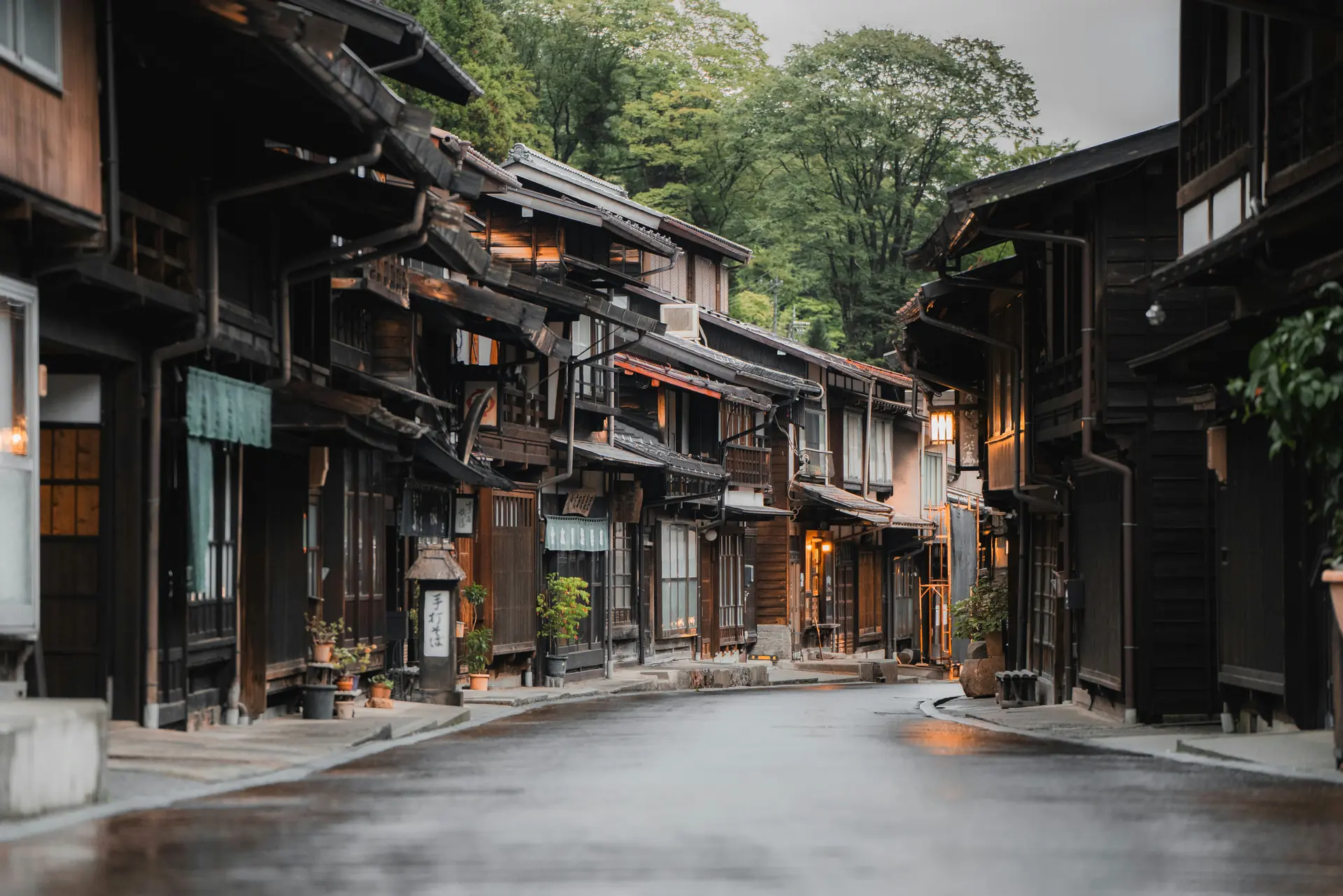
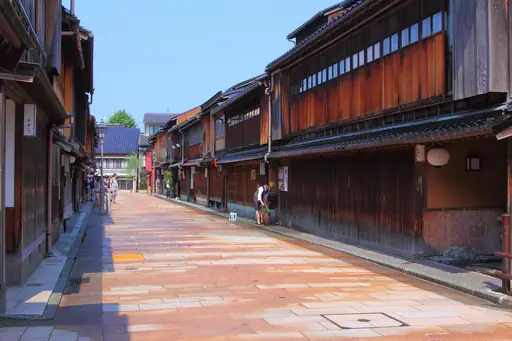
Narai-juku was a stop on the Nakasendo, the inland road that linked Kyoto and Edo in the Edo period. The village is in the Kiso Valley in Nagano Prefecture and grew rich from travellers, which earned it the nickname Narai of a Thousand Houses. The preserved main street is about 1 km long and is lined with wooden townhouses with latticed fronts and deep eaves, which gives a good sense of how the road looked to travellers.
Walking the street is the main activity, with several old buildings open to visitors. Nakamura House is a merchant house from the 1830s that shows the family's comb-making business. Kamidonya Shiryokan is a former wholesaler's residence with records and objects from the Nakasendo era. Shops along the way sell wooden combs and Kiso lacquerware, the two crafts the village has long been known for. A wooden bridge called Kiso Ohashi spans the river at the edge of town. A notice board marks where shogunate decrees were once posted.
Narai is a lived-in village rather than a museum, so residents use the street and cars are allowed on it. The village is quietest early in the morning and in the late afternoon after the day trippers leave. Spring and autumn are the busiest seasons and October weekends draw the most visitors for the autumn leaves.
A visit usually takes one to two hours on foot. The street is gently sloped and easy to walk, though old buildings have steps and thresholds. Museums open in the morning and close in the late afternoon while some shut on certain days in winter. Restaurants close early so lunch needs planning. The old Torii Pass trail leads from the village to the next post town over a forested ridge. The Nakasendo around Narai is also a good base for exploring other Kiso post towns by train.
Narai-juku is reached by the JR Chuo Main Line. Local trains stop at Narai Station, a short walk from the village. Limited express trains don't, so you change at Shiojiri or Kiso-Fukushima. Local trains from Shiojiri take about 25 minutes, from Kiso-Fukushima about 20 minutes and from Matsumoto about 30 minutes. Services are sparse, with long gaps between trains. From Tokyo, the usual route takes about 3.5 hours by Azusa limited express to Matsumoto or Shiojiri and then a local train. From Nagoya, the Shinano limited express runs to Shiojiri and Kiso-Fukushima, from where you take a local train. By car, Narai is about 40 minutes from Matsumoto on Route 19. Parking is available at the roadside station near the village and at the station. The nearest airport is Matsumoto (MMJ) for domestic flights while Nagoya's Centrair (NGO) is the main gateway for international travellers.
Narai has a small number of ryokan and guesthouses in old buildings along the main street. They're the best way to see the village after the day trippers leave. Most stays include dinner and breakfast. Rooms are limited, so book well ahead for spring and autumn. Some places take bookings mainly by phone or direct, so allow time to arrange it. Staying in the village means evenings are quiet and shops close early, so there isn't much to do after dinner. If the village is full, Kiso-Fukushima and Shiojiri have a few other places to stay. Matsumoto, about 30 minutes by train, has a much larger choice of hotels and many restaurants. October weekends in the leaf season fill first.
Food in Narai is limited, so it helps to plan meals. A few small restaurants and cafes open for lunch along the street and serve soba, local sweets and tea. Handmade buckwheat soba is the classic Nagano meal. Gohei-mochi, grilled rice skewers brushed with a sweet miso and walnut paste, is a typical mountain snack.
Daytime restaurants close in the mid-afternoon. Evening meals are mainly at the ryokan, which serve set dinners with mountain vegetables and river fish. Tell them about dietary needs when you book. The village has no large supermarkets, so bring snacks if you want flexibility.
Matsumoto and Shiojiri have more restaurants and shops for evening meals and for stocking up.
Log in to add this place to a travel list and get a summary of all recommended items for your whole trip.
We calculate the average costs when travelling to destinations and compare those with the living costs at your home. With this you can get an estimate of how expensive or cheap the destination is for you.
To customise this, you can set up which location and price level are used for the calculations in your account settings.
The exchange rate price factor shows how expensive or cheap a currency currently is compared to its historical average. It's a quick way to see if a country is currently more or less affordable due to exchange rate changes.
