







Was this page helpful?

| Opening hours: |
|
|
|---|---|---|
| Public website: | ja.kyoto.travel |
| Power Grid: |
100 V, 50 Hz Plug: Type A
Type A:
 Read about power adapters |
|---|---|
| Currency: |
Japanese Yen (JPY) £1 ≈ JP¥210 |
| Cashless info: |
Rating 4/5
Cashless payments are becoming more common, especially in cities, with some shops still preferring cash. Be prepared for occasional cash-only situations in rural areas.
Save with a travel credit card |
| eSIM providers: |
Best value: Saily Flexibility: Airalo Read our in-depth comparison |
| Tipping: | Tipping is not customary in Japan and can be considered rude. Excellent service is the norm, and tipping is unnecessary in most places. |
|---|---|
| Public drinking: | Public drinking is legal and commonly accepted, particularly during festivals and events. |
| Public smoking: | Smoking is prohibited in indoor public places but allowed in designated outdoor areas. Some restaurants may have smoking sections. |
| New Year (January) |
One of the most important holidays, expect crowded temples and high prices. Plan ahead. |
|---|---|
| Golden Week (April-May) |
The busiest travel time, expect high demand for accommodation and transport. |
| Obon (August) |
A time to honour ancestors, many businesses close, and transport can be crowded. |
| Emergency contact: | Emergency Number: 110 (Police), 119 (Fire & Ambulance) |
|---|---|
| Taxi apps: | Uber, JapanTaxi, DiDi |
| Other: | Japan is a country of respect, so understanding local customs and etiquette is important. Public transport is efficient, but can be crowded during peak hours. |
The best times to travel section shows how the months compare for a visit, so you can find the time of year that fits what you want to do.
Background colours of the months:
The colour shows the typical temperature: yellow (hot), green (mild) and blue (cold). How strong the colour is shows the travel season: full colour means high season, soft colour means shoulder season and soft-striped means off season.
Weather symbols:
Each month has one symbol showing what the weather is typically like, such as hot and sunny, freezing or a rainy or snowy season. Use them to quickly spot months that match the weather you want, or to avoid the ones that don't.
Crowdedness:
The people icon shows how busy the place usually is. The more people, the more crowded it gets.
Additional notes:
The grey info boxes point out special things worth knowing, like recurring weather issues or seasonal events.
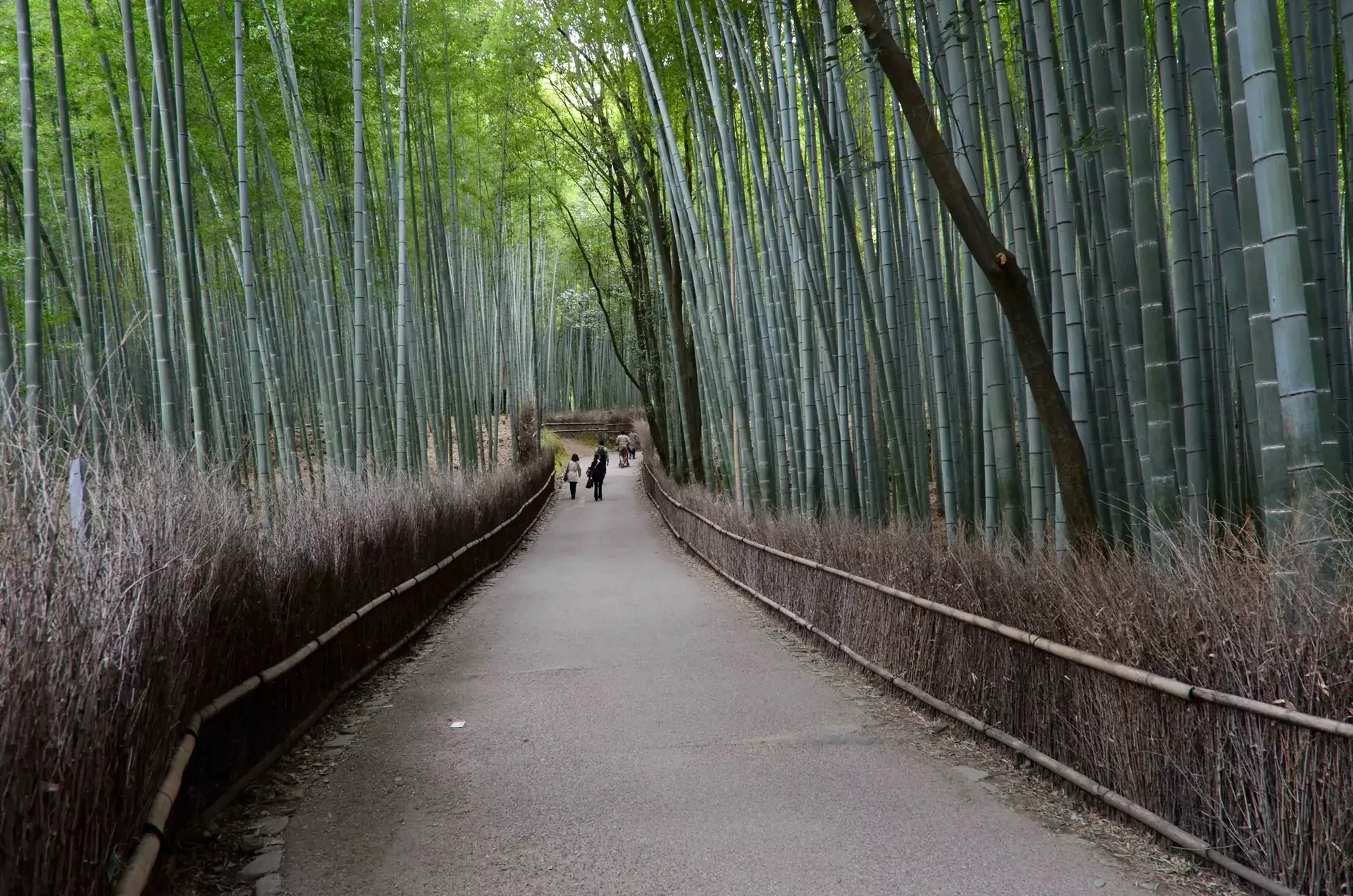
The Arashiyama Bamboo Grove is a long lane lined with tall bamboo in Saga-Arashiyama, in the west of Kyoto. Light comes down through the canopy and the stalks stand close together along the path. The lane is a public walkway rather than a ticketed site and it takes only a short time to walk through. Its appeal comes from the setting, which feels quiet and green even though the busy streets of Arashiyama are close by.
The most atmospheric approach is from the side gate of Tenryu-ji Temple, which opens toward the grove. At the top of the lane Okochi Sanso Villa has gardens with wide views over Kyoto and is generally free of crowds. The admission price includes a sweet and a bowl of hot matcha. Nonomiya Shrine extends the grove and is known for good marriages and safe childbirth. It can be busy with visitors in yukata. Bamboo craft shops are along the way toward Randen Saga Station.
From Saga-Arashiyama Station the grove is about a 10-minute walk away. Togetsukyo Bridge is about 8 minutes on foot from the same station. A walking course that links the grove with Tenryu-ji, the Saga Arashiyama Museum of Arts and Culture and Burari Arashiyama covers about 2.7 km and takes around 2 hours. The area is one of Kyoto's most popular day trips, so the lane gets crowded and photos without people are hard to get at busy hours.
Graffiti has damaged the bamboo here. The Kyoto tourism board asks visitors to respect the plants and the local community. Leave the stalks untouched and keep to the path. If you want a quieter experience, go as early as you can or return in the evening.
Trains are the easiest way to reach the grove. From Kyoto Station the JR Sagano Line reaches Saga-Arashiyama Station in about 11 minutes and the grove is roughly a 10-minute walk from there. The platform is far from the other lines and the front cars get crowded, so it helps to board from the back. A less crowded option is to take the Karasuma Line underground to Karasuma Oike, change to the Tozai Line for Uzumasa Tenjingawa and then ride the Keifuku Randen tram to Arashiyama. From Shijo Kawaramachi you can take the Hankyu Kyoto Line to Katsura and change to the Hankyu Arashiyama Line to its last stop. The Randen from Shijo-Omiya to the Arashiyama terminal is another scenic choice, with about 4 minutes on foot to Togetsukyo Bridge. Buses from Kyoto Station are crowded and slow, so trains are usually the better choice. From Kansai Airport (KIX) the Haruka express runs to Kyoto Station in about 75 minutes and you continue on the Sagano Line.
Most visitors stay in central Kyoto and come out to Arashiyama for a half or full day, since trains from Kyoto Station take about 11 minutes. The Kyoto Station area has the widest choice and the easiest connections, while Shijo Kawaramachi and Gion put you closer to restaurants and the old streets. Staying in Arashiyama itself suits you if you want the grove and the riverside in the early morning or after the day trippers leave. The area has Japanese-style inns and a smaller number of hotels, with prices that tend to be higher than in the city centre. Rooms across Kyoto fill quickly during cherry blossom season and the autumn foliage, so it helps to book early for those weeks. Because the Randen tram and the Hankyu and JR lines all reach Arashiyama, a base in western Kyoto or along those lines works well too.
Food around the grove is a mix of casual snacks, tea houses and traditional Kyoto cooking. The streets between Togetsukyo Bridge and the grove have shops selling matcha sweets and other snacks to eat as you walk. Tofu dishes, soba and Zen vegetarian meals are typical of the Arashiyama area. Bamboo shoots appear on menus in spring.
A visit to Okochi Sanso Villa comes with matcha and a sweet, which makes a quiet tea stop. There aren't any restaurants inside the lane itself, so you'd eat in the surrounding streets or near the station. Convenience stores are easier to find near Saga-Arashiyama Station than along the grove. Cafes and restaurants fill up at lunchtime on weekends and in the autumn, so an early or late meal avoids waits.
Log in to add this place to a travel list and get a summary of all recommended items for your whole trip.
We calculate the average costs when travelling to destinations and compare those with the living costs at your home. With this you can get an estimate of how expensive or cheap the destination is for you.
To customise this, you can set up which location and price level are used for the calculations in your account settings.
The exchange rate price factor shows how expensive or cheap a currency currently is compared to its historical average. It's a quick way to see if a country is currently more or less affordable due to exchange rate changes.
