








Was this page helpful?

| Power Grid: |
230 V, 50 Hz Plug: Type C , Type D , Type M
Type C:
   Read about power adapters |
|---|---|
| Currency: |
Indian Rupee (INR) £1 ≈ ₹126.52 |
| Cashless info: |
Rating 4/5
Cashless payments are becoming more common in India, especially in urban areas. Credit cards and mobile payment apps like Google Pay, Paytm, and PhonePe are widely accepted in cities.
Save with a travel credit card |
| eSIM providers: |
Best value: Saily Flexibility: Airalo Read our in-depth comparison |
| Tipping: | Tipping is appreciated in India but not mandatory. A 10% tip in restaurants is common. Tipping taxi drivers and hotel staff is also customary, typically 10-15% for good service. |
|---|---|
| Public drinking: | Public drinking is not commonly seen in India. Alcohol is typically consumed in licensed bars, restaurants, and hotels. |
| Public smoking: | Smoking is prohibited in many indoor public spaces, including restaurants, bars, and public transport stations. |
| Independence Day (15 August) |
A national holiday celebrated with flag hoisting and parades |
|---|---|
| Diwali (October-November) |
The Festival of Lights, celebrated with fireworks and festivities |
| Emergency contact: | Emergency Number: 112 |
|---|---|
| Taxi apps: | Ola, Uber |
| Other: | India is a vast and diverse country with a rich cultural heritage, offering a wide range of experiences from ancient temples to modern cities. Prepare for varying infrastructure and safety conditions depending on the region. |
The best times to travel section shows how the months compare for a visit, so you can find the time of year that fits what you want to do.
Background colours of the months:
The colour shows the typical temperature: yellow (hot), green (mild) and blue (cold). How strong the colour is shows the travel season: full colour means high season, soft colour means shoulder season and soft-striped means off season.
Weather symbols:
Each month has one symbol showing what the weather is typically like, such as hot and sunny, freezing or a rainy or snowy season. Use them to quickly spot months that match the weather you want, or to avoid the ones that don't.
Crowdedness:
The people icon shows how busy the place usually is. The more people, the more crowded it gets.
Additional notes:
The grey info boxes point out special things worth knowing, like recurring weather issues or seasonal events.
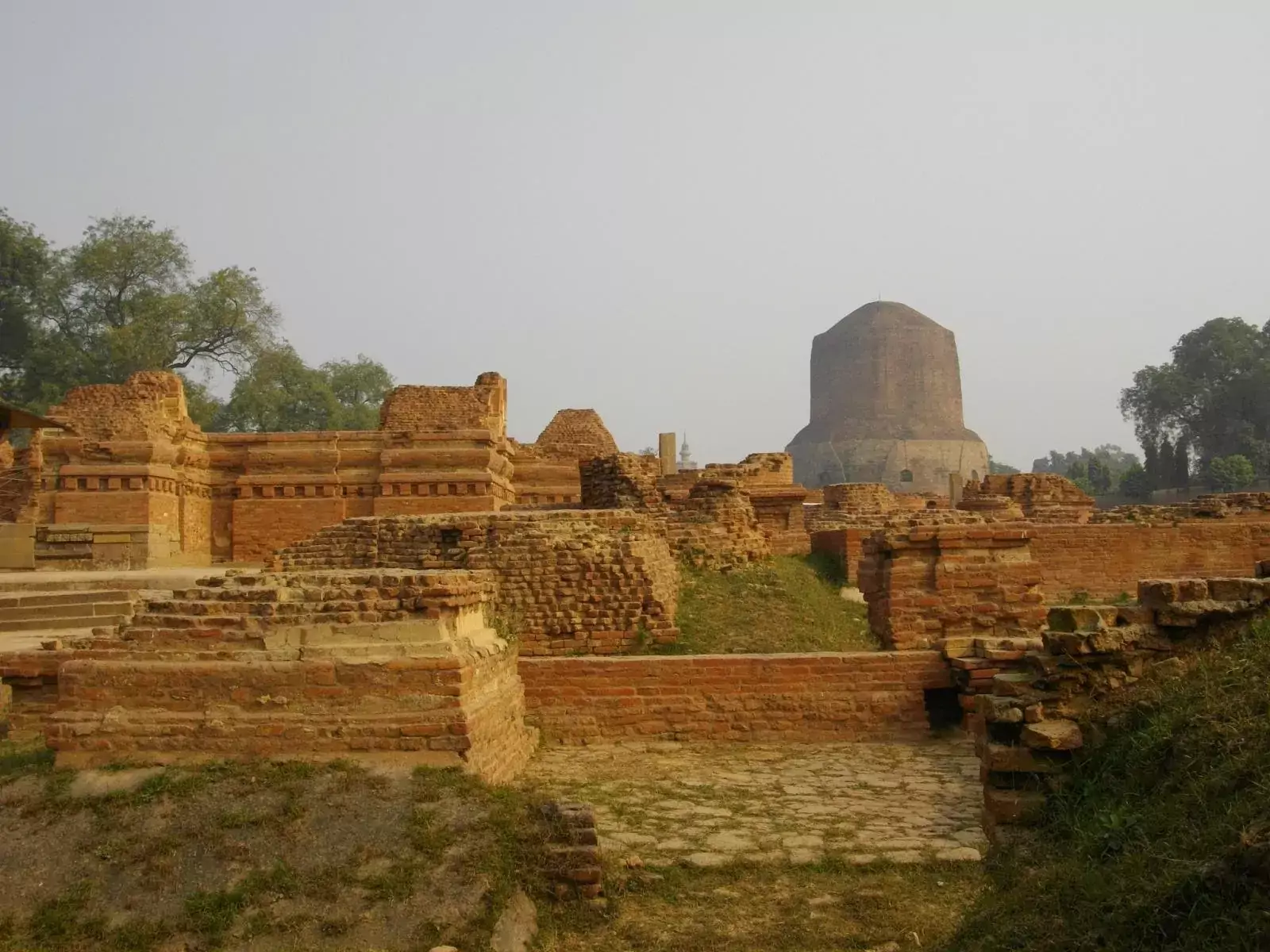
Sarnath stands as a key location in India’s history where Buddhism began to spread beyond its birthplace. Located just outside Varanasi along the Ganges River ancient routes connected this place to travelers and monks from far regions. The site holds deep meaning for many who seek understanding of early Buddhist teachings.
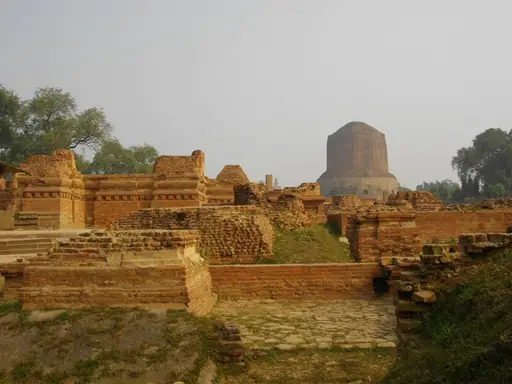
The main attraction is the Dhamek Stupa a large stone structure built around the 4th century CE. It marks where Buddha delivered his first sermon after enlightenment known as the “Turning of the Wheel.” Visitors can see carvings and inscriptions that show how different cultures added to this place over centuries. The surrounding ruins include monasteries and temples reflecting varied architectural styles.
Nearby archaeological museums display artifacts such as sculptures coins and pottery found during excavations. These items help explain daily life religious practices and trade activities of people who lived here long ago. Walking through the grounds visitors notice quiet spaces where reflection feels natural due to open skies and gentle river breezes.
Today Sarnath remains a place for learning meditation and respectful exploration. Guides often share stories about how teachings traveled across Asia influencing art philosophy and community life. The site welcomes those interested in history spirituality or cultural exchange without requiring special preparation beyond curiosity and openness.
Sarnath, located approximately 10 kilometers northeast of Varanasi in Uttar Pradesh, India, is accessible via road and rail. The nearest major railway station is Motilal Nehru Airport (Varanasi), about 25 km away, with regular taxi and bus services to Sarnath. Buses operated by UPSRTC connect Varanasi and nearby towns to Sarnath regularly. Private vehicles can use well-maintained highways for direct travel. The site is also reachable via local buses from Varanasi or nearby districts. Visitors may combine trips with stops in Varanasi, as several routes pass through the region. Entry to the archaeological site requires tickets purchased at designated counters on-site.
Sarnath offers a range of lodging that caters to both budget travelers and those seeking comfort. Guesthouses and homestays dot the town’s outskirts, providing cozy rooms with basic amenities for ₹1,500 – 3,000 (£11.84 – 23.67) per night. Mid‑range hotels in the central area offer private bathrooms, Wi‑Fi and on‑site dining, typically priced between ₹4,000 (£31.57) and ₹7,000 (£55.24). For a more tranquil experience, several boutique resorts near the river feature traditional Indian décor, yoga classes and organic breakfast options, with rates around ₹8,000 – 12,000 (£63.13 – 94.70). The town is renowned for its heritage homestays that preserve local architecture, allowing visitors to immerse themselves in authentic village life while enjoying modern comforts.
Log in to add this place to a travel list and get a summary of all recommended items for your whole trip.
We calculate the average costs when travelling to destinations and compare those with the living costs at your home. With this you can get an estimate of how expensive or cheap the destination is for you.
To customise this, you can set up which location and price level are used for the calculations in your account settings.
The exchange rate price factor shows how expensive or cheap a currency currently is compared to its historical average. It's a quick way to see if a country is currently more or less affordable due to exchange rate changes.
