







Was this page helpful?

| Opening hours: |
|
|---|
| Power Grid: |
220 V, 50 Hz Plug: Type A , Type I
Type A:
  Read about power adapters |
|---|---|
| Currency: |
Chinese Yuan Renminbi (CNY) £1 ≈ CN¥8.88 |
| Cashless info: |
Rating 5/5
Cashless payments are widely accepted in China, particularly in urban areas. Mobile payment services like Alipay and WeChat Pay are commonly used.
Save with a travel credit card |
| eSIM providers: |
Best value: Saily Flexibility: Airalo Read our in-depth comparison |
| Tipping: | Tipping is not customary in China and is not expected, although it may be appreciated in high-end restaurants or by hotel staff for exceptional service. |
|---|---|
| Public drinking: | Public drinking is generally not allowed in many places in China, but it is common in restaurants and bars. |
| Public smoking: | Smoking is prohibited in many indoor public spaces, such as restaurants and public transport, but enforcement can vary. |
| Chinese New Year (January/February) |
Major holiday with family gatherings and public celebrations |
|---|---|
| National Day (1 October) |
National holiday with parades and festivities |
| Emergency contact: | Emergency Numbers: 110 (Police), 120 (Ambulance), 119 (Fire) |
|---|---|
| Taxi apps: | DiDi, Uber |
| Other: | China is known for its vast cultural heritage, including historical landmarks like the Great Wall, the Forbidden City, and the Terracotta Army. It offers diverse landscapes ranging from mountains to beaches. |
The best times to travel section shows how the months compare for a visit, so you can find the time of year that fits what you want to do.
Background colours of the months:
The colour shows the typical temperature: yellow (hot), green (mild) and blue (cold). How strong the colour is shows the travel season: full colour means high season, soft colour means shoulder season and soft-striped means off season.
Weather symbols:
Each month has one symbol showing what the weather is typically like, such as hot and sunny, freezing or a rainy or snowy season. Use them to quickly spot months that match the weather you want, or to avoid the ones that don't.
Crowdedness:
The people icon shows how busy the place usually is. The more people, the more crowded it gets.
Additional notes:
The grey info boxes point out special things worth knowing, like recurring weather issues or seasonal events.
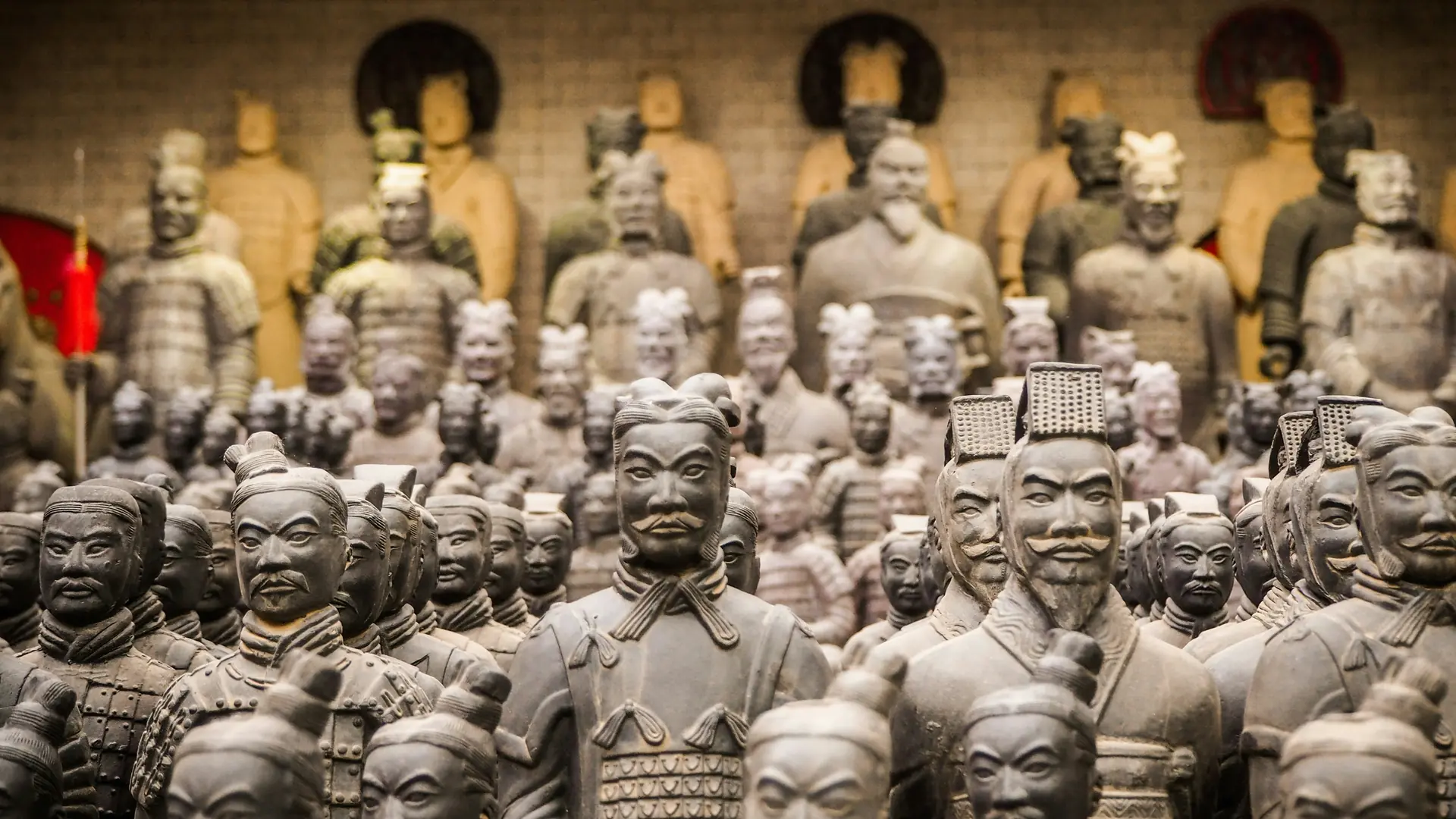
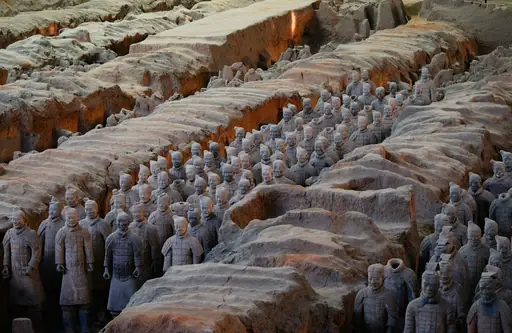
The Terracotta Army museum in Xi’an presents a remarkable collection of ancient sculptures. Thousands of life-sized figures were created to accompany the first emperor of China into the afterlife. Each statue has unique facial features and clothing details that show advanced craftsmanship from over two thousand years ago.
Visitors walk through several large pits where rows of soldiers stand in organized ranks. The site also includes chariots, horses and weapons made from bronze and other materials. These artifacts reveal how military organization and artistry were combined during the Qin dynasty. The museum provides clear information about excavation history and ongoing research.
Guides explain the significance of each section without exaggeration. You can see original pieces alongside replicas that help illustrate how the army once looked in bright colors. Small displays describe how archaeologists uncovered the site and what challenges they faced during restoration work. The experience feels educational rather than overly dramatic, focusing on facts about daily life and burial customs.
Nearby attractions include other museums and historic neighborhoods where traditional markets still operate. Public transport connects the city center to the museum with affordable tickets. Entry fees are reasonable for international visitors and timed slots help manage crowds during peak seasons. The site encourages respectful behavior through posted signs that remind guests not to touch artifacts.
The Terracotta Army Museum in Xi’an, China, is accessible via Xi’an Xianyang International Airport, located approximately 40 kilometers northwest of the city center. Travelers can reach the museum by taxi, private car or public bus from the airport; the most direct route takes about 50 minutes. High-speed rail services connect Xi’an Railway Station to nearby cities, with transfers available to local transport for final leg access. The museum is situated near the Lintong District, a key historical area in Xi’an. Visitors may also opt for guided tours or ride‑hailing apps for convenience. Proximity to major highways ensures efficient road travel during favorable weather conditions.
Close to the Terracotta Army site, visitors find a mix of boutique guesthouses and mid‑range hotels that cater to history enthusiasts. Traditional courtyard inns offer authentic Chinese décor and local cuisine, while newer serviced apartments provide modern amenities such as Wi‑Fi, fitness centers and on‑site dining. Prices vary from CN¥300 – 600 (£33.58 – 67.16) per night for budget rooms to CN¥1,200 – 2,000 (£134.32 – 223.86) for premium suites with panoramic views of the city’s skyline. Many accommodations feature tea‑service lounges and cultural workshops, reflecting Xi’an’s reputation as a hub for heritage tourism. The area is also known for its “heritage hotels,” which blend historic architecture with contemporary comforts, making them popular among travelers seeking an immersive experience.


Log in to add this place to a travel list and get a summary of all recommended items for your whole trip.
We calculate the average costs when travelling to destinations and compare those with the living costs at your home. With this you can get an estimate of how expensive or cheap the destination is for you.
To customise this, you can set up which location and price level are used for the calculations in your account settings.
The exchange rate price factor shows how expensive or cheap a currency currently is compared to its historical average. It's a quick way to see if a country is currently more or less affordable due to exchange rate changes.
