






Was this page helpful?

| Public website: | www.leshandafo.com |
|---|
| Power Grid: |
220 V, 50 Hz Plug: Type A , Type I
Type A:
  Read about power adapters |
|---|---|
| Currency: |
Chinese Yuan Renminbi (CNY) £1 ≈ CN¥8.88 |
| Cashless info: |
Rating 5/5
Cashless payments are widely accepted in China, particularly in urban areas. Mobile payment services like Alipay and WeChat Pay are commonly used.
Save with a travel credit card |
| eSIM providers: |
Best value: Saily Flexibility: Airalo Read our in-depth comparison |
| Tipping: | Tipping is not customary in China and is not expected, although it may be appreciated in high-end restaurants or by hotel staff for exceptional service. |
|---|---|
| Public drinking: | Public drinking is generally not allowed in many places in China, but it is common in restaurants and bars. |
| Public smoking: | Smoking is prohibited in many indoor public spaces, such as restaurants and public transport, but enforcement can vary. |
| Chinese New Year (January/February) |
Major holiday with family gatherings and public celebrations |
|---|---|
| National Day (1 October) |
National holiday with parades and festivities |
| Emergency contact: | Emergency Numbers: 110 (Police), 120 (Ambulance), 119 (Fire) |
|---|---|
| Taxi apps: | DiDi, Uber |
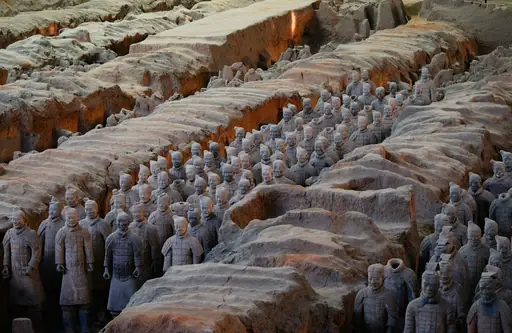
| Other: | China is known for its vast cultural heritage, including historical landmarks like the Great Wall, the Forbidden City, and the Terracotta Army. It offers diverse landscapes ranging from mountains to beaches. |
The best times to travel section shows how the months compare for a visit, so you can find the time of year that fits what you want to do.
Background colours of the months:
The colour shows the typical temperature: yellow (hot), green (mild) and blue (cold). How strong the colour is shows the travel season: full colour means high season, soft colour means shoulder season and soft-striped means off season.
Weather symbols:
Each month has one symbol showing what the weather is typically like, such as hot and sunny, freezing or a rainy or snowy season. Use them to quickly spot months that match the weather you want, or to avoid the ones that don't.
Crowdedness:
The people icon shows how busy the place usually is. The more people, the more crowded it gets.
Additional notes:
The grey info boxes point out special things worth knowing, like recurring weather issues or seasonal events.
The Leshan Giant Buddha stands over 70 meters tall near the confluence of three rivers in Sichuan province. Carved from a single sandstone cliff between the 7th and 9th centuries it reflects ancient engineering skill and spiritual dedication. The statue depicts Maitreya, the future Buddha, with serene features and hands positioned to suggest calm. Its scale invites visitors to consider both human creativity and cultural legacy.
Historical records link the project to a monk named Hai Tong who sought protection from frequent floods that threatened local villages. Workers spent decades chiseling stone while integrating natural water channels into the design. This connection between art and practicality shows how communities combined faith with problem-solving. The Buddha’s face aligns with river currents creating subtle visual effects when viewed from key angles.
Today travelers explore pathways that wind around the statue allowing close inspection of carvings on its shoulders and base. Smaller temples nearby display stone tablets inscribed with ancient texts offering glimpses into past beliefs. The site’s location near mountain trails encourages walking routes that combine history with nature. Local guides share stories about daily life during construction adding context to physical details often overlooked.
Visiting requires planning due to its remote setting yet rewards patience with quiet moments by the river. Nearby towns provide basic lodging and meals featuring Sichuan cuisine known for bold flavors without heavy spice. Photography is encouraged but respect for prayer areas remains important. The Buddha’s presence persists as a reminder of enduring traditions shaping modern identities across generations.
The Leshan Giant Buddha, located in Sichuan Province, China, is accessible via several transportation methods. The nearest major city is Chengdu, reachable by high-speed rail or flight from Beijing or Shanghai to Chengdu Shuangliu International Airport. From Chengdu, travelers can take a taxi, bus or private car to Leshan, approximately 180 kilometers away – a journey taking about 2–3 hours depending on traffic. The town of Leshan is connected to the national highway system, allowing for road access by private vehicle or tour buses. Public transportation options include local buses from Chengdu to Leshan, though renting a car or hiring a driver may offer greater flexibility for visitors exploring nearby attractions like Mount Emei.
In the vicinity of the Leshan Giant Buddha, lodging ranges from modest guesthouses to upscale boutique inns, catering to both budget travelers and those seeking comfort. Typical room rates span roughly CN¥200 – 600 (£22.39 – 67.16) per night, with higher-end establishments offering private balconies overlooking the river or traditional courtyard designs that echo local heritage. Many accommodations emphasize eco‑friendly practices, using bamboo furnishings and solar power, reflecting China’s growing emphasis on sustainable tourism. The area is renowned for its “riverfront homestays,” where guests can enjoy home-cooked meals featuring regional Sichuan cuisine while watching the sunset over the Buddha’s silhouette. For longer stays, serviced apartments provide kitchenettes and laundry facilities, making them ideal for extended visits to the site.


Log in to add this place to a travel list and get a summary of all recommended items for your whole trip.
We calculate the average costs when travelling to destinations and compare those with the living costs at your home. With this you can get an estimate of how expensive or cheap the destination is for you.
To customise this, you can set up which location and price level are used for the calculations in your account settings.
The exchange rate price factor shows how expensive or cheap a currency currently is compared to its historical average. It's a quick way to see if a country is currently more or less affordable due to exchange rate changes.
