










Was this page helpful?

These place ratings give you a quick overview of how well a destination matches different types of trips.
‘Best for’ scores:
The specific interest scores show where this place really shines – whether it's ideal for hiking, food & drink experiences, museums or other activities. These highlights help you understand what makes the destination special at a glance.
‘Your personal’ scores:
This reflects how well a place matches your personal preferences. You can adjust the importances of travel topics or other personal requirements categories in your account settings.
‘Suited for’ badges:
These give you a quick overview of how well a destination suits specific types of travellers, to help you find the places that match your lifestyle, preferences or travel situation.
| Power Grid: |
110 V, 60 Hz Plug: Type A , Type B
Type A:
  Read about power adapters |
|---|---|
| Currency: |
Colombian Peso (COP) £1 ≈ COP 4,204.52 |
| Cashless info: |
Rating 3/5
Cashless payments are becoming more common, especially in cities. Credit and debit cards are widely accepted, but cash is still preferred in many rural areas.
Save with a travel credit card |
| eSIM providers: |
Best value: Saily Flexibility: Airalo Read our in-depth comparison |
| Tipping: | Tipping is not obligatory, but a tip of 5-10% is appreciated in restaurants. Taxis generally do not expect a tip, but rounding up the fare is common. |
|---|---|
| Public drinking: | Public drinking is not allowed in some areas, especially in cities. It is best to consume alcohol in licensed venues like bars or restaurants. |
| Public smoking: | Smoking is prohibited in indoor public spaces, including restaurants, bars, and public transport. |
| Independence Day (20 July) |
National holiday celebrating Colombia's independence with parades and festivities |
|---|---|
| Christmas (25 December) |
Celebrated with family gatherings and festive meals |
| Emergency contact: | Emergency Number: 123 |
|---|---|
| Taxi apps: | Uber, Cabify |
| Other: | Colombia is known for its coffee, vibrant culture, and beautiful landscapes, including the Andes mountains and Caribbean beaches. |
The best times to travel section shows how the months compare for a visit, so you can find the time of year that fits what you want to do.
Background colours of the months:
The colour shows the typical temperature: yellow (hot), green (mild) and blue (cold). How strong the colour is shows the travel season: full colour means high season, soft colour means shoulder season and soft-striped means off season.
Weather symbols:
Each month has one symbol showing what the weather is typically like, such as hot and sunny, freezing or a rainy or snowy season. Use them to quickly spot months that match the weather you want, or to avoid the ones that don't.
Crowdedness:
The people icon shows how busy the place usually is. The more people, the more crowded it gets.
Additional notes:
The grey info boxes point out special things worth knowing, like recurring weather issues or seasonal events.
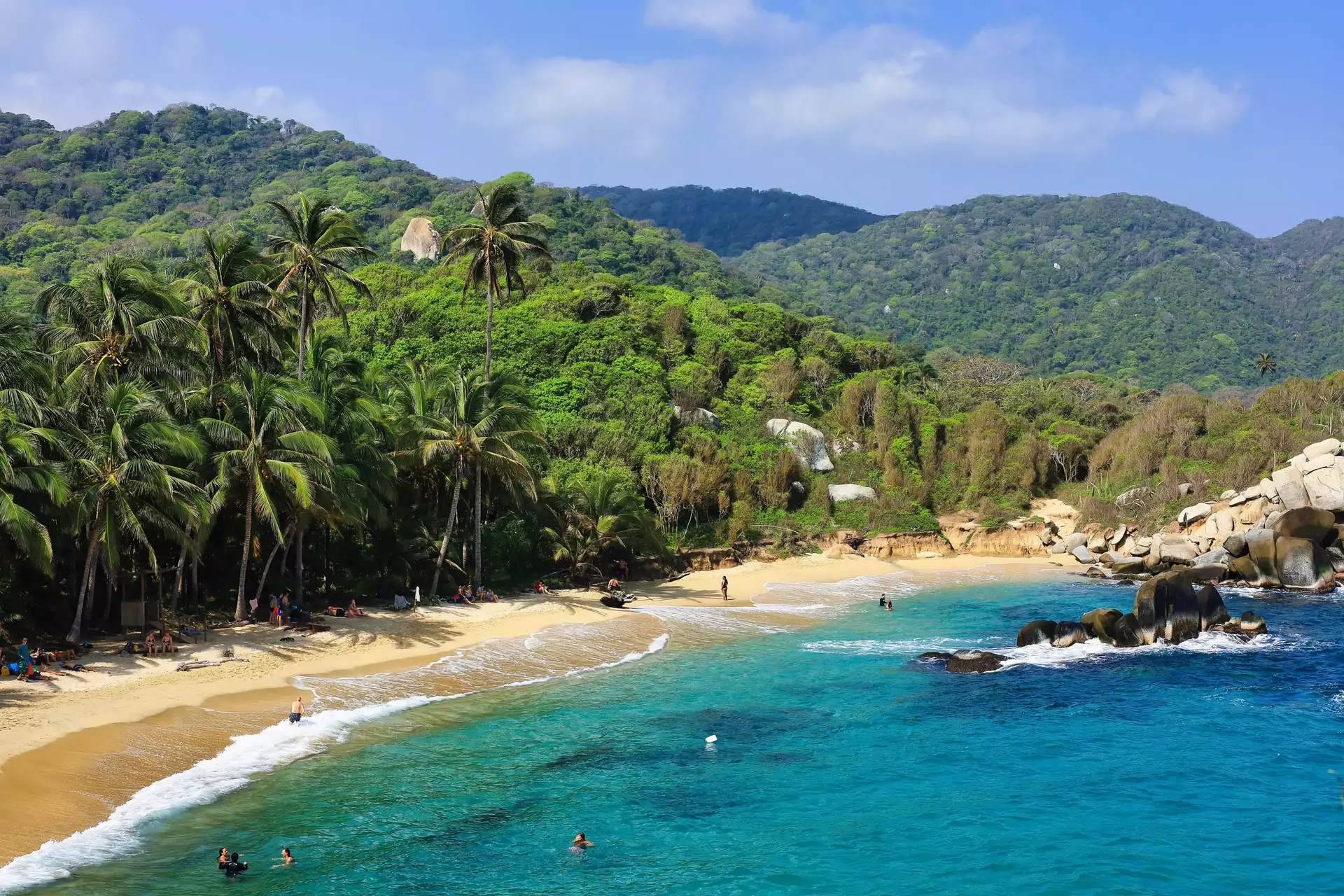
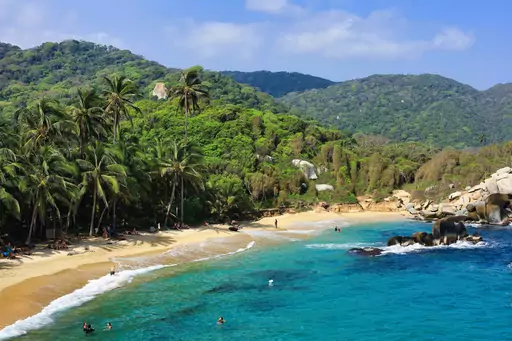
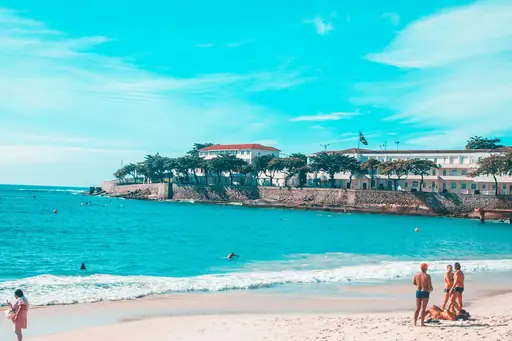
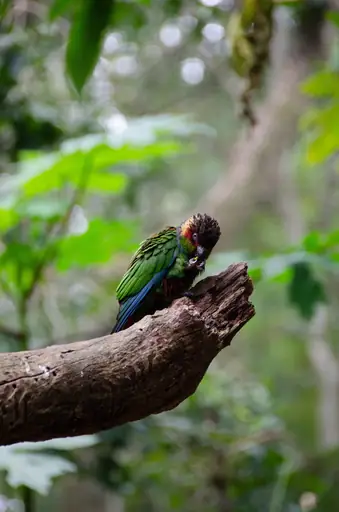
Tayrona offers a rare combination of pristine beaches and tropical rainforest that few destinations can match. The park's spectacular coastline features a series of stunning beaches like Cabo San Juan and Playa Cristal (ranked among South America's top 25 beaches), where you can swim in crystal-clear waters or simply relax on soft white sand. For the more adventurous, over 30 kilometers of ecological trails wind through the rainforest, offering opportunities to spot diverse wildlife including 200+ bird species, monkeys, sloths and various reptiles. The cultural dimension adds another layer of interest, with ancient indigenous sites like Pueblito Tayrona where you can explore stone pathways and structures built by ancestral communities. However, visiting Tayrona requires some planning and consideration. The park can get extremely crowded during Colombian holidays (December/January, June/July) and weekends, diminishing the peaceful experience many seek. Not all beaches are safe for swimming due to strong currents, so it's essential to heed local warnings and only swim in designated areas. The hiking trails, while beautiful, can be challenging in the heat and humidity, especially the 1.5-hour walk from the entrance to the first beaches (though you can pay for transportation to skip this part). During rainy seasons (April/May and September-November), trails can become muddy and slippery and some areas may close temporarily.
The easiest way to reach Tayrona National Park is from Santa Marta, the nearest city with an airport. From Santa Marta, public buses run every 30 minutes to the El Zaíno entrance (the main park entrance) for about COP 7,000 (£1.66), taking approximately 40 minutes. Alternatively, if you're coming from Palomino, local buses that travel between Santa Marta and Palomino stop at both park entrances for COP 8,000 – 10,000 (£1.90 – 2.38) (COP 15,000 (£3.57) for air‑conditioned buses). Simply wave down the bus and ask the driver to drop you at the national park entrance.
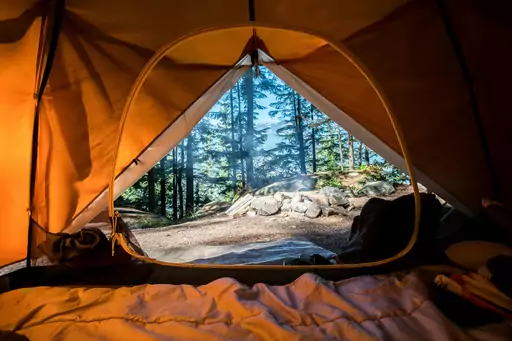
Accommodation options in Tayrona range from camping to hammocks to eco-lodges, with most visitors staying within the park for the full experience. The most popular option is sleeping in hammocks at the iconic lookout point at Cabo San Juan, though these fill up quickly. Camping is available at designated areas like Cañaveral and Arrecifes. For those preferring more comfort, there are eco-lodges at the park entrance or you can stay in nearby Santa Marta and visit as a day trip. Facilities are basic throughout the park, with limited electricity and shared bathrooms.
We calculate the average costs when travelling to destinations and compare those with the living costs at your home. With this you can get an estimate of how expensive or cheap the destination is for you.
To customise this, you can set up which location and price level are used for the calculations in your account settings.
The exchange rate price factor shows how expensive or cheap a currency currently is compared to its historical average. It's a quick way to see if a country is currently more or less affordable due to exchange rate changes.
To help you plan your trip, we provide estimated daily costs per person (when travelling as a pair) for different travel styles. These numbers give you an idea of what you might spend each day at this destination, including accommodation, food, transport and activities.
Additionally, we also provide average hotel costs for different travel styles to give you an estimate for the accommodation only.
Please note that these are only estimates. The real costs depend on booking times, season and other factors.
Travel style categories explained:
Backpacker:
Staying in hostels or budget hotels, cooking your own meals or eating cheap and choosing low-cost activities.
Mid-range:
Staying in mid-range hotels, eating at a mix of restaurants and casual spots and enjoying a variety of activities.
Luxury:
Staying in luxury hotels, dining out at high-end restaurants and enjoying premium experiences without worrying about the price.
| Backpacker | Mid-range | Luxury | |
|---|---|---|---|
| 💵 Total costs per day, including accommodation | |||
| 🏨 Accommodation per night, per person | |||
| 🍝 Food per day | |||
| 🚕 Transportation per day |
| 🍽️ Restaurant Dinner, per person | |
|---|---|
| 🍛 Lunch Set, per person | |
| 🍟 Fast food combo | |
| 🍝 Preparing your own food, per day | |
| ☕ Cappuccino | |
| 🍺 Beer in a restaurant, 0.5 l |
| 🚌 Public transport ticket | |
|---|---|
| 🚕 Taxi Ride, 10 km / 6 mi | |
| ⛽ Petrol, 1 l |
| 🎞️ Cinema ticket | |
|---|---|
| 👩⚕️ Doctor's consult | |
| 🤧 Cold medication | |
| 💇 Basic haircut |
Log in to add this place to a travel list and get a summary of all recommended items for your whole trip.
