






Was this page helpful?

| Public website: | hanaumabaystatepark.com |
|---|
| Power Grid: |
120 V, 60 Hz Plug: Type A , Type B
Type A:
  Read about power adapters |
|---|---|
| Currency: |
US Dollar (USD) £1 ≈ US$1.33 |
| Cashless info: |
Rating 5/5
The U.S. is highly cashless, with credit and debit cards accepted almost everywhere. Mobile payment options like Apple Pay and Google Pay are widely used.
Save with a travel credit card |
| eSIM providers: |
Best value: Saily Flexibility: Airalo Read our in-depth comparison |
| Tipping: | Tipping is customary and expected in the U.S. In restaurants, 15-20% is standard. Taxi drivers, hotel staff, and tour guides also expect tips, usually around 10-20% depending on the service. |
|---|---|
| Public drinking: | Public drinking laws vary by state, but it is generally prohibited in public spaces without a permit. |
| Public smoking: | Smoking is restricted in most indoor public spaces and some outdoor areas. Local laws vary. |
| Etiquette: | Greet with a firm handshake, maintain eye contact, respect personal space, and avoid discussing politics or income unless invited to share opinions. Politeness and friendliness are appreciated. |
| Thanksgiving (November) |
A major holiday with closures and domestic travel surges. |
|---|---|
| Independence Day (July) |
Expect parades, fireworks, and celebrations nationwide. |
| Christmas (December) |
Markets, festive events, and crowded tourist spots. |
| Emergency contact: | Emergency Number: 911 (Police, Fire, Ambulance) |
|---|---|
| Taxi apps: | Uber, Lyft, Bolt |
| Helpful links: |
Wikipedia Visa regulations Customs & border control Travel with medicine |
| Other: | The U.S. is known for its diverse landscapes, cultural experiences, and regional cuisines. Public transport is efficient in cities but less so in rural areas. Renting a car is recommended for exploring national parks. |
The best times to travel section shows how the months compare for a visit, so you can find the time of year that fits what you want to do.
Background colours of the months:
The colour shows the typical temperature: yellow (hot), green (mild) and blue (cold). How strong the colour is shows the travel season: full colour means high season, soft colour means shoulder season and soft-striped means off season.
Weather symbols:
Each month has one symbol showing what the weather is typically like, such as hot and sunny, freezing or a rainy or snowy season. Use them to quickly spot months that match the weather you want, or to avoid the ones that don't.
Crowdedness:
The people icon shows how busy the place usually is. The more people, the more crowded it gets.
Additional notes:
The grey info boxes point out special things worth knowing, like recurring weather issues or seasonal events.
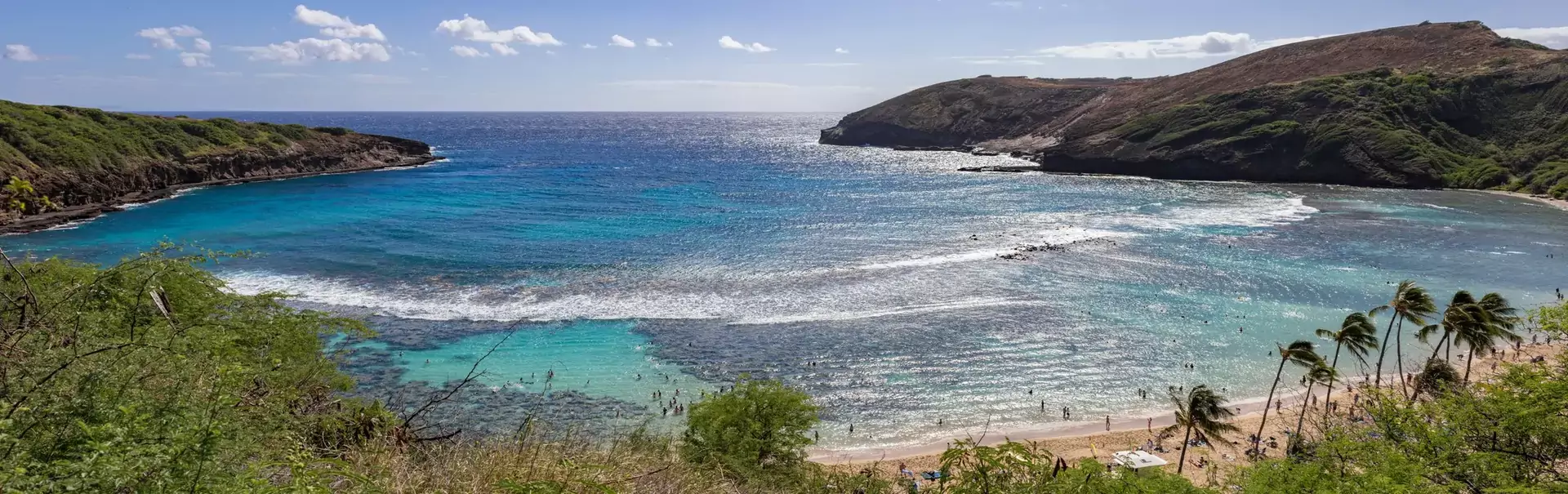
Hanauma Bay is a breathtaking marine sanctuary nestled within a volcanic cone on the island of Oʻahu. It is renowned for its crystal-clear waters and diverse marine ecosystem, which includes around 400 species of fish and frequent sightings of the valuable green sea turtles known locally as Honu. The bay has a rich history, once serving as a royal fishing retreat and launch point for traditional canoes, with deep cultural importance to native Hawaiians.
Visitors today experience Hanauma Bay as a protected nature preserve and marine life conservation area. Efforts since the 1990s have restored its delicate coral reefs, which suffered damage from decades of overtourism. To protect this treasure, entry is limited through a reservation system and guests must watch a mandatory educational video on reef conservation and snorkeling safety before entering the beach.
The white sandy beach combined with the protected calm waters creates an ideal environment for snorkeling, swimming and photography. However, the bay can get crowded, especially on weekends and holidays and sun protection is vital due to limited natural shade. Visitors should also be cautious of sharp coral, strong currents at times and follow all safety guidelines strictly to preserve the ecosystem and ensure personal safety.
Though there’s an entry fee for non-residents, the cost supports preservation initiatives. The beach is well maintained with lifeguards, restroom facilities and educational resources. Despite some impacts from past coral bleaching and human activity, Hanauma Bay remains a deeply fulfilling destination for nature lovers seeking an immersive ocean adventure in Hawaiʻi.
Hanauma Bay is located about 15 minutes by car from Waikiki and Honolulu, making it easily accessible from the main city areas on Oʻahu. Visitors typically travel via the Kalanianaʻole Highway (Hwy 72) to reach the bay. There's limited parking onsite, so arriving early or using shuttle services during busy periods is recommended. The closest major airport is Daniel K. Inouye International Airport in Honolulu.
Accommodation options near Hanauma Bay range from hotels and resorts in nearby Honolulu and Waikiki to vacation rentals. While Hanauma itself does not have lodging within walking distance, the close proximity to the city provides convenient access to a wide range of stays from budget to luxury.
Log in to add this place to a travel list and get a summary of all recommended items for your whole trip.
We calculate the average costs when travelling to destinations and compare those with the living costs at your home. With this you can get an estimate of how expensive or cheap the destination is for you.
To customise this, you can set up which location and price level are used for the calculations in your account settings.
The exchange rate price factor shows how expensive or cheap a currency currently is compared to its historical average. It's a quick way to see if a country is currently more or less affordable due to exchange rate changes.
