



Oceania › New Zealand › North Island › Rotorua

Rotorua

Scroll
Geothermal Wonders and Māori Culture

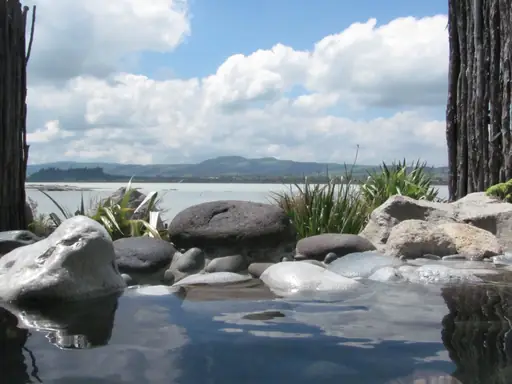
Rotorua in New Zealand’s North Island is a place where geothermal activity shapes daily life. Hot springs bubble across parks and mud pools steam under clear skies. The city sits near volcanic hills that influence local culture and cuisine. Traditional Māori customs are visible in community events and art displayed throughout town. Visitors can learn about history at museums or join guided tours to see natural wonders up close. The mix of outdoor adventure and cultural experiences makes Rotorua distinct among New Zealand destinations.

City in New Zealand
Climate zone: Mild oceanic

Mild oceanic: Marine-influenced climates with cool summers, mild winters and frequent precipitation year-round, typical of western coasts at mid-latitudes.

See climate table
Price level: $$$
$Cheap
$$Medium
$$$Expensive, upscale
$$$+Very expensive, luxury
See price details
Safety: 7.5
General Safety:8
Health & medical:7
Accessibility:5
Tap water:8
Read details
Tourist English: 5/5
English is universally spoken in Rotorua, and all tourist services, signage, and information are available in English. Māori is also present in cultural contexts, but communication is easy for English-speaking travelers everywhere.
Last update: 27 Oct 2026
* We earn a commission from some links on this page.
Rotorua Summary

These place ratings give you a quick overview of how well a destination matches different types of trips.

‘Best for’ scores:
The specific interest scores show where this place really shines – whether it's ideal for hiking, food & drink experiences, museums or other activities. These highlights help you understand what makes the destination special at a glance.

‘Your personal’ scores:
This reflects how well a place matches your personal preferences. You can adjust the importances of travel topics or other personal requirements categories in your account settings.

‘Suited for’ badges:
These give you a quick overview of how well a destination suits specific types of travellers, to help you find the places that match your lifestyle, preferences or travel situation.

Read how our scores work
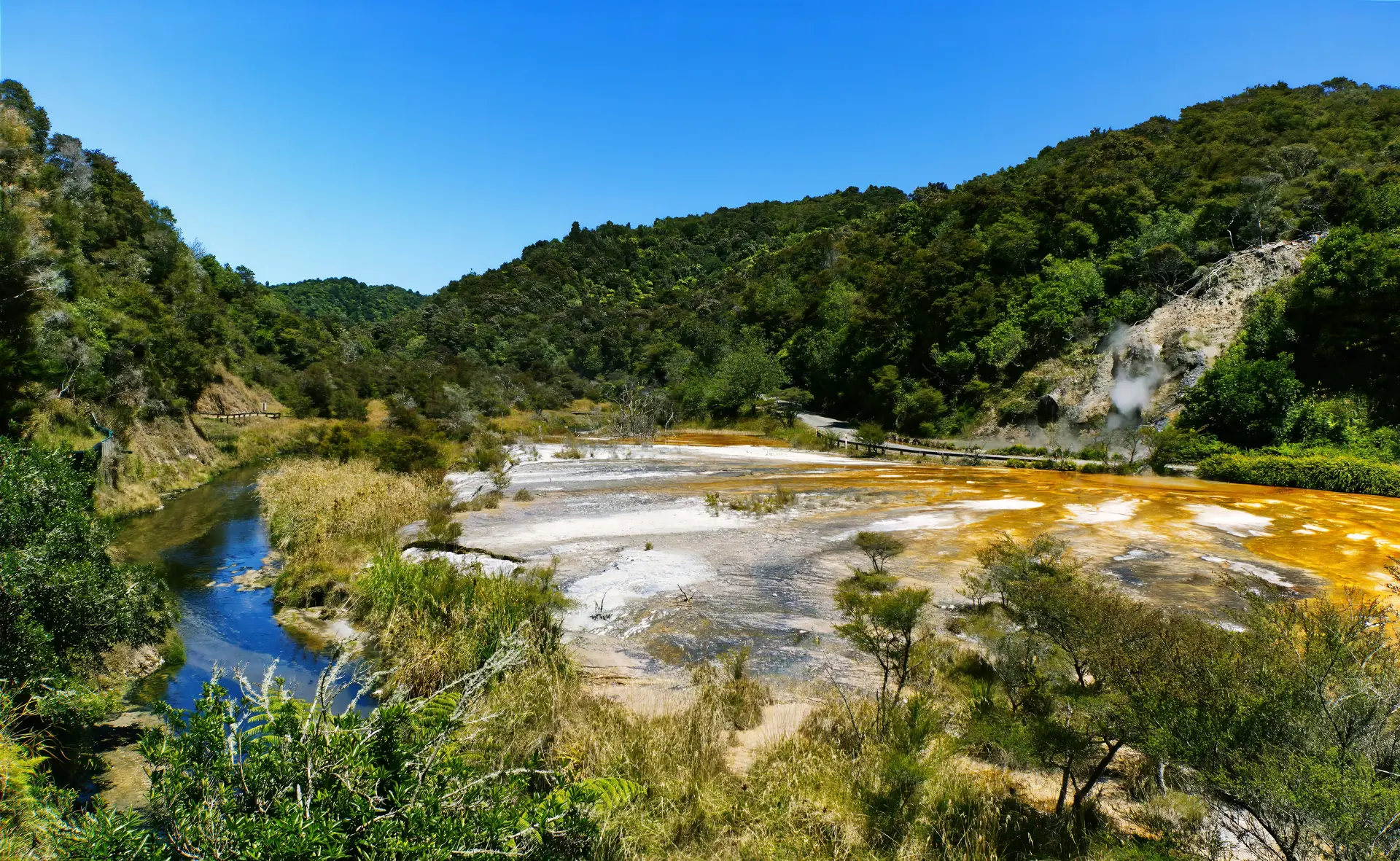
Outstanding for geothermal landscapes and Māori culture. See geysers and hot springs, visit cultural villages, relax in thermal baths and explore forest biking trails.
Place score
8.2
Best at:
Geothermal
10
Cycling
10
Lakes
9
Natural sites
9
Guided tours
9
Personal score
?
Log in to see how this place matches your personal travel interests.
Suited for
👶 8
Families
🧓 6
Seniors
🛡️ 8
Travel Beginners
🥜 8
With food allergies
New Zealand – Quick facts
Power Grid: 230 V, 50 Hz
Plug: Type I
Type I:
Diagram of a Type I power plug

Read about power adapters
Currency: New Zealand Dollar (NZD)
£1 ≈ NZ$2.34
Cashless info: Rating 5/5
Cashless payments are widely accepted across New Zealand, and credit cards are commonly used, especially in urban areas and tourist spots.

Save with a travel credit card
eSIM providers: Best value: Saily
Flexibility: Airalo
Read our in-depth comparison
Tipping: Tipping is not expected in New Zealand, though it is appreciated for exceptional service. 5-10% in restaurants and small tips for taxi and hotel staff are common.
Public drinking: Public drinking is generally allowed in some designated areas but may be restricted in others. Consumption of alcohol in public places may require a permit.
Public smoking: Smoking is restricted in many public areas, especially indoor spaces and public transport.
Waitangi Day
(6 February)
A national holiday celebrating the signing of the Treaty of Waitangi
Emergency contact: Emergency Number: 111 (Police, Fire, Ambulance)
Taxi apps: Uber, Ola
Other: New Zealand is known for its stunning landscapes, from beaches and mountains to national parks and cultural experiences.
Best times to travel

The best times to travel section shows how the months compare for a visit, so you can find the time of year that fits what you want to do.

Background colours of the months:
The colour shows the typical temperature: yellow (hot), green (mild) and blue (cold). How strong the colour is shows the travel season: full colour means high season, soft colour means shoulder season and soft-striped means off season.

Weather symbols:
Each month has one symbol showing what the weather is typically like, such as hot and sunny, freezing or a rainy or snowy season. Use them to quickly spot months that match the weather you want, or to avoid the ones that don't.

Crowdedness:
The people icon shows how busy the place usually is. The more people, the more crowded it gets.

Additional notes:
The grey info boxes point out special things worth knowing, like recurring weather issues or seasonal events.

for Rotorua, New Zealand
🌤️
Jan
🌤️
Feb
🌤️
Mar
🌤️
Apr
🌤️
May
🌤️
Jun
🌤️
Jul
🌥️
Aug
🌥️
Sep
🌤️
Oct
🌤️
Nov
🌥️
Dec
High season: Jan. - March, Dec.
Shoulder season: April - May, Sep. - Nov.
Crowdedness: 8 (Very crowded)
Tap on a month for more info Hover over a month for more info
New Zealand school holidays from mid December to late January bring peak crowds and prices
Geothermal parks, hot pools and Māori cultural experiences operate year-round; cold months suit them best
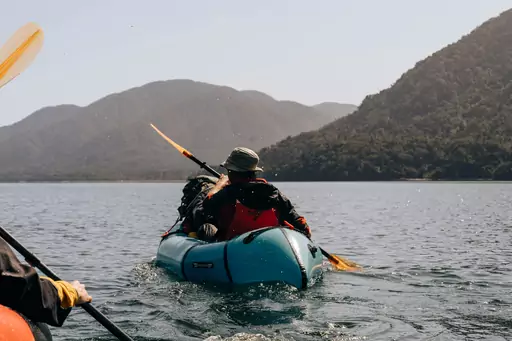
Lake swimming, kayaking and boat trips are most pleasant December to March

Why travel to Rotorua?

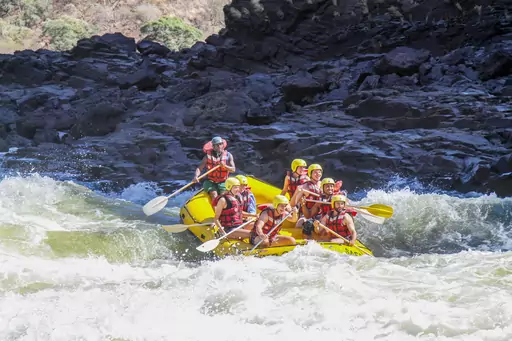
Rotorua is a must for anyone who loves dramatic natural scenery and wants to experience authentic Māori culture. You can wander through otherworldly geothermal parks like Wai-O-Tapu and Te Puia, soak in mineral-rich hot springs and watch traditional haka performances at a local marae. The city is also a hub for adventure, with mountain biking in the Redwoods, white-water rafting and ziplining through native bush. But take note: the sulfur smell is real and can be strong, especially near geothermal areas-it’s not everyone’s cup of tea. Rotorua is popular, so expect crowds at top spots in peak season. Some attractions are pricey and the weather can change quickly, so pack for all conditions. Still, the mix of culture, nature and adventure makes Rotorua one of New Zealand’s most memorable stops.

🏯Places worth seeing
  • 1 Te Puia
  • 2 Wai-o-Tapu Thermal Wonderland
  • 3 Skyline
  • 4 Whakarewarewa
  • 5 Rotorua Museum
  • 6 Mitai Māori Village
🎡Places for activities
  • 1 Polynesian Spa
  • 2 Velocity Valley
  • 3 Skyline Rotorua
  • 4 Kaitiaki Adventures
  • 5 ZORB
  • 6 Rotorua Canopy Tours
  • 7 National Kiwi Hatchery
🏞️Natural landmarks
  • 1 Waimangu Volcanic Valley Scientific Reserve
  • 2 Tarawera Falls
  • 3 Hamurana Springs Recreation Reserve
  • 4 Lake Rotokākahi / Green Lake
  • 5 Tikitapu / Blue Lake
  • 6 The Redwoods – Whakarewarewa Forest
  • 7 Lake Rotorua
  • 8 Hot 'n' Cold
🛍️Shopping
  • 1 Rotorua Central Mall
  • 2 Whakarewarewa Visitor Centre and Gift Shop
  • 3 Rotorua Night Market
🎈Events
  • Rotorua Marathon (May)
  • Matariki Festival (June/July)
  • Crankworx Mountain Bike Festival
  • Lakeside Concert
  • GLO Festival (New Year’s Eve)
  • Rotorua Night Market (weekly)
  • Taniwha Dragon Boat Festival
  • Mudtopia Festival
  • Maori New Year Celebrations
  • Polynesian Spa Wellness Events

Knowledge before you go

  • Expect a sulphur smell; it’s normal around geothermal areas.
  • Book one Māori cultural experience only; many are similar, with different food and group sizes.
  • Spend time in central Rotorua evenings – Eat Streat and nearby streets concentrate restaurants, bars and buzz.
  • For a free geothermal fix, walk Kuirau Park’s bubbling pools and footbaths – go early for fewer crowds.

How to travel to Rotorua

Rotorua is about a 3-hour drive from Auckland and 1 hour from Taupō. Intercity buses connect Rotorua with major North Island cities. Rotorua Regional Airport has direct flights from Auckland, Wellington and Christchurch, with taxis and shuttles to the city. Car rental is available at the airport and in town.

Access summary

  • From Rotorua Airport (ROT): Taxi or shuttle, around 10–15 minutes.
  • From Auckland: Drive about 3 hours; intercity buses roughly 3.5–4.5 hours.
  • From Hamilton or Taupō: Driving or bus connections, usually about 1.5–2 hours.

Where to stay in Rotorua

Rotorua has a wide range of accommodation, from lakeside resorts and boutique lodges to motels, hostels and holiday parks. Many places offer geothermal pools or spa facilities. Book ahead in summer and during festivals, as the best spots fill quickly. For a quieter stay, look for options outside the city center or near the lakes.

How to get around Rotorua

Rotorua’s city center is compact and walkable, with most attractions a short drive or shuttle away. Local buses connect the main sights and many tours offer hotel pickups. Renting a car gives you the most flexibility, especially for exploring lakes and forests outside town. Cycling is popular, particularly in the Redwoods. Parking is generally easy, but some areas can be busy in peak season.
Budget snapshot
Costs compared to home

We calculate the average costs when travelling to destinations and compare those with the living costs at your home. With this you can get an estimate of how expensive or cheap the destination is for you.

To customise this, you can set up which location and price level are used for the calculations in your account settings.

-16 %
Daily expenses in Rotorua are around 16% lower than the average across United States. That means you'll spend considerably less on meals and getting around.
Exchange rate trend

The exchange rate price factor shows how expensive or cheap a currency currently is compared to its historical average. It's a quick way to see if a country is currently more or less affordable due to exchange rate changes.

-15 %
Your exchange rate (GBP to NZD) is 15% better than in recent years. That means travelling now is considerably cheaper compared to the past.

Travel costs

To help you plan your trip, we provide estimated daily costs per person (when travelling as a pair) for different travel styles. These numbers give you an idea of what you might spend each day at this destination, including accommodation, food, transport and activities.

Additionally, we also provide average hotel costs for different travel styles to give you an estimate for the accommodation only.

Please note that these are only estimates. The real costs depend on booking times, season and other factors.

Daily cost summary

Travel style categories explained:

Backpacker:
Staying in hostels or budget hotels, cooking your own meals or eating cheap and choosing low-cost activities.

Mid-range:
Staying in mid-range hotels, eating at a mix of restaurants and casual spots and enjoying a variety of activities.

Luxury:
Staying in luxury hotels, dining out at high-end restaurants and enjoying premium experiences without worrying about the price.

Backpacker Mid-range Luxury
💵 Total costs per day, including accommodation
£47
£118
£325
🏨 Accommodation per night, per person
£17
£53
£120
🍝 Food per day
£25
£58
£179
🚕 Transportation per day
£6
£7
£26
Food & Drink
🍽️ Restaurant Dinner, per person
£23
🍛 Lunch Set, per person
£9
🍟 Fast food combo
£7.50
🍝 Preparing your own food, per day
£9
☕ Cappuccino
£2.60
🍺 Beer in a restaurant, 0.5 l
£5
Transportation
🚌 Public transport ticket
£1.25
🚕 Taxi Ride, 10 km / 6 mi
£16
⛽ Petrol, 1 l
£1.20
Other
🎞️ Cinema ticket
£7.50
👩‍⚕️ Doctor's consult
£28
🤧 Cold medication
£8.50
💇 Basic haircut
£8

Safety information overview

General safety
8
Rotorua is very safe, with low crime rates. Usual precautions apply: keep valuables secure in busy places and lock your car. The geothermal areas can be hazardous — always stay on marked paths and supervise children closely.
Health & Medical
7
Medical care is excellent, with clinics and a hospital in town. Tap water is safe to drink. The sulfur smell is harmless but can be strong near geothermal areas. Use sun protection and stay hydrated, especially after hot pool visits.
Accessi­bility
5
Most main attractions, hotels and city areas are accessible, but some geothermal parks have uneven paths or steps. Wheelchair access is improving, but check ahead for specific needs. Public transport is generally accessible.
Tap water
8
Tap water in Rotorua is safe and widely available. Public fountains exist in parks and at major attractions, but carrying a refillable bottle is handy, especially when exploring outdoors.

Looking for inspiration?

Discover
Top adventure destinations and outdoor activities
Adventure travel covers an enormous range of activities and risk tolerances, from multi-day wilderness trekking and white water rafting to technical climbing, polar expeditions and…
Read more
Discover
Best hot springs destinations in Oceania
Oceania's hot spring offer is anchored by New Zealand's North Island geothermal zone, where one of the world's most accessible and varied thermal landscapes produces hot springs,…
Read more
Discover
Best adventure destinations in Oceania
Oceania's adventure offer combines the alpine wilderness and white water rivers of New Zealand's South Island with the surf coastlines of Australia, the jungle trekking of Papua…
Read more
Discover
Best travel destinations for food allergies
Travelling with a food allergy adds a layer of planning most people never have to think about and the right destination can make that planning a lot easier. Some travellers…
Read more
Discover
Volcano destinations and volcanic landscapes
Volcanic destinations offer a category of landscape experience unavailable anywhere else, with the combination of raw geological drama, active crater environments and the…
Read more
Discover
Best destinations to visit in November in Oceania
Oceania moves toward early summer in November, with warming temperatures building steadily across the region. Australia and New Zealand both see comfortable, mild weather this…
Read more
Discover
Top spiritual travel destinations and wellness retreats
Spiritual travel works best at destinations with a genuine, long-standing tradition behind the practice on offer: places where meditation, ritual or retreat has been part of local…
Read more
Discover
Best traditional destinations in Oceania
Oceania's traditional destinations are defined by the indigenous cultures of Australia, New Zealand and the Pacific island groups, where some of the world's oldest continuous…
Read more
Discover
Best wellness destinations in Oceania
Oceania's wellness offer combines the world-class destination spa infrastructure of Australia and New Zealand with the Pacific island retreat circuit that has developed around the…
Read more
Discover
Best destinations to visit in September in Oceania
September brings spring to Oceania, easing the region out of winter just as wildflowers and warmer days start to return. Western Australia's wildflower season reaches its peak…
Read more
Discover
Top forest destinations and woodland landscapes
Forest travel encompasses some of the world's most biodiverse and ecologically significant environments, with the great tropical rainforests, temperate old growth systems and…
Read more
Discover
Top traditional destinations and cultural heritage sites
Traditional destinations are those where cultural practices, craftsmanship, ceremony and ways of life that predate industrialisation and mass tourism remain visible and active…
Read more
Discover
Best travel destinations for food allergies in Oceania
Australia and New Zealand share some of the clearest food allergen laws anywhere, which makes Oceania a fairly reassuring region for allergy conscious travelers. Packaged food…
Read more
Discover
Top hot springs destinations and thermal resorts
Hot spring travel sits at the intersection of natural landscape, geological spectacle and bathing culture, with the world's most rewarding destinations combining accessible thermal…
Read more
Discover
Top beer destinations and famous breweries
Beer travel has developed a dedicated following built around the explosion of craft and independent brewing that has transformed the offer in many countries over the past two…
Read more
Was this page helpful?
Feedback