We use cookies and external services: MapTiler for interactive maps and Google Maps to show route duration/distance. Both may process personal data such as your IP address, including transfers outside the EU/EEA. See our privacy policy for details. By clicking ‘Accept all’, you consent to this.
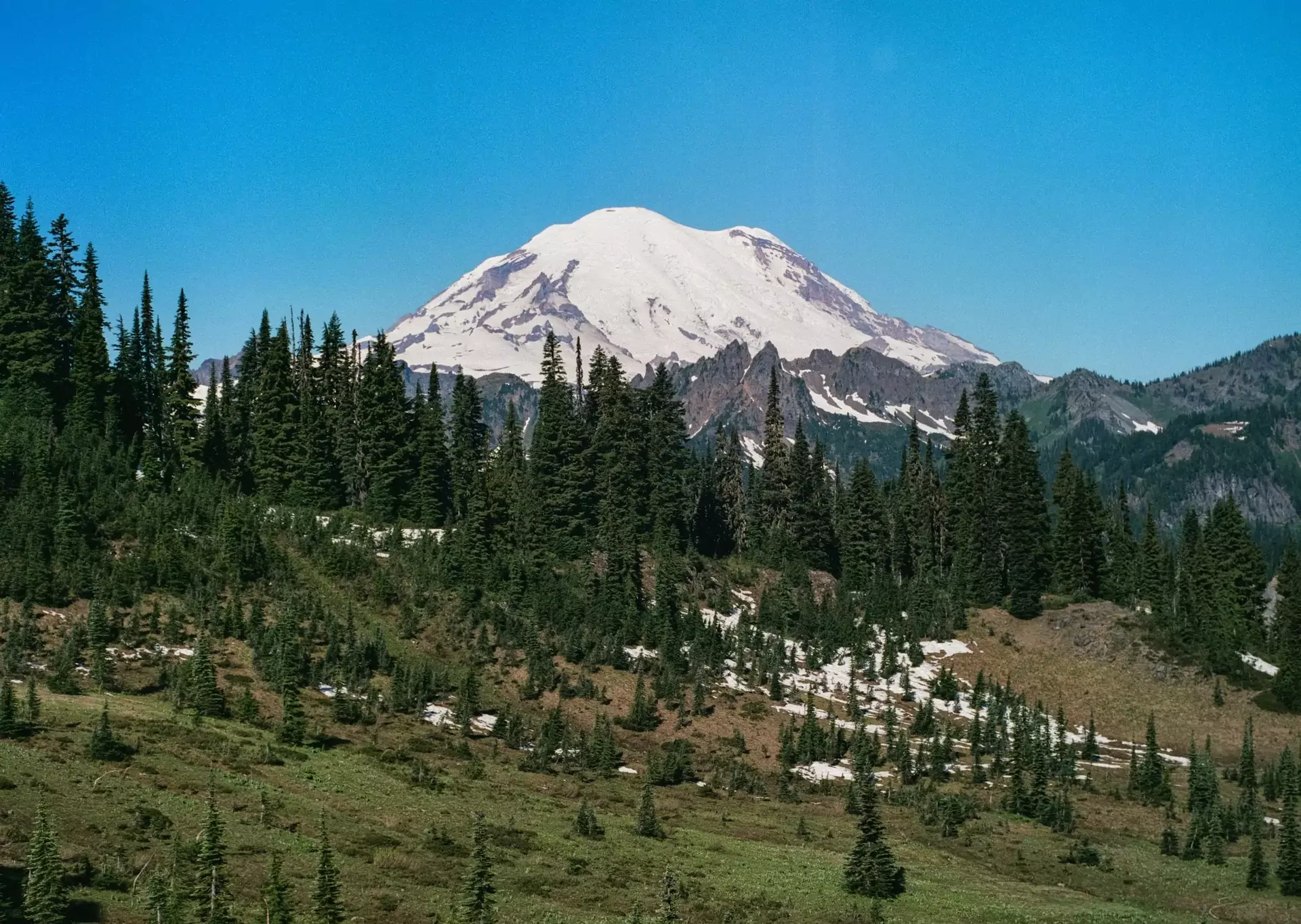
Mount Rainier National Park has a cool, wet Pacific Northwest climate shaped by dramatic elevation changes. Winters are snowy and cold, while summers are mild, sunny, and relatively dry. Weather can shift rapidly, so visitors should be prepared for rain or chilly conditions at any time of year, especially at higher elevations.
The best times to travel section shows how the months compare for a visit, so you can find the time of year that fits what you want to do.
Background colours of the months:
The colour shows the typical temperature: yellow (hot), green (mild) and blue (cold). How strong the colour is shows the travel season: full colour means high season, soft colour means shoulder season and soft-striped means off season.
Weather symbols:
Each month has one symbol showing what the weather is typically like, such as hot and sunny, freezing or a rainy or snowy season. Use them to quickly spot months that match the weather you want, or to avoid the ones that don't.
Crowdedness:
The people icon shows how busy the place usually is. The more people, the more crowded it gets.
Additional notes:
The grey info boxes point out special things worth knowing, like recurring weather issues or seasonal events.
The climate of Mount Rainier National Park
Mount Rainier National Park’s climate is heavily influenced by the Pacific Ocean and its mountainous terrain. Winters (November–April) are long, cold, and very wet, with lower elevations like Longmire seeing average highs of 2–7°C and lows near or below freezing. At higher elevations such as Paradise, temperatures are several degrees cooler and snowfall is legendary – Paradise is among the snowiest places on earth, averaging over 12 metres of snow each season. Most park roads close for winter, and snow blankets the landscape, making it a paradise for snowshoeing and cross-country skiing. Rain and snow can occur any time, and storms are frequent.
Spring (May–June) brings gradually warming temperatures (10–19°C at Longmire), but snow lingers on higher trails into July. Waterfalls are at their most powerful, fed by melting snow, and lower-elevation trails can be muddy or still snow-covered. Summer (July–September) is the driest and sunniest period, with highs of 20–24°C at lower elevations and cool nights. Wildflowers bloom in the meadows, and most trails are finally snow-free by mid-July. Even in summer, weather can change quickly – rain and chilly winds are possible, especially higher up. Autumn (late September–October) is crisp and colourful, with temperatures dropping (6–15°C) and the first snows returning by late October. Sunshine hours peak in summer (up to 9 hours per day), while winter days are short and often cloudy. Winds are moderate (10–20 km/h), but can be stronger on exposed ridges and during storms.
| Average climate data for Mount Rainier National Park, United States | |||||||||||||
|---|---|---|---|---|---|---|---|---|---|---|---|---|---|
| Month | Jan | Feb | Mar | Apr | May | Jun | Jul | Aug | Sep | Oct | Nov | Dec | Year |
| Average maximum temperature (°C) | 2 | 2 | 3 | 6 | 10 | 13 | 17 | 18 | 15 | 9 | 3 | 1 | 18 |
| Average minimum temperature (°C) | -5 | -6 | -5 | -3 | 0 | 2 | 6 | 7 | 4 | 0 | -4 | -6 | -6 |
| Average precipitation (mm) | 459 | 325 | 319 | 209 | 150 | 103 | 49 | 50 | 120 | 262 | 514 | 438 | 2,998 |
| Average rainfall days (days) | 21 | 18 | 22 | 19 | 15 | 13 | 7 | 7 | 10 | 15 | 22 | 21 | 189 |
| Average snowfall (mm) | 2,997 | 2,351 | 2,292 | 1,703 | 659 | 143 | 7 | 2 | 36 | 617 | 3,091 | 3,138 | 17,036 |
| Average snowfall days (days) | 19 | 16 | 20 | 14 | 8 | 3 | 0 | 0 | 1 | 6 | 17 | 19 | 122 |
| Average daily daylight hours (h) | 9 | 10 | 12 | 13 | 15 | 15 | 15 | 14 | 12 | 10 | 9 | 8 | 12 |
Travel info
- Winter (November–April): Cold and snowy, with highs of 2–7°C and frequent snowstorms. Paradise is a snow sports haven, but most park roads are closed. Bring snow gear and check road conditions before visiting.
- Spring (May–June): Cool and wet, highs of 10–19°C. Snow lingers at higher elevations and trails can be muddy. Waterfalls are spectacular – pack waterproof boots and layers.
- Summer (July–September): Mild and mostly dry, highs of 20–24°C. Wildflowers bloom, trails are clear, and days are long and sunny. Still, sudden rain or chilly winds are possible – bring sun protection and a light jacket.
- Autumn (late September–October): Cool and crisp, highs of 6–15°C. Autumn foliage is vibrant, but rain and early snow are likely. Dress in layers and check for road closures.
- General Tips: Weather is unpredictable – always check the forecast, pack layers, rain gear, and sturdy shoes. Higher elevations are colder and snowier. Summer is busiest; visit midweek or early in the day to avoid crowds.
The best time to visit Mount Rainier National Park
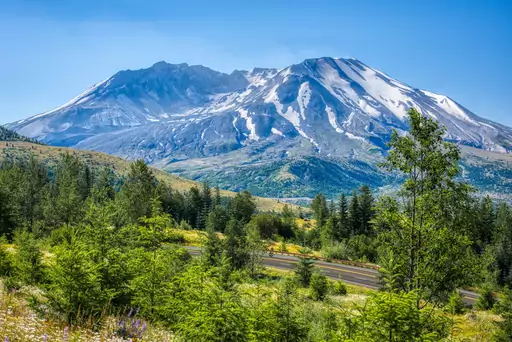
The best time to visit Mount Rainier National Park is from mid-July to mid-September. During these months, most trails are snow-free, wildflowers are in full bloom, and the weather is mild and sunny (20–24°C). This is the ideal period for hiking, photography, and enjoying the park’s famous alpine meadows. Early mornings offer the clearest mountain views and fewer crowds.
The worst time to visit Mount Rainier National Park
The least favourable time to visit is from November to April, when the park is cold, snowy, and wet. Many roads and trails are closed, and storms are frequent. While winter is beautiful for snow sports, conditions can be harsh and unpredictable, making travel and sightseeing challenging for most visitors.
Frequently asked questions
Paradise, at higher elevation, averages over 12 metres (500 inches) of snow each season, making it one of the snowiest places on earth. Lower elevations receive more rain than snow, but all areas can see winter storms.
Wildflowers typically bloom from mid-July to early August, depending on snowmelt. The meadows around Paradise and Sunrise are especially famous for their vibrant displays during this time.
Most park roads close for winter due to heavy snow. Only the Nisqually Entrance to Longmire is open year-round, but even this can close temporarily during storms. Check current road conditions before your visit.
Pack layers for changing temperatures, waterproof clothing, sturdy hiking boots, and sun protection. Even in summer, weather can change rapidly, and higher elevations are much colder than the base.
Summer is usually the driest and sunniest season, with highs of 20–24°C at lower elevations. However, rain and sudden temperature drops are possible at any time, especially in the mountains.
Most higher-elevation trails are snow-free from mid-July to early October. Lower-elevation trails may be accessible earlier, but always check trail conditions before heading out.
Yes, Paradise is open for snowshoeing, cross-country skiing, and sledding in winter. Be prepared for deep snow, cold temperatures, and changing weather conditions.
Minimum and maximum temperatures in Mount Rainier National Park
The warmest month, with the highest average maximum temperature, is August (18 °C). The month with the lowest average maximum temperature is December (0.9 °C). Overall, the average maximum temperature over the whole year is 8.1 °C.
The month with the highest average minimum temperature is August (6.6 °C). The coldest month, with the lowest average minimum temperature, is December (-6.1 °C). Overall, the average minimum temperature over the whole year is -0.8 °C.
Rainfall amount in Mount Rainier National Park
The wettest month, with the highest amount of precipitation, is November (514 mm). The driest month, with the least amount of precipitation, is July (49 mm). Over the whole year there are 2,997.9 mm of rainfall on average.
Rainfall days in Mount Rainier National Park
The month with the most days of rain is November (21.7 days). The month with the fewest days of rain is August (6.7 days). Over the whole year there are 188.6 days of rain on average.
Snowfall amount in Mount Rainier National Park
The month with the most snowfall is December (3,137.7 mm). The month with the least snowfall is August (2.5 mm). Over the whole year there are 17,035.8 mm of snowfall on average.
Snowfall days in Mount Rainier National Park
The month with the most days of snowfall is March (19.6 days). The month with the fewest days of snowfall is August (0.2 days). Over the whole year there are 121.9 days of snowfall on average.
Daylight hours and sunshine hours in Mount Rainier National Park
The month with the longest days, so the most daylight, is June (Average daylight: 15.1 h). The month with the shortest days, so the least daylight, is December (Average daylight: 8.1 h). Over the whole year there are 11.9 h of daylight per day on average.
- Mount Rainier National Park climate overview
- Climate table
- Related travel information for Mount Rainier National Park
- The best time to visit Mount Rainier National Park
- The worst time to visit Mount Rainier National Park
- Frequently asked questions
- Temperature summary
- Rainfall amount summary
- Rainfall days summary
- Snowfall amount summary
- Snowfall days summary
- Daylight hours and sunshine hours summary
- Other recommended travel destinations