








Was this page helpful?

| Power Grid: |
120 V, 60 Hz Plug: Type A , Type B
Type A:
  Read about power adapters |
|---|---|
| Currency: |
US Dollar (USD) £1 ≈ US$1.33 |
| Cashless info: |
Rating 5/5
The U.S. is highly cashless, with credit and debit cards accepted almost everywhere. Mobile payment options like Apple Pay and Google Pay are widely used.
Save with a travel credit card |
| eSIM providers: |
Best value: Saily Flexibility: Airalo Read our in-depth comparison |
| Tipping: | Tipping is customary and expected in the U.S. In restaurants, 15-20% is standard. Taxi drivers, hotel staff, and tour guides also expect tips, usually around 10-20% depending on the service. |
|---|---|
| Public drinking: | Public drinking laws vary by state, but it is generally prohibited in public spaces without a permit. |
| Public smoking: | Smoking is restricted in most indoor public spaces and some outdoor areas. Local laws vary. |
| Etiquette: | Greet with a firm handshake, maintain eye contact, respect personal space, and avoid discussing politics or income unless invited to share opinions. Politeness and friendliness are appreciated. |
| Thanksgiving (November) |
A major holiday with closures and domestic travel surges. |
|---|---|
| Independence Day (July) |
Expect parades, fireworks, and celebrations nationwide. |
| Christmas (December) |
Markets, festive events, and crowded tourist spots. |
| Emergency contact: | Emergency Number: 911 (Police, Fire, Ambulance) |
|---|---|
| Taxi apps: | Uber, Lyft, Bolt |
| Helpful links: |
Wikipedia Visa regulations Customs & border control Travel with medicine |
| Other: | The U.S. is known for its diverse landscapes, cultural experiences, and regional cuisines. Public transport is efficient in cities but less so in rural areas. Renting a car is recommended for exploring national parks. |
The best times to travel section shows how the months compare for a visit, so you can find the time of year that fits what you want to do.
Background colours of the months:
The colour shows the typical temperature: yellow (hot), green (mild) and blue (cold). How strong the colour is shows the travel season: full colour means high season, soft colour means shoulder season and soft-striped means off season.
Weather symbols:
Each month has one symbol showing what the weather is typically like, such as hot and sunny, freezing or a rainy or snowy season. Use them to quickly spot months that match the weather you want, or to avoid the ones that don't.
Crowdedness:
The people icon shows how busy the place usually is. The more people, the more crowded it gets.
Additional notes:
The grey info boxes point out special things worth knowing, like recurring weather issues or seasonal events.
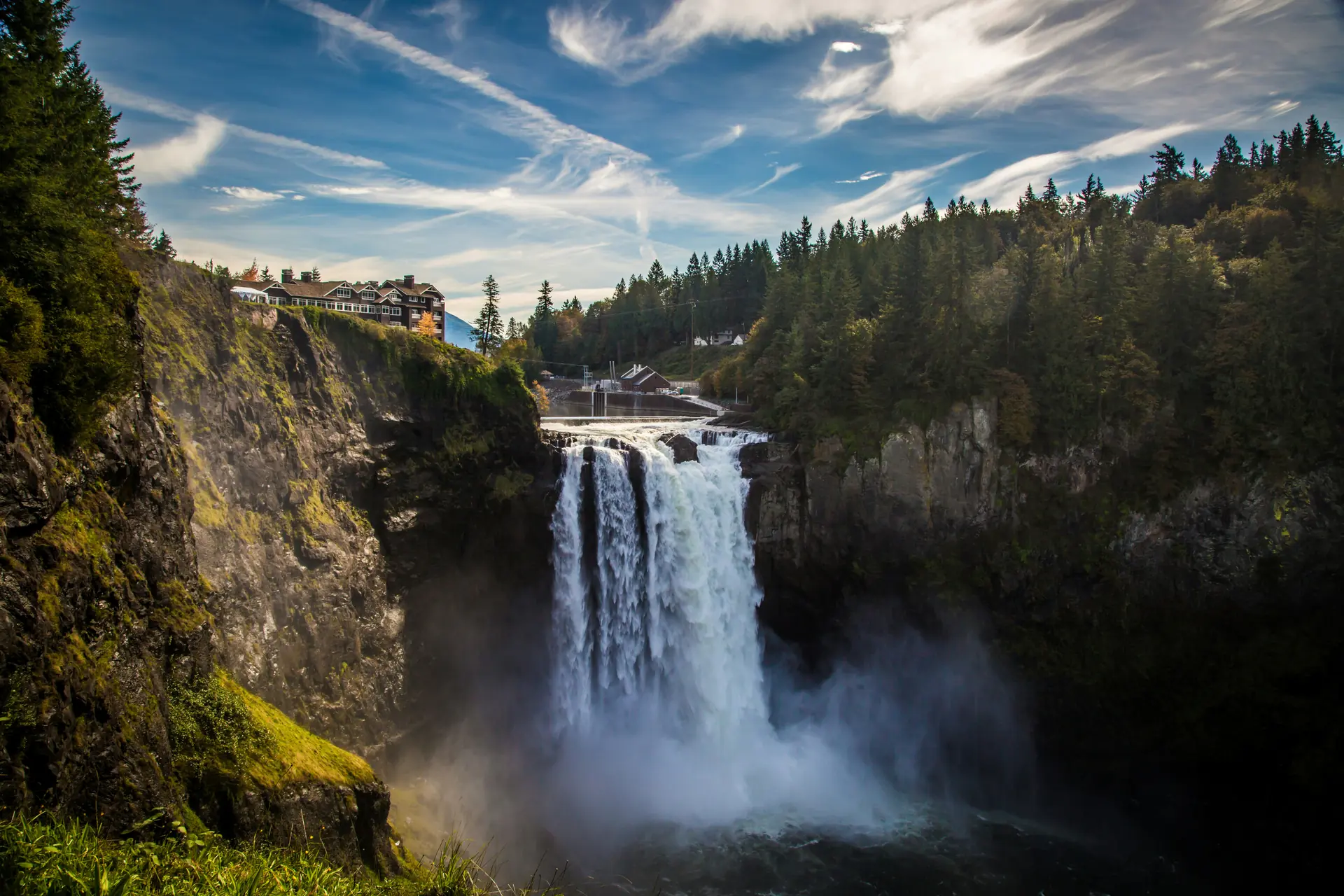
Snoqualmie Falls stands as a powerful natural landmark in Washington State. The waterfall drops over 268 feet creating a striking display of water and mist. Visitors can hear the constant rush from miles away making it easy to notice its presence even before seeing it up close. The trail leading down offers multiple viewpoints where people pause to capture photos or simply absorb the scene.
The area around Snoqualmie Falls features well-maintained paths suitable for walking and cycling. Seasonal changes bring different looks to the falls with spring bringing higher flow from melting snow and summer offering drier conditions. The surrounding forest provides shade and quiet spaces where birds call and leaves rustle in the wind. Benches along parts of the trail allow rest while still keeping eyes on the waterfall.
Local history connects deeply with Snoqualmie Falls. Indigenous peoples used to gather here for fishing and ceremonies long before visitors arrived. Later settlers built bridges and walkways making it accessible without harming natural features. Today signs near the site share stories about early explorers and the role of water in local industry such as logging and hydroelectric power.
Accessibility remains a priority with parking close to the falls and ramps for wheelchairs. Picnic tables sit nearby inviting short breaks between hikes. Nearby towns provide cafes and shops selling snacks or gear if needed. The combination of natural force and thoughtful planning makes Snoqualmie Falls a place where people return again and again without feeling overcrowded.
Snoqualmie Falls is accessible via several routes depending on your starting point. From Seattle, take State Route 99 North toward Snoqualmie, then follow signs to the Snoqualmie Falls Parkway Road for a direct route to the falls parking area. Public transit options include King County Metro buses (routes 235 or 237) with stops near the park entrance. The Washington State Department of Transportation maintains the roads leading to the site, ensuring year-round access despite seasonal weather conditions. Visitors may also reach the falls via the Snoqualmie Valley Scenic Byway, offering scenic views en route. Parking is available at designated lots, with shuttle services occasionally operating during peak seasons for visitor convenience. The area adheres to local regulations for safe and sustainable access.
Snoqualmie Falls sits in a valley that blends rustic charm with modern convenience, offering accommodations ranging from cozy cabins and bed‑and‑breakfasts to upscale lodges and boutique inns. Many lodging options are within a 10‑minute drive, featuring private balconies overlooking forested trails or panoramic views of the Cascades. Prices vary: budget-friendly cabins start around US$120 (£89.71) per night, mid‑range hotels hover near US$200 (£149.52), while luxury resorts can exceed US$350 (£261.66) for premium rooms with spa amenities and river‑side decks. The area is renowned for its “treehouse” style lodgings that blend into the surrounding pine forests, as well as historic log cabins that echo early pioneer architecture. Seasonal packages often include guided hikes, wildlife tours or access to nearby ski resorts, making it a versatile base for both day visitors and extended stays.
Log in to add this place to a travel list and get a summary of all recommended items for your whole trip.
We calculate the average costs when travelling to destinations and compare those with the living costs at your home. With this you can get an estimate of how expensive or cheap the destination is for you.
To customise this, you can set up which location and price level are used for the calculations in your account settings.
The exchange rate price factor shows how expensive or cheap a currency currently is compared to its historical average. It's a quick way to see if a country is currently more or less affordable due to exchange rate changes.
