We use cookies and external services: MapTiler for interactive maps and Google Maps to show route duration/distance. Both may process personal data such as your IP address, including transfers outside the EU/EEA. See our privacy policy for details. By clicking ‘Accept all’, you consent to this.
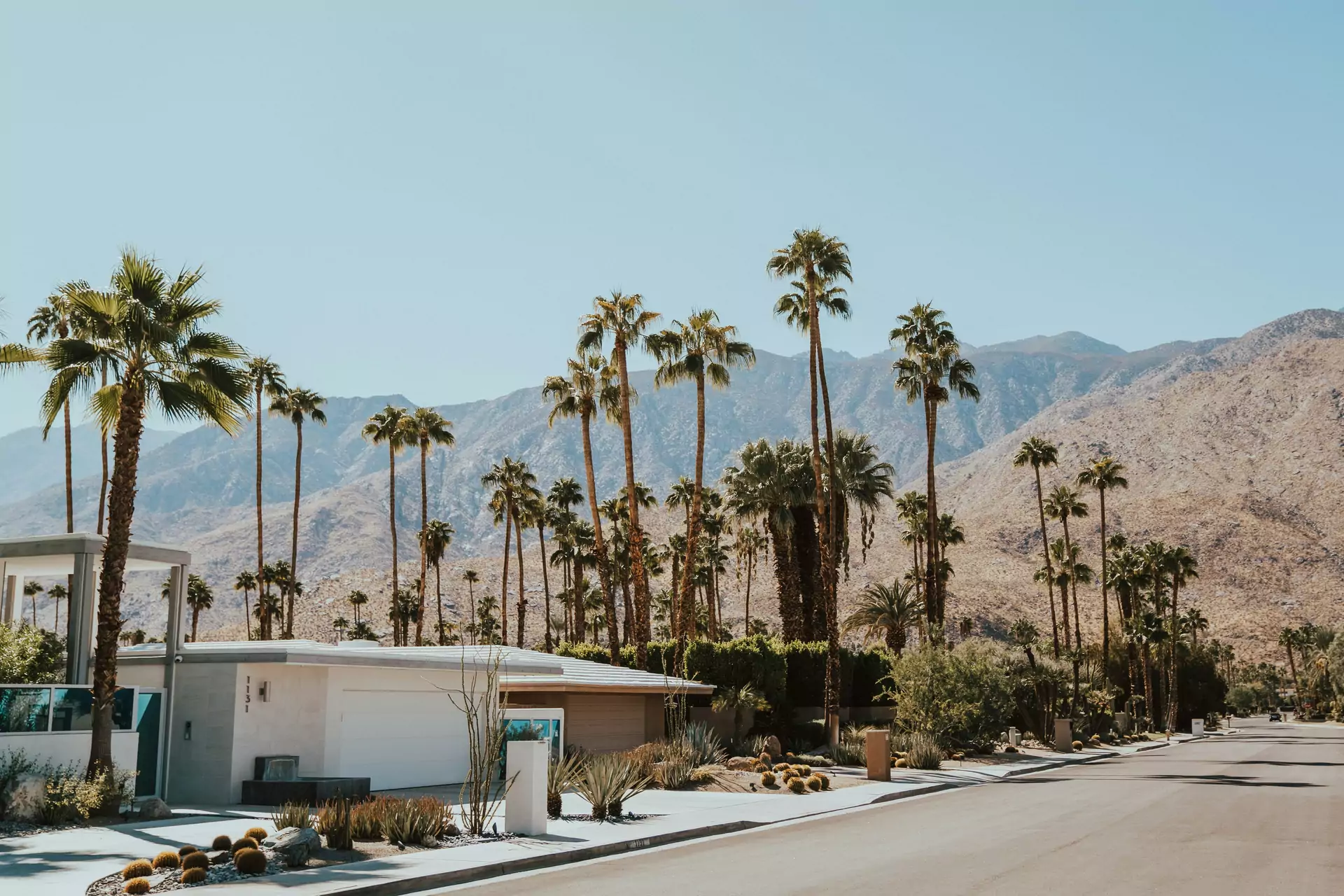
Palm Springs, set in Southern California’s Coachella Valley, boasts a classic desert climate with scorching summers, mild winters, and over 300 days of sunshine each year. The city experiences dramatic seasonal temperature swings, very low rainfall, and consistently dry air, making it a year-round destination for sun-seekers, outdoor enthusiasts, and those escaping colder climates.
The best times to travel section shows how the months compare for a visit, so you can find the time of year that fits what you want to do.
Background colours of the months:
The colour shows the typical temperature: yellow (hot), green (mild) and blue (cold). How strong the colour is shows the travel season: full colour means high season, soft colour means shoulder season and soft-striped means off season.
Weather symbols:
Each month has one symbol showing what the weather is typically like, such as hot and sunny, freezing or a rainy or snowy season. Use them to quickly spot months that match the weather you want, or to avoid the ones that don't.
Crowdedness:
The people icon shows how busy the place usually is. The more people, the more crowded it gets.
Additional notes:
The grey info boxes point out special things worth knowing, like recurring weather issues or seasonal events.
The climate of Palm Springs
Palm Springs features a hot desert climate (BWh), defined by long, intensely hot summers and mild, sunny winters. Average annual temperatures range from 15°C in January to 34°C in July and August. Summer (June–September) brings daytime highs regularly exceeding 40°C, with nights remaining warm above 23°C. The heat is dry, and humidity is low, but conditions can feel extreme – outdoor activities are best in the early morning or evening. Sunshine is nearly constant, with up to 13 hours per day, and rainfall is virtually absent, averaging less than 2 mm monthly.
Winters (December–February) are mild and sunny, with highs of 20–24°C and cool nights dipping to 7–10°C. Rain is rare, with January and February the wettest months, but even then, rainfall averages just 28–29 mm monthly and is limited to brief showers. Spring (March–May) and autumn (October–November) are transitional, featuring warm, pleasant days (24–34°C), cool nights, and minimal rainfall. These seasons are ideal for outdoor activities, festivals, and exploring the surrounding desert landscapes. Winds are generally light to moderate, but gustier conditions can occur during spring, sometimes bringing dust or haze. Annual precipitation totals just 115 mm, concentrated in winter, and the city enjoys over 3,000 hours of sunshine each year.
Palm Springs’ arid climate and mountain shelter make it a haven for sun-lovers and a popular escape from colder, cloudier destinations. The dry air, brilliant blue skies, and dramatic temperature swings define the city’s unique desert charm.
| Average climate data for Palm Springs, United States | |||||||||||||
|---|---|---|---|---|---|---|---|---|---|---|---|---|---|
| Month | Jan | Feb | Mar | Apr | May | Jun | Jul | Aug | Sep | Oct | Nov | Dec | Year |
| Average maximum temperature (°C) | 15 | 16 | 19 | 22 | 26 | 32 | 34 | 34 | 30 | 25 | 19 | 14 | 34 |
| Average minimum temperature (°C) | 6 | 6 | 8 | 11 | 13 | 18 | 22 | 22 | 19 | 15 | 10 | 5 | 5 |
| Average precipitation (mm) | 9 | 12 | 8 | 8 | 3 | 3 | 23 | 17 | 10 | 5 | 6 | 13 | 117 |
| Average rainfall days (days) | 4 | 3 | 5 | 4 | 3 | 2 | 7 | 6 | 5 | 3 | 2 | 4 | 48 |
| Average relative humidity (%) | 45 | 45 | 43 | 38 | 38 | 29 | 29 | 29 | 31 | 34 | 39 | 48 | 37 |
| Average wind speed (km/h) | 10 | 11 | 13 | 14 | 14 | 13 | 11 | 11 | 11 | 11 | 10 | 10 | 12 |
| Average daily daylight hours (h) | 10 | 11 | 12 | 13 | 13 | 14 | 14 | 13 | 12 | 11 | 10 | 9 | 12 |
| Average daily sunshine hours (h) | 7 | 7 | 9 | 11 | 12 | 12 | 12 | 12 | 10 | 9 | 7 | 7 | 10 |
| Average cloud coverage (%) | 19 | 19 | 17 | 12 | 8 | 6 | 7 | 6 | 6 | 7 | 10 | 20 | 11 |
| Average UV index | 4 | 4 | 4 | 5 | 6 | 7 | 7 | 7 | 6 | 5 | 4 | 3 | 5 |
Travel info
- Winter (Dec–Feb): Mild, sunny, and dry, with highs of 20–24°C and cool nights. Ideal for golf, hiking, and outdoor markets. Pack layers for chilly evenings.
- Spring (Mar–May): Warm and bright, with highs of 24–34°C. Wildflowers bloom, and festivals abound. Perfect for outdoor adventures – bring sun protection and light clothing.
- Summer (Jun–Sep): Extremely hot and dry, with highs often above 40°C. Outdoor activities are best in the early morning or evening. Stay hydrated, use sun cream, and seek shade or pools during peak heat.
- Autumn (Oct–Nov): Pleasantly warm, with highs from 33°C in October to 25°C in November. Fewer crowds and ideal for hiking and sightseeing. Nights are cooler – bring a light jacket.
- Travel tip: The best weather is from November to April. In summer, plan activities for early or late in the day and take advantage of lower hotel rates. Always check for heat advisories and stay hydrated.
The best time to visit Palm Springs
The best time to visit Palm Springs is from November to April, when temperatures are mild, skies are sunny, and rainfall is minimal. These months offer ideal conditions for golfing, hiking, festivals, and exploring the city’s vibrant culture, with comfortable evenings and abundant outdoor events.
The worst time to visit Palm Springs
The least favourable time to visit is from June to September, when daytime temperatures frequently exceed 40°C and heat can be extreme. Outdoor activities are limited to early morning or evening, and midday sun can be dangerous without proper precautions. However, this period offers quieter resorts and lower accommodation rates.
Frequently asked questions
Palm Springs has a hot desert climate with long, intensely hot summers and mild, sunny winters. Temperatures range from 15°C in winter to over 40°C in summer, and rainfall is very low, with over 300 days of sunshine annually.
The best time to visit is from November to April, when days are warm (20–30°C), nights are cool, and rainfall is minimal. This period is ideal for outdoor activities, festivals, and enjoying the city’s vibrant scene.
Summers are extremely hot, with daytime highs often above 40°C from June to September. Nights remain warm, and humidity is low. Outdoor activities are best done early or late in the day to avoid the peak heat.
No, Palm Springs is very dry, receiving just 115 mm of rain annually. Most rain falls in winter (January–February), but even then, showers are brief and infrequent. Summers are virtually rainless.
Yes, especially from November to April, when temperatures are comfortable. In summer, plan hikes for early morning or evening, and always carry water, sun cream, and a hat to protect against the intense sun.
Pack light, breathable clothing, sun protection, sunglasses, and a hat. In winter, bring layers for cool evenings. For summer, include swimwear and plan to spend midday hours indoors or by the pool.
The main hazard is extreme heat in summer, which can be dangerous without precautions. Stay hydrated, avoid midday sun, and check for heat advisories. Occasional spring winds can bring dust or haze.
Minimum and maximum temperatures in Palm Springs
The warmest month, with the highest average maximum temperature, is August (34 °C). The month with the lowest average maximum temperature is December (14.1 °C). Overall, the average maximum temperature over the whole year is 23.9 °C.
The month with the highest average minimum temperature is August (22.4 °C). The coldest month, with the lowest average minimum temperature, is December (5.5 °C). Overall, the average minimum temperature over the whole year is 13 °C.
Rainfall amount in Palm Springs
The wettest month, with the highest amount of precipitation, is July (23 mm). The driest month, with the least amount of precipitation, is May (3 mm). Over the whole year there are 117.2 mm of rainfall on average.
Rainfall days in Palm Springs
The month with the most days of rain is July (7.3 days). The month with the fewest days of rain is June (1.6 days). Over the whole year there are 47.7 days of rain on average.
Relative humidity in Palm Springs
The month with the highest average relative humidity is December (48.2 %). The month with the lowest average relative humidity is August (28.6 %). The overall average relative humidity over the whole year is 37.3 %.
Wind speed in Palm Springs
The windiest month, with the highest average wind speed, is May (14.2 km/h). The calmest month, with the lowest average wind speed, is January (9.9 km/h). The overall average wind speed over the whole year is 11.6 km/h.
Cloud coverage in Palm Springs
The month with the cloudiest skies, so the highest cloud coverage, is December (19.6 %). The month with the clearest skies, so the lowest cloud coverage, is September (5.5 %). Over the whole year there is an average cloud coverage of 11.4 %.
Daylight hours and sunshine hours in Palm Springs
The month with the longest days, so the most daylight, is June (Average daylight: 14 h). The month with the shortest days, so the least daylight, is December (Average daylight: 9.1 h). Over the whole year there are 11.9 h of daylight per day on average.
The month with the most sunshine per day is August (Average sunshine: 12.1 h). The month with the least sunshine per day is December (Average sunshine: 6.9 h). Over the whole year there are 9.6 h of sunlight per day on average.
UV index in Palm Springs
The months with the highest average UV index are June, July and August (UV index: 7). The month with the lowest average UV index is December (UV index: 3). Over the whole year the average UV index is 5.2.
- Palm Springs climate overview
- Climate table
- Related travel information for Palm Springs
- The best time to visit Palm Springs
- The worst time to visit Palm Springs
- Frequently asked questions
- Temperature summary
- Rainfall amount summary
- Rainfall days summary
- Relative humidity summary
- Wind speed summary
- Cloud coverage summary
- Daylight hours and sunshine hours summary
- UV index summary
- Other recommended travel destinations