
There is a travel warning issued for this country. Please check the website of your country's foreign office for the latest information.
Last update: 12 Oct 2026
* We earn a commission from some links on this page.
Haiti Summary
These place ratings give you a quick overview of how well a destination matches different types of trips.
‘Best for’ scores:
The specific interest scores show where this place really shines – whether it's ideal for hiking, food & drink experiences, museums or other activities. These highlights help you understand what makes the destination special at a glance.
‘Your personal’ scores:
This reflects how well a place matches your personal preferences. You can adjust the importances of travel topics or other personal requirements categories in your account settings.
‘Suited for’ badges:
These give you a quick overview of how well a destination suits specific types of travellers, to help you find the places that match your lifestyle, preferences or travel situation.
Suited for
Haiti – Quick facts
| Power Grid: |
110 V, 60 Hz Plug: Type A , Type B
Type A:
  Read about power adapters |
|---|---|
| Currency: |
Haitian Gourde (HTG) £1 ≈ HTG 174.33 |
| Cashless info: |
Rating 2/5
Cash is the primary method of payment in Haiti, especially outside major cities. Cashless payment options are becoming available in larger establishments, but credit cards are rarely accepted.
Save with a travel credit card |
| eSIM providers: |
Best value: Saily Flexibility: Airalo Read our in-depth comparison |
| Tipping: | Tipping is not mandatory in Haiti, but a 10% tip is appreciated in restaurants. It is common to give small tips to taxi drivers and hotel staff for good service. |
|---|---|
| Public drinking: | Public drinking is not widely accepted in Haiti, and alcohol is consumed in licensed establishments such as bars and restaurants. |
| Public smoking: | Smoking is prohibited in some indoor public spaces, including restaurants and public transport. |
| Independence Day (1 January) |
Celebrates Haiti’s independence from France |
|---|---|
| Carnival (February) |
A major festival with parades and celebrations before Lent |
| Emergency contact: | Emergency Numbers: 114 (Police), 116 (Ambulance), 115 (Fire) |
|---|---|
| Taxi apps: | Yello |
| Other: | Haiti is known for its vibrant culture, history, and natural beauty, but travellers should be cautious of political instability and the risk of natural disasters. |
Best times to travel
The best times to travel section shows how the months compare for a visit, so you can find the time of year that fits what you want to do.
Background colours of the months:
The colour shows the typical temperature: yellow (hot), green (mild) and blue (cold). How strong the colour is shows the travel season: full colour means high season, soft colour means shoulder season and soft-striped means off season.
Weather symbols:
Each month has one symbol showing what the weather is typically like, such as hot and sunny, freezing or a rainy or snowy season. Use them to quickly spot months that match the weather you want, or to avoid the ones that don't.
Crowdedness:
The people icon shows how busy the place usually is. The more people, the more crowded it gets.
Additional notes:
The grey info boxes point out special things worth knowing, like recurring weather issues or seasonal events.
for Haiti, Haiti
Dry season December to March is best; rainy seasons April to June and August to October, with the south and southwest getting the heaviest rain
Hurricane season June to November, with the highest risk August to October
Kanaval (Carnival) takes place in the weeks before Lent, February to early March, with the biggest parades in Port-au-Prince and Jacmel
Don't miss
- 🏰 Climb the iconic Citadelle Laferrière fortress
- 🏛️ Explore the ruins of Sans-Souci Palace, a UNESCO site
- 🏝️ Relax on the pristine beaches of Labadee
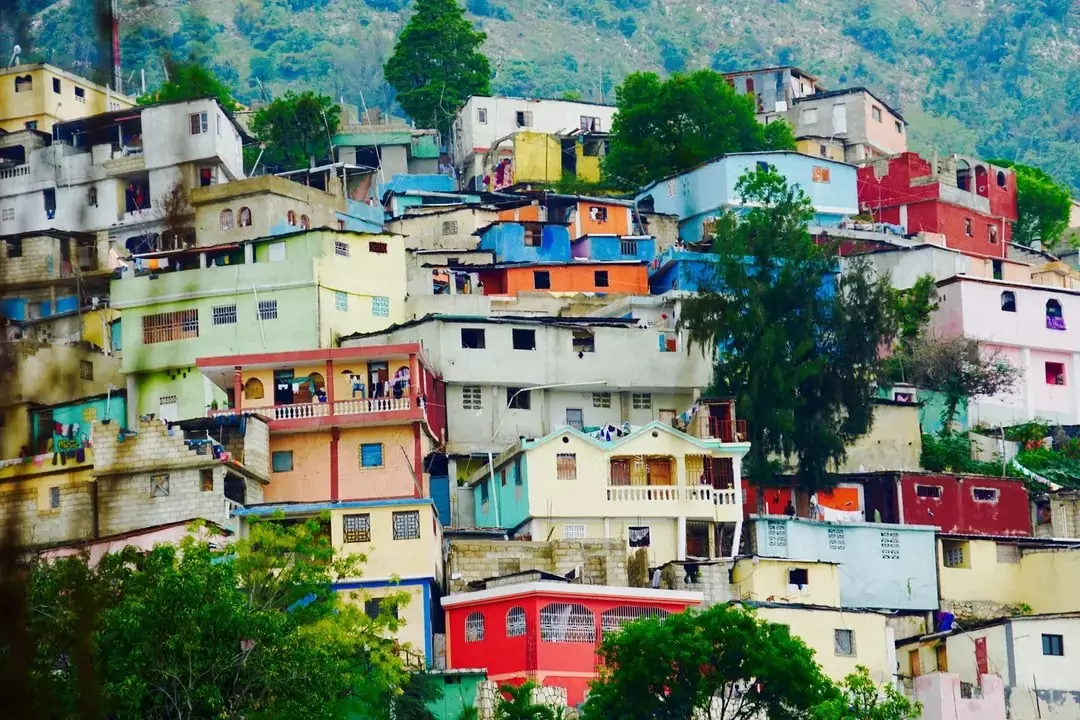
- 🌈 Wander the colorful colonial streets of Jacmel
- 💧 Discover the stunning waterfalls at Saut-Mathurine
- ⛪ Visit the historic Notre-Dame Cathedral of Cap-Haïtien
You've been here?
Log in to manage your own bucket list! Why travel to Haiti?
What makes Haiti truly special is its remarkable cultural depth and natural beauty that remain largely unexplored by mass tourism. The country boasts breathtaking beaches along its coastline, particularly in areas like Port-Salut and Cap-Haïtien, where you can enjoy crystal-clear waters without the crowds found in more popular Caribbean destinations. The stunning Bassin-Bleu waterfall with its azure pools offers a magical swimming experience, while the country's rich history is evident in sites like the UNESCO World Heritage Citadelle Laferrière fortress. However, travelers should be aware that Haiti faces significant challenges. The country has experienced political instability, economic hardship and is particularly vulnerable to natural disasters including hurricanes, tropical storms and earthquakes. Infrastructure is limited outside major cities and safety concerns exist in certain areas. Despite these challenges, for those seeking authentic cultural experiences and willing to travel responsibly, Haiti offers rewards that few Caribbean destinations can match.
🏯Places worth seeing
🎡Places for activities
🏞️Natural landmarks
🛍️Shopping
🎈Events
-
Carnival (February)
-
Rara Festival (Easter)
-
Fête Gede (Day of the Dead)
-
Jacmel Carnival
-
Fête de Notre Dame (August 15)
-
Independence Day (January 1)
-
Ancestor's Day (January 2)
-
Flag Day (May 18)
-
Dessalines Day (October 17)
-
Vertières Day (November 18)
Knowledge before you go
- Avoid non-essential travel due to high crime and unrest risks.
- Hire local guides for safer navigation through markets, cultural sites and transportation.
- Prepare for rainy seasons with flooding from April-June and October-November; monitor weather alerts.
- Respect Vodou heritage by joining festivals or community events with trusted local contacts for authentic insights.
How to travel to Haiti
Most international visitors arrive in Haiti through one of two international airports: Toussaint Louverture International Airport in Port-au-Prince or Cap-Haïtien International Airport. Direct flights are available from several U.S. cities including Miami, Fort Lauderdale and New York, as well as from other Caribbean islands, Panama City and Montreal. Major airlines serving Haiti include American Airlines, JetBlue and Spirit Airlines. Some travelers also arrive via the Dominican Republic, crossing the land border by bus or private vehicle, though this requires additional planning and awareness of border procedures. Cruise ships occasionally dock at Labadee, a private port on Haiti's northern coast, though these visits are typically limited to the immediate resort area.
Access summary
- Port-au-Prince: Fly to Toussaint Louverture (PAP) from Miami, Florida, Caribbean hubs.
- Cap-Haïtien/north coast: Fly to Cap-Haïtien (CAP) or domestic flight from PAP.
- From Dominican Republic: buses or private transfers from Santo Domingo to Haiti.
Check your route from anywhere
Where to stay in Haiti
Accommodation in Haiti ranges from international hotels in Port-au-Prince and Cap-Haïtien to smaller guesthouses and boutique hotels in places like Jacmel and Port-Salut. Major cities offer business-class hotels with modern amenities, while coastal areas feature more relaxed options. Budget accommodations start around HTG 4,500 – 7,500 (£25.68 – 42.80) per night, mid-range options from HTG 12,000 – 25,000 (£68.47 – 142.65) and luxury accommodations from HTG 30,000 (£171.18) upward. Advance booking is recommended, especially during peak tourist season (December-March) and around major festivals.
Hotel recommendations
*by rating and popularity. Commissions have no influence on the rankings.



How to get around Haiti
Getting around Haiti requires patience and flexibility. In cities like Port-au-Prince and Cap-Haïtien, tap-taps (colorfully painted pickup trucks or minibuses) are the main form of public transportation, offering very affordable rides along set routes. For longer distances between cities, larger buses operate, though schedules can be unpredictable. Taxis are available in major cities but should be arranged through hotels or reputable companies. For exploring more remote areas or traveling between major destinations, hiring a driver with a 4x4 vehicle is recommended, as road conditions can be challenging, especially during the rainy season. Some areas may require special transportation arrangements due to limited infrastructure.
Budget snapshot
Costs compared to home
We calculate the average costs when travelling to destinations and compare those with the living costs at your home. With this you can get an estimate of how expensive or cheap the destination is for you.
To customise this, you can set up which location and price level are used for the calculations in your account settings.
Daily expenses in Haiti are around 69% lower than the average across United States. That means you'll spend a lot less on meals and getting around.
Exchange rate trend
The exchange rate price factor shows how expensive or cheap a currency currently is compared to its historical average. It's a quick way to see if a country is currently more or less affordable due to exchange rate changes.
Your exchange rate (GBP to HTG) is 13% better than in recent years. That means travelling now is cheaper compared to the past.
Travel costs
To help you plan your trip, we provide estimated daily costs per person (when travelling as a pair) for different travel styles. These numbers give you an idea of what you might spend each day at this destination, including accommodation, food, transport and activities.
Additionally, we also provide average hotel costs for different travel styles to give you an estimate for the accommodation only.
Please note that these are only estimates. The real costs depend on booking times, season and other factors.
Daily cost summary
Travel style categories explained:
Backpacker:
Staying in hostels or budget hotels, cooking your own meals or eating cheap and choosing low-cost activities.
Mid-range:
Staying in mid-range hotels, eating at a mix of restaurants and casual spots and enjoying a variety of activities.
Luxury:
Staying in luxury hotels, dining out at high-end restaurants and enjoying premium experiences without worrying about the price.
| Backpacker | Mid-range | Luxury | |
|---|---|---|---|
| 💵 Total costs per day, including accommodation | |||
| 🏨 Accommodation per night, per person | |||
| 🍝 Food per day | |||
| 🚕 Transportation per day |
Food & Drink
| 🍽️ Restaurant Dinner, per person | |
|---|---|
| 🍛 Lunch Set, per person | |
| 🍟 Fast food combo | |
| 🍝 Preparing your own food, per day | |
| ☕ Cappuccino | |
| 🍺 Beer in a restaurant, 0.5 l |
Transportation
| 🚌 Public transport ticket | |
|---|---|
| 🚕 Taxi Ride, 10 km / 6 mi | |
| ⛽ Petrol, 1 l |
Other
| 🎞️ Cinema ticket | |
|---|---|
| 👩⚕️ Doctor's consult | |
| 🤧 Cold medication | |
| 💇 Basic haircut |
Safety information overview
General safety
Exercise increased caution in Haiti due to civil unrest, crime and kidnapping. Avoid certain areas of Port-au-Prince and travel with local guides when possible. Stay informed about current conditions, as security situations can change rapidly. Consider registering with your embassy.
Health & Medical
Medical facilities in Haiti are limited, with basic care available in major cities but few resources in rural areas. Comprehensive travel insurance with evacuation coverage is essential. Waterborne diseases are common and mosquito-borne illnesses including malaria are present.
Accessibility
Accessibility infrastructure is minimal throughout Haiti. Most buildings, transportation and tourist sites lack accommodations for those with mobility challenges. Rough terrain, uneven sidewalks and limited paved roads create significant barriers even in major cities.
Tap water
Tap water is unsafe to drink throughout Haiti. Stick to bottled or purified water, which is widely available in tourist areas but may be harder to find in remote regions. Always carry water purification tablets when traveling outside major cities.
Packing recommendations for Haiti
Log in to add this place to a travel list and get a summary of all recommended items for your whole trip.
📷
Camera
🌞
Sun cream
hat, sunglasses, high-SPF sun cream
👕
Light, breathable clothing
🕶️
Sunglasses
hat, sunglasses, high-SPF sun cream
🪰
Insect repellent
🧼
Hand sanitiser
🔦
Torch
power cuts are common
👛
Cash in small denominations
🧕
Modest clothing covering shoulders and knees
for visiting religious sites
🔋
Power bank
🩹
Basic first aid kit
👒
Sun hat
hat, sunglasses, high-SPF sun cream
📃
Travel insurance
🚰
Water bottle with filter
🪪
Copies of passport and important documents
📱
Translation app or phrasebook
🧻
Wet wipes
📱
Travel eSIM
🔌
Universal travel adaptor
🩺
Prescription medicines
💳
Credit card with no foreign transaction fees
🛂
Passport
Related articles & guides for Haiti



Nearby recommended places
Looking for inspiration?
Discover
Best value travel destinations
The best value destinations aren't necessarily the cheapest: they're the ones where money goes furthest relative to what's actually on offer, whether that's food, accommodation or…
Read more

Discover
Most beautiful beaches and coastal escapes
For a lot of people, a beach is the whole point of a holiday, but what makes a beach day perfect really depends on personal taste. Some travellers want isolation and the feeling…
Read more

Discover
Stunning national parks and wilderness areas
National parks exist because someone decided that certain landscapes were too important to lose. The best of them protect ecosystems, wildlife and natural processes that would…
Read more

Discover
Intimate escapes and romantic getaways
The most memorable trips for couples tend to have less to do with luxury and more to do with the quality of shared experience. A place that slows you down, removes the usual…
Read more
What other users say about travelfilters
“travelfilters made it easy for me to find ski areas and compare what else they offer, so that I could find the best place for my personal travel style.”

Chris
Snowboarding & Onsen trip to Japan
“I love how transparent the data feels. There is no pushy upsell, just honest information and settings I can tune to my own travel style.”

Maria
After booking her 2027 winter escape
“The level of detail for each destination and how well those are displayed, make planning feel confident instead of overwhelming.”

Mina
Planned a week in New York City
“We used travelfilters for our planning from start to end. The trip turned out even better than expected, thanks to all their tools and customisation options.”

Allan & Etienne
Trip to Japan to see autumn foliage
“Thanks to travelfilters, I found some hidden gems to see. Being able to filter for exactly your interests is a game changer for my travel planning.”

Michael
Tour through the old cities of Northern Italy
“The customizable filters helped me find a quiet beach town with good wifi and low season crowds in under five minutes.”

Diego
Weekend Escape to Llanes, Spain
“The airport connection map saved me hours by showing good flight options from my home airport to lesser-known cities.”

Nguyen
Planning a 2027 trip to France
“The website is clean, fast and focused on the search itself, which makes travelfilters feel more like a professional tool than an ad-heavy booking site.”

Hassan
Christmas Market trip, Germany
