















Was this page helpful?

| Public website: | www.byward-market.com |
|---|
| Power Grid: |
120 V, 60 Hz Plug: Type A , Type B
Type A:
  Read about power adapters |
|---|---|
| Currency: |
Canadian Dollar (CAD) £1 ≈ CA$1.87 |
| Cashless info: |
Rating 5/5
Cashless payments are widely accepted, especially in urban areas. Most businesses accept credit and debit cards, and mobile payment options like Apple Pay are popular.
Save with a travel credit card |
| eSIM providers: |
Best value: Saily Flexibility: Airalo Read our in-depth comparison |
| Tipping: | Tipping is customary in Canada, with a typical tip of 10-20% in restaurants. Tipping is also expected in taxis and for hotel staff, usually 1-2 CAD for bellhops and housekeepers. |
|---|---|
| Public drinking: | Public drinking laws vary by province, but it's often allowed in designated areas such as festivals or certain parks. |
| Public smoking: | Smoking is prohibited indoors in public spaces and in most outdoor spaces in urban areas. Some provinces have stricter laws than others. |
| Canada Day (July) |
The country celebrates with fireworks and festivals. Expect crowded tourist spots and high demand for accommodations. |
|---|---|
| Thanksgiving (October) |
A major family holiday with many businesses closed, especially in rural areas. |
| Christmas (December) |
Festive markets and winter activities are popular, but expect higher accommodation prices and busy cities. |
| Emergency contact: | Emergency Number: 911 (Police, Fire, Ambulance) |
|---|---|
| Taxi apps: | Uber, Lyft, Bolt |
| Other: | Canada is vast, so be prepared for long distances between cities and varying weather conditions depending on the region. |
The best times to travel section shows how the months compare for a visit, so you can find the time of year that fits what you want to do.
Background colours of the months:
The colour shows the typical temperature: yellow (hot), green (mild) and blue (cold). How strong the colour is shows the travel season: full colour means high season, soft colour means shoulder season and soft-striped means off season.
Weather symbols:
Each month has one symbol showing what the weather is typically like, such as hot and sunny, freezing or a rainy or snowy season. Use them to quickly spot months that match the weather you want, or to avoid the ones that don't.
Crowdedness:
The people icon shows how busy the place usually is. The more people, the more crowded it gets.
Additional notes:
The grey info boxes point out special things worth knowing, like recurring weather issues or seasonal events.
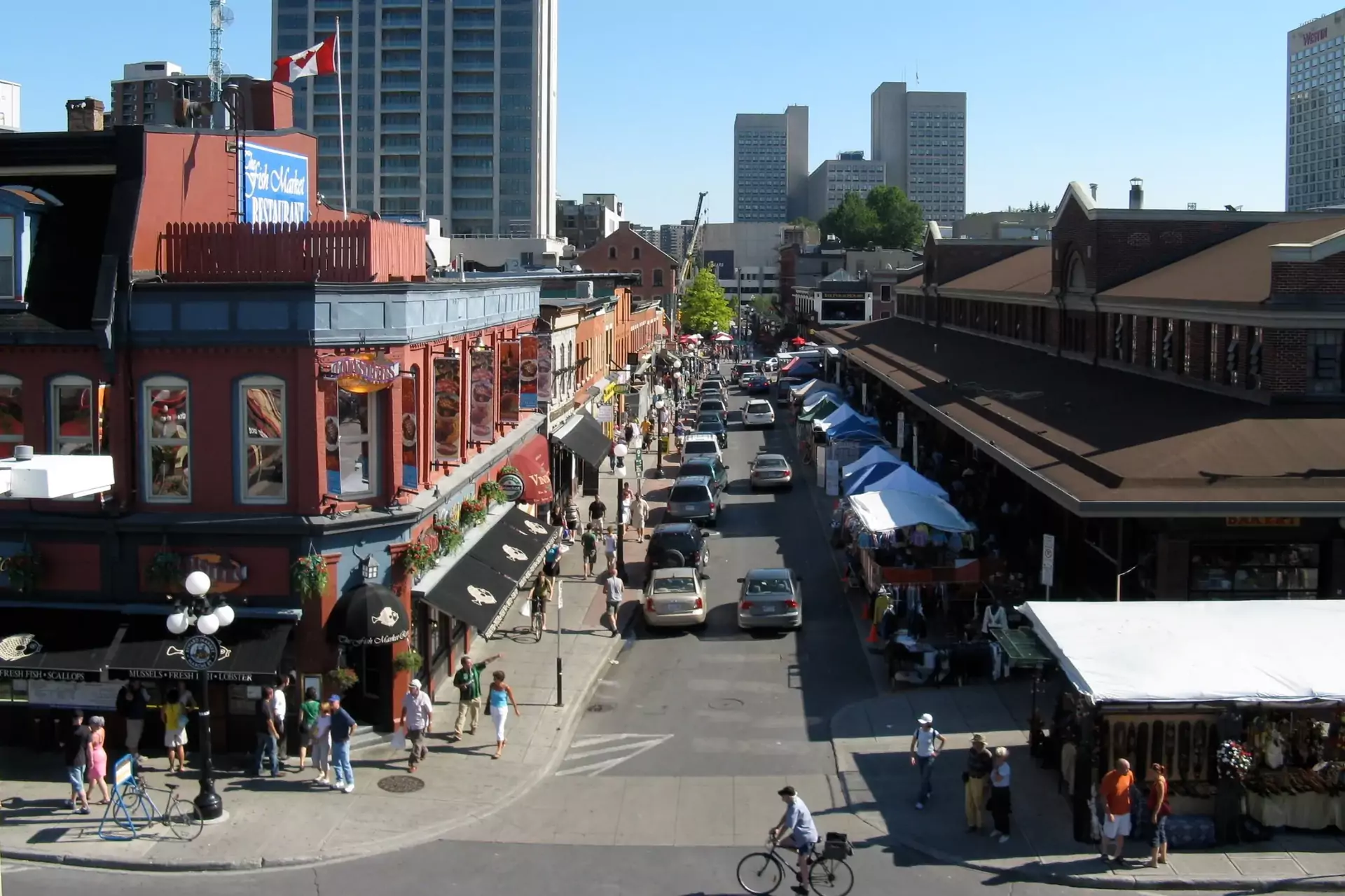
ByWard Market is one of Canada’s oldest and largest public markets, established in 1826. The area spans four blocks filled with vibrant shops, eateries and open-air stalls that showcase a diversity of local produce, crafts and culinary delights. It’s a place where history meets contemporary city life.
The market is especially lively during summer when outdoor vendors fill the streets, while winter brings festive markets and indoor warmth. The neighborhood also offers an arts and entertainment scene with galleries, music venues and theaters.
While generally safe and welcoming, caution is advised at night as the area can attract pickpockets or become rowdy during certain events. Staying alert and avoiding isolated spots after dark is recommended.
Recent investments in security and urban renewal have improved safety and cleanliness, making the market a thriving cultural hotspot that draws both locals and tourists for its distinct vibe and rich experiences year-round.
ByWard Market is located in downtown Ottawa, close to Parliament Hill. The best way to reach it is via Ottawa’s public transit system, with stops at or near Rideau Station and Parliament Station. International visitors usually fly into Ottawa Macdonald-Cartier International Airport and can take taxis, airport shuttles or public transit to downtown.
Ottawa’s downtown core offers many accommodation options from boutique hotels to international chains, making it convenient for visitors exploring ByWard Market and surrounding attractions.
Log in to add this place to a travel list and get a summary of all recommended items for your whole trip.
We calculate the average costs when travelling to destinations and compare those with the living costs at your home. With this you can get an estimate of how expensive or cheap the destination is for you.
To customise this, you can set up which location and price level are used for the calculations in your account settings.
The exchange rate price factor shows how expensive or cheap a currency currently is compared to its historical average. It's a quick way to see if a country is currently more or less affordable due to exchange rate changes.
