








Was this page helpful?

| Opening hours: |
|
||
|---|---|---|---|
| Public website: | catedraldesantiago.es |
| Power Grid: |
230 V, 50 Hz Plug: Type C , Type F
Type C:
  Read about power adapters |
|---|---|
| Currency: |
Euro (EUR) £1 ≈ €1.19 |
| Cashless info: |
Rating 5/5
Cashless payment is widely accepted in Spain, particularly in urban areas and tourist destinations. Credit and debit cards are commonly used, and mobile payment options are available in many establishments.
Save with a travel credit card |
| eSIM providers: |
Best value: Saily Flexibility: Airalo Read our in-depth comparison |
| Tipping: | Tipping is not mandatory in Spain but appreciated for good service. In restaurants, rounding up the bill or leaving 5-10% is customary. Taxi drivers and hotel staff may also be tipped, though it is less common. |
|---|---|
| Public drinking: | Public drinking is restricted in some regions, particularly in tourist-heavy cities. Local laws may vary. |
| Public smoking: | Smoking is banned indoors in public places but allowed in designated outdoor areas. |
| La Tomatina (August) |
A famous tomato-throwing festival, expect large crowds in Buñol. |
|---|---|
| Semana Santa (March/April) |
Religious parades and events make this a busy time in major cities. |
| Christmas (December) |
Markets and festive celebrations, with tourist areas becoming busier. |
| Emergency contact: | Emergency Number: 112 (Police, Fire, Ambulance) |
|---|---|
| Taxi apps: | Cabify, Bolt, Uber |
| Other: | Spain is known for its diverse culture, stunning architecture, and vibrant festivals. Public transport is reliable and efficient, making it easy to explore. |
The best times to travel section shows how the months compare for a visit, so you can find the time of year that fits what you want to do.
Background colours of the months:
The colour shows the typical temperature: yellow (hot), green (mild) and blue (cold). How strong the colour is shows the travel season: full colour means high season, soft colour means shoulder season and soft-striped means off season.
Weather symbols:
Each month has one symbol showing what the weather is typically like, such as hot and sunny, freezing or a rainy or snowy season. Use them to quickly spot months that match the weather you want, or to avoid the ones that don't.
Crowdedness:
The people icon shows how busy the place usually is. The more people, the more crowded it gets.
Additional notes:
The grey info boxes point out special things worth knowing, like recurring weather issues or seasonal events.
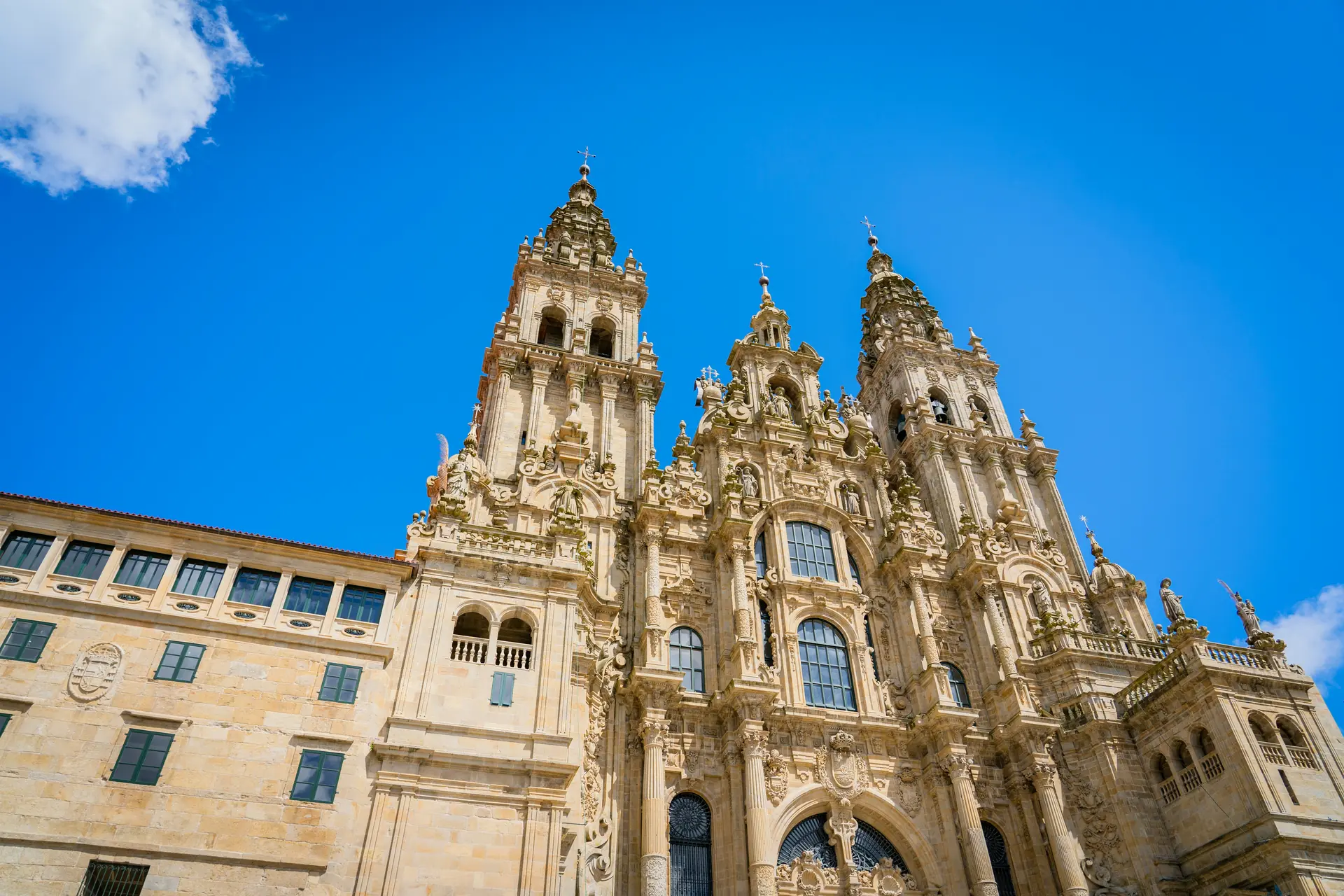
Santiago de Compostela stands as a key stop on the Camino de Santiago pilgrimage route. The city in Galicia holds deep cultural and religious significance for many travelers. Its historic center remains largely intact preserving centuries of architecture and tradition.
The Santiago de Compostela Cathedral dominates the skyline with its Romanesque and Baroque features. Visitors often notice the elaborate Portico de la Gloria a stone entrance carved in the 12th century. Inside the space feels both grand and intimate with stained glass windows casting soft light over ancient walls.
Beyond the cathedral the city thrives on its connection to pilgrimage routes. Local markets sell fresh seafood from nearby coasts while small cafes serve traditional Galician dishes like pulpo a la gallega. The atmosphere encourages slow exploration whether wandering cobblestone streets or resting in quiet plazas.
Historical records show the cathedral houses remains believed to belong to Saint James the Greater. This association has drawn pilgrims for generations creating a sense of continuity between past and present. Today Santiago de Compostela balances its sacred role with modern life making it accessible yet rich with heritage.
Santiago de Compostela Cathedral is accessible via several transportation methods. The nearest airport is Santiago de Compostela Airport (SCQ), located approximately 10 kilometers from the city center, offering domestic and limited international flights. For rail access, the cathedral is served by Santiago de Compostela Railway Station, connected to Spain’s high-speed AVE network and regional trains. Buses operate from major Spanish cities like Madrid (via A-6 highway) and Barcelona (via AP-7), with frequent services throughout the day. Cyclists can utilize dedicated bike lanes along routes such as the Camino de Santiago, while pedestrians may walk part of the historic Camino Francés trail leading to the cathedral. Taxis and ride-sharing services are available for shorter distances within the city.
Near the Cathedral of Santiago de Compostela, lodging ranges from boutique hostels to luxury boutique hotels, offering a mix of historic charm and modern amenities. The city center hosts over 200 accommodations, with many establishments boasting traditional Galician décor, local art and panoramic views of the cathedral’s façade. Boutique inns often feature handcrafted furnishings and locally sourced cuisine, while larger hotels provide spa services, fitness centers and multilingual staff. For travelers seeking authenticity, several guesthouses in adjacent streets offer homely atmospheres and guided tours of nearby pilgrimage sites. The area is renowned for its “albergues” – budget-friendly hostels that cater to pilgrims – and for upscale boutique hotels that blend contemporary design with regional heritage.
Log in to add this place to a travel list and get a summary of all recommended items for your whole trip.
We calculate the average costs when travelling to destinations and compare those with the living costs at your home. With this you can get an estimate of how expensive or cheap the destination is for you.
To customise this, you can set up which location and price level are used for the calculations in your account settings.
The exchange rate price factor shows how expensive or cheap a currency currently is compared to its historical average. It's a quick way to see if a country is currently more or less affordable due to exchange rate changes.
