









Was this page helpful?

| Power Grid: |
230 V, 50 Hz Plug: Type C , Type F
Type C:
  Read about power adapters |
|---|---|
| Currency: |
Euro (EUR) £1 ≈ €1.19 |
| Cashless info: |
Rating 5/5
Cashless payments are widely accepted in Italy, particularly in cities. While larger establishments and chains are fully cashless, smaller shops may still prefer cash.
Save with a travel credit card |
| eSIM providers: |
Best value: Saily Flexibility: Airalo Read our in-depth comparison |
| Tipping: | Tipping is customary in Italy, especially in restaurants where 10-15% is typical. Tipping for taxi drivers is usually rounded up or 5-10%. Small tips for hotel staff are also appreciated. |
|---|---|
| Public drinking: | Public drinking is allowed in Italy, especially in public squares and during festivals. In some regions, it is illegal to drink alcohol in certain areas like public transport or near schools. |
| Public smoking: | Smoking is banned in indoor public spaces and on public transport. Designated smoking areas are available outside. |
| Ferragosto (August) |
Many businesses close, and Italians take holidays. It’s very busy in tourist areas. |
|---|---|
| Christmas (December) |
Christmas markets and festivities are popular, expect higher prices and crowded attractions. |
| La Befana (January) |
Celebrated on January 6, the Epiphany is a public holiday with festive events, and some businesses close. |
| Emergency contact: | Emergency Number: 112 (Police, Fire, Ambulance) |
|---|---|
| Taxi apps: | Uber, Free Now, ItTaxi |
| Other: | Italy's tourist infrastructure is well-developed, but some rural or historical areas may require extra planning for accessibility. |
The best times to travel section shows how the months compare for a visit, so you can find the time of year that fits what you want to do.
Background colours of the months:
The colour shows the typical temperature: yellow (hot), green (mild) and blue (cold). How strong the colour is shows the travel season: full colour means high season, soft colour means shoulder season and soft-striped means off season.
Weather symbols:
Each month has one symbol showing what the weather is typically like, such as hot and sunny, freezing or a rainy or snowy season. Use them to quickly spot months that match the weather you want, or to avoid the ones that don't.
Crowdedness:
The people icon shows how busy the place usually is. The more people, the more crowded it gets.
Additional notes:
The grey info boxes point out special things worth knowing, like recurring weather issues or seasonal events.
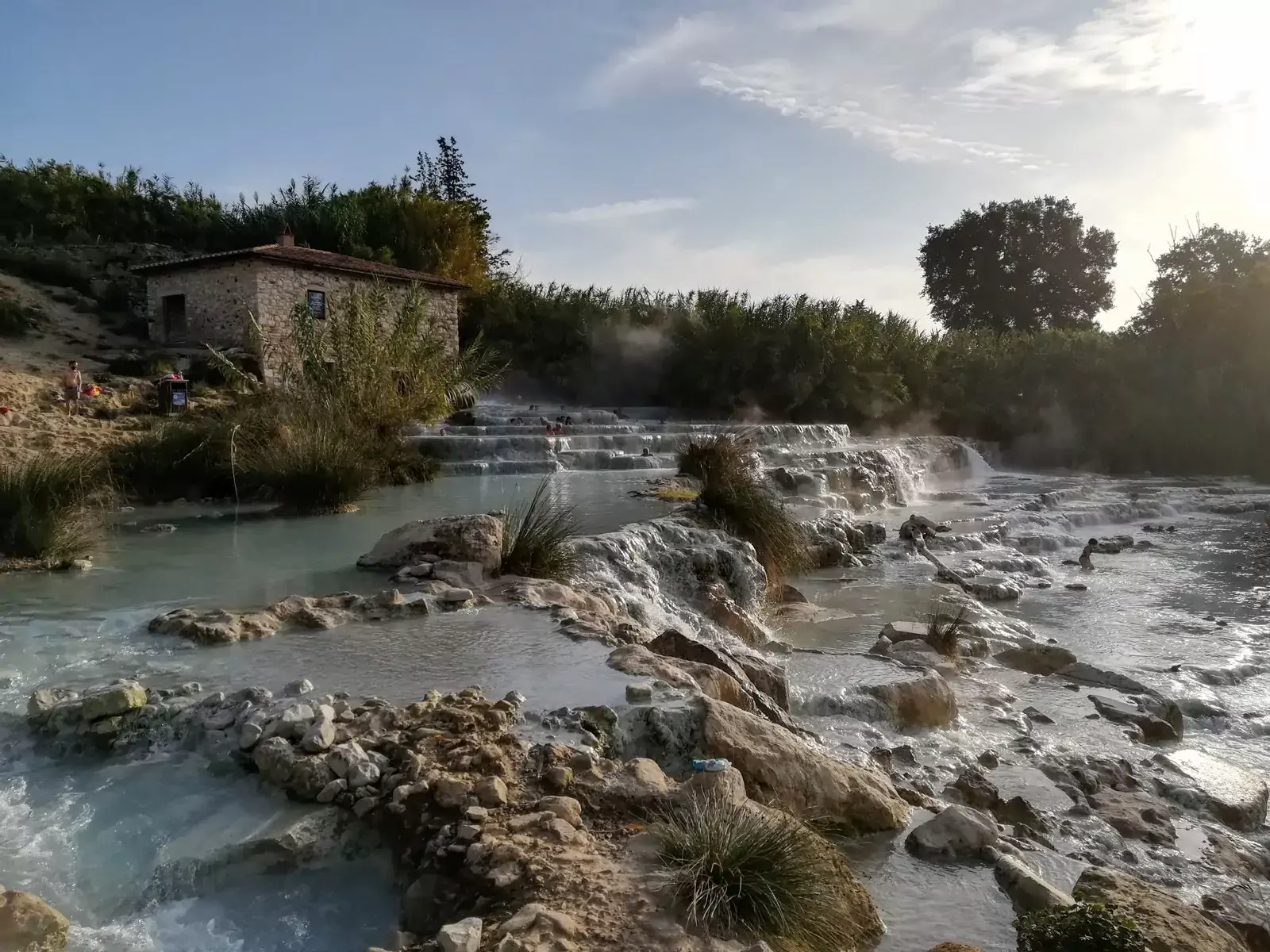
Saturnia in Tuscany presents natural hot springs that draw visitors seeking relaxation and wellness. The area features thermal pools where warm water rises from underground sources creating gentle currents ideal for soaking. Many local resorts integrate these springs into their facilities allowing guests to experience the mineral-rich waters directly. The atmosphere feels calm with surrounding hills offering quiet escape from busy city life.
The region’s landscape includes rolling vineyards and olive groves visible from spring-fed pools. Water temperatures vary slightly across different sites but remain comfortable year round making them suitable for casual visits even during cooler months. Guides often recommend combining a dip in the springs with short walks through nearby trails where wildflowers bloom seasonally adding color to the scenery without overwhelming natural quiet.
Local culture emphasizes slow living and appreciation of simple pleasures here. Markets sell fresh produce bread and regional cheeses encouraging travelers to enjoy meals outdoors after visiting pools. Many accommodations prioritize sustainability using locally sourced materials and energy-efficient practices reflecting community values around preserving environment for future generations.
Accessibility improves through well maintained roads connecting Saturnia to other Tuscan towns like Grosseto or Pitigliano. Public transport options exist though renting a car allows flexibility exploring smaller villages along the way. Accommodation choices range from boutique hotels with private spring access to family run guesthouses offering home cooked breakfasts featuring eggs from nearby farms.
Saturnia, located in Tuscany, Italy, is accessible via regional train or bus services from major cities like Florence and Rome. The nearest railway station is Saturnia-Poggiomoio, approximately 15 km away, with local buses connecting to the town center. Driving from Florence takes about 1.5 hours via the A1 highway, exiting at Montevarchi and following signs to Saturnia. Public transport options are limited, so renting a car is recommended for flexibility. The area’s hot springs are within walking distance of the station or reachable by short taxi rides. Parking is available near thermal pools for visitors arriving independently.
Saturnia’s thermal area offers a spectrum of lodging that caters to both budget travelers and luxury seekers. Rustic agriturismos dot the surrounding hills, providing authentic Tuscan charm with homemade meals and private access to nearby springs for under €80 (£67.17) per night. Mid‑range boutique hotels combine modern amenities with traditional décor, typically ranging from €120 (£100.76) to €180 (£151.14) per room and many feature on‑site spa treatments that complement the natural thermal waters. For those desiring opulence, high‑end resorts offer suites with panoramic views, private pools and exclusive wellness packages, often priced between €250 (£209.92) and €400 (£335.87) per night. The region is renowned for its “terme” style accommodations – hot spring baths integrated into historic villas or contemporary spa complexes – making Saturnia a premier destination for thermal relaxation.
Log in to add this place to a travel list and get a summary of all recommended items for your whole trip.
We calculate the average costs when travelling to destinations and compare those with the living costs at your home. With this you can get an estimate of how expensive or cheap the destination is for you.
To customise this, you can set up which location and price level are used for the calculations in your account settings.
The exchange rate price factor shows how expensive or cheap a currency currently is compared to its historical average. It's a quick way to see if a country is currently more or less affordable due to exchange rate changes.
