









Was this page helpful?

| Power Grid: |
230 V, 50 Hz Plug: Type F
Type F:
 Read about power adapters |
|---|---|
| Currency: |
Icelandic Króna (ISK) £1 ≈ ISK 163 |
| Cashless info: |
Rating 5/5
Cashless payments are highly common in Iceland, especially in cities. Most businesses accept credit and debit cards, including smaller establishments. Mobile payment options like Apple Pay and Google Pay are popular.
Save with a travel credit card |
| eSIM providers: |
Best value: Saily Flexibility: Airalo Read our in-depth comparison |
| Tipping: | Tipping is not common in Iceland and not expected in restaurants. A service charge is usually included in the bill. Tipping taxi drivers or hotel staff is appreciated but not necessary. |
|---|---|
| Public drinking: | Public drinking is allowed, especially in designated areas during festivals or outdoor events. Alcohol is also available at licensed venues. |
| Public smoking: | Smoking is prohibited in indoor public spaces and on public transport. Designated smoking areas are available outside of many restaurants and public buildings. |
| Icelandic National Day (June) |
Expect parades and celebrations throughout the country. Hotels and tourist spots can get busy. |
|---|---|
| Christmas (December) |
Christmas is widely celebrated, and it’s a great time to visit for festive markets, but accommodation can be more expensive. |
| Þorrablót Festival (January) |
A festival celebrating Icelandic cuisine, it’s a popular time to visit, though some businesses may have reduced hours. |
| Emergency contact: | Emergency Number: 112 (Police, Fire, Ambulance) |
|---|---|
| Taxi apps: | Hreyfill, Reykjavik Taxi |
| Other: | Iceland's weather can be unpredictable, so it’s important to prepare for sudden changes in climate. Always check weather forecasts before venturing into nature. |
The best times to travel section shows how the months compare for a visit, so you can find the time of year that fits what you want to do.
Background colours of the months:
The colour shows the typical temperature: yellow (hot), green (mild) and blue (cold). How strong the colour is shows the travel season: full colour means high season, soft colour means shoulder season and soft-striped means off season.
Weather symbols:
Each month has one symbol showing what the weather is typically like, such as hot and sunny, freezing or a rainy or snowy season. Use them to quickly spot months that match the weather you want, or to avoid the ones that don't.
Crowdedness:
The people icon shows how busy the place usually is. The more people, the more crowded it gets.
Additional notes:
The grey info boxes point out special things worth knowing, like recurring weather issues or seasonal events.
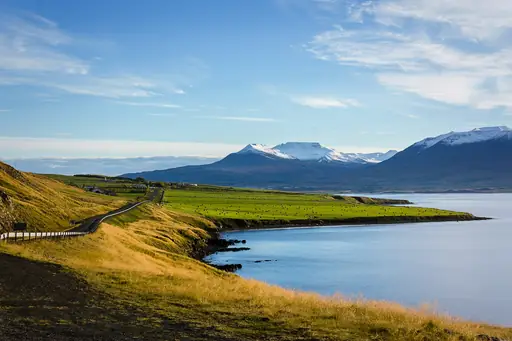
The Ring Road in Iceland follows a 1,332 kilometer loop around the island. It provides access to diverse landscapes ranging from black sand beaches to volcanic plains. Travelers can experience glaciers that glisten under sunlight and waterfalls that thunder through basalt columns. The route is mostly paved with well-marked stops at scenic viewpoints.
One key feature of this road is its accessibility to natural wonders like Thingvellir National Park. Here, tectonic plates shift apart creating visible rifts in the earth. Further along the journey, waterfalls such as Seljalandsfoss and Skógafoss drop from towering cliffs. Many stops include short hikes or viewing platforms for safe observation of these sites.
Driving conditions vary with weather playing a major role. Winter months bring snow and ice requiring four-wheel drive vehicles. Summer delivers long daylight hours ideal for extended sightseeing. Road signs follow Icelandic standards emphasizing clarity over decoration. Fuel stations are common in populated zones but sparse elsewhere so planning ahead remains essential.
The Ring Road connects coastal villages where local cuisine reflects Iceland’s fishing heritage. Restaurants serve dishes like plokkfiskur made from fresh fish and potatoes. Accommodations range from guesthouses to modern hotels along the route. Each segment of the journey reveals a distinct slice of Icelandic life without relying on tourist traps.
The Ring Road of Iceland, known as Route 1, encircles the entire island and provides access to most major attractions. The road is mostly paved and well-maintained, with a few gravel sections in remote areas. Travelers can drive along it using rental cars, buses or guided tours. Public transportation connects major towns, but private vehicles offer greater flexibility for exploring rural regions. Winter travel requires 4x4 vehicles due to snowy conditions on some stretches. The road is open year-round, though winter storms may cause temporary closures. Scenic viewpoints and rest areas are spaced regularly along the route, allowing stops for sightseeing or photography.
Along the Ring Road, accommodations range from budget hostels and guesthouses to mid‑range inns and luxury lodges, offering roughly ISK 7,000 – 28,000 (£43.15 – 172.60) per night depending on season and location. The most common lodging type is the traditional Icelandic “stofa” – a cozy, family‑run guesthouse with shared kitchen facilities that provide an authentic local experience. In popular stops such as Vik, Akureyri and Reykjavik’s outskirts, you’ll find boutique hotels featuring geothermal pools and panoramic views of volcanic landscapes. For travelers seeking higher comfort, several high‑end resorts offer spa services, private hot tubs and gourmet dining, while self‑contained cabins cater to those who prefer a more secluded stay amid the rugged scenery.
Log in to add this place to a travel list and get a summary of all recommended items for your whole trip.
We calculate the average costs when travelling to destinations and compare those with the living costs at your home. With this you can get an estimate of how expensive or cheap the destination is for you.
To customise this, you can set up which location and price level are used for the calculations in your account settings.
The exchange rate price factor shows how expensive or cheap a currency currently is compared to its historical average. It's a quick way to see if a country is currently more or less affordable due to exchange rate changes.
