









Was this page helpful?

| Power Grid: |
230 V, 50 Hz Plug: Type C , Type F
Type C:
  Read about power adapters |
|---|---|
| Currency: |
Hungarian Forint (HUF) £1 ≈ HUF 438.44 |
| Cashless info: |
Rating 4/5
Cashless payment is widely accepted in Hungary, especially in urban areas, though smaller vendors may prefer cash.
Save with a travel credit card |
| eSIM providers: |
Best value: Saily Flexibility: Airalo Read our in-depth comparison |
| Tipping: | Tipping is customary in Hungary, with 10-15% added in restaurants if not included. Small tips for taxi drivers and hotel staff are also common. |
|---|---|
| Public drinking: | Public drinking is not permitted in Hungary, except in designated areas or during special events. |
| Public smoking: | Smoking is banned in indoor public spaces and transport. Designated smoking areas are available. |
| Hungarian Revolution Day (March) |
Public events and closures occur, especially in Budapest. |
|---|---|
| Saint Stephen's Day (August) |
Expect fireworks and celebrations across Hungary. |
| Christmas (December) |
Festive markets and holiday closures are common. |
| Emergency contact: | Emergency Number: 112 (Police, Fire, Ambulance) |
|---|---|
| Taxi apps: | Bolt, Főtaxi, Uber |
| Other: | Hungary is known for its thermal baths, historical architecture, and vibrant cultural festivals. Public transport is efficient in cities. |
The best times to travel section shows how the months compare for a visit, so you can find the time of year that fits what you want to do.
Background colours of the months:
The colour shows the typical temperature: yellow (hot), green (mild) and blue (cold). How strong the colour is shows the travel season: full colour means high season, soft colour means shoulder season and soft-striped means off season.
Weather symbols:
Each month has one symbol showing what the weather is typically like, such as hot and sunny, freezing or a rainy or snowy season. Use them to quickly spot months that match the weather you want, or to avoid the ones that don't.
Crowdedness:
The people icon shows how busy the place usually is. The more people, the more crowded it gets.
Additional notes:
The grey info boxes point out special things worth knowing, like recurring weather issues or seasonal events.
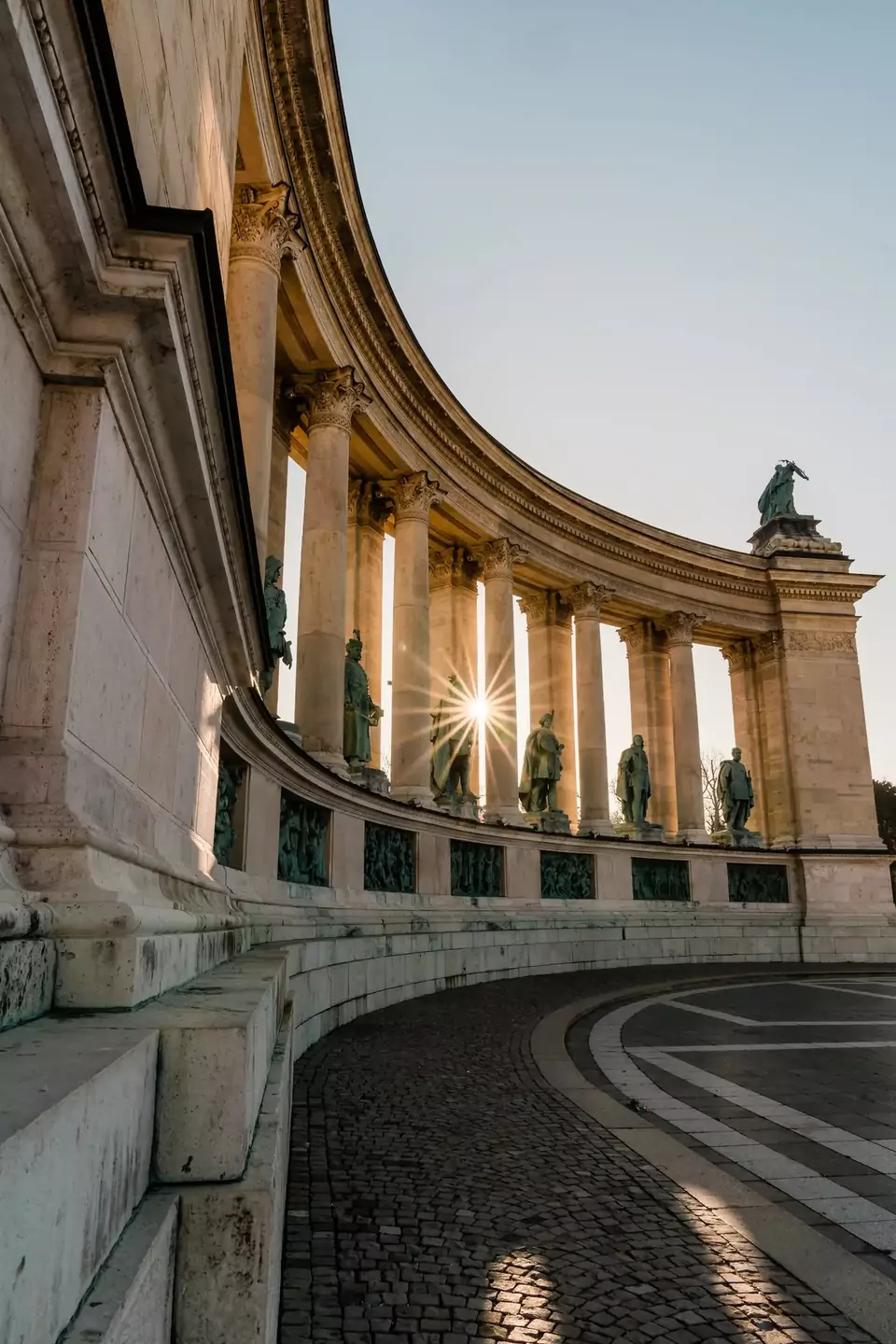
Built to commemorate Hungary’s millennial anniversary in 1896, Heroes' Square (Hősök tere) is one of Budapest’s most iconic landmarks. The centerpiece is the Millennium Monument, featuring a tall column topped by the archangel Gabriel and flanked by statues of the seven Magyar chieftains and other historical leaders.
The square is framed by two significant museums: the Museum of Fine Arts and the Kunsthalle, offering a cultural feast for art and history enthusiasts. Adjacent City Park provides expansive green space with lakes, gardens and the famous Széchenyi Thermal Bath.
The square has been a pivotal venue for public and cultural events, including national celebrations and summertime concerts. Its Neo-Classical design and symmetrical grandeur make it a superb photography spot, especially at sunset or nighttime when beautifully illuminated.
Note: The square can get busy during festivals and holidays, so early visit times provide a more tranquil experience. The large open space is exposed to weather elements, so dress accordingly. Pickpocketing can occur in crowded events, so vigilance is advised.
Heroes' Square is accessible via the Budapest Metro M1 (yellow line) at Hősök tere station. Visitors coming from Budapest Liszt Ferenc Airport can take taxis or public transit to the city center, then transfer to the metro or buses servicing the square. The area is well connected by multiple bus and trolleybus lines.
Budapest city center, particularly around the 5th and 6th districts, provides a variety of lodging options close to Heroes' Square and convenient metro access for city exploration.
Log in to add this place to a travel list and get a summary of all recommended items for your whole trip.
We calculate the average costs when travelling to destinations and compare those with the living costs at your home. With this you can get an estimate of how expensive or cheap the destination is for you.
To customise this, you can set up which location and price level are used for the calculations in your account settings.
The exchange rate price factor shows how expensive or cheap a currency currently is compared to its historical average. It's a quick way to see if a country is currently more or less affordable due to exchange rate changes.
