





Was this page helpful?

| Power Grid: |
230 V, 50 Hz Plug: Type C , Type F
Type C:
  Read about power adapters |
|---|---|
| Currency: |
Euro (EUR) £1 ≈ €1.19 |
| Cashless info: |
Rating 3/5
Cashless payments are becoming more common, especially in urban areas. However, many small shops and rural locations still prefer cash payments.
Save with a travel credit card |
| eSIM providers: |
Best value: Saily Flexibility: Airalo Read our in-depth comparison |
| Tipping: | Tipping is customary in Greece. In restaurants, 5-10% is typical, though rounding up is also common. Tipping taxi drivers is customary, and small tips for hotel staff are appreciated. |
|---|---|
| Public drinking: | Public drinking is generally allowed in Greece, especially in designated areas or during festivals. However, it’s prohibited in some areas like public transport or near schools. |
| Public smoking: | Smoking is prohibited in indoor public places. There are designated outdoor smoking areas in most restaurants and public buildings. |
| Easter (March/April) |
Easter is a significant religious holiday, and many businesses close. Popular for family gatherings and church services. |
|---|---|
| Assumption of Mary (August) |
A national holiday with parades and festivities. Expect crowded tourist areas and higher accommodation prices. |
| Christmas (December) |
Christmas celebrations take place in many towns and cities, with lively events, though many businesses close for the holiday. |
| Emergency contact: | Emergency Number: 112 (Police, Fire, Ambulance) |
|---|---|
| Taxi apps: | Beat, TaxiBeat, Uber |
| Other: | Greece is a popular tourist destination, particularly in summer, so be prepared for high demand for accommodation and services during peak months. |
The best times to travel section shows how the months compare for a visit, so you can find the time of year that fits what you want to do.
Background colours of the months:
The colour shows the typical temperature: yellow (hot), green (mild) and blue (cold). How strong the colour is shows the travel season: full colour means high season, soft colour means shoulder season and soft-striped means off season.
Weather symbols:
Each month has one symbol showing what the weather is typically like, such as hot and sunny, freezing or a rainy or snowy season. Use them to quickly spot months that match the weather you want, or to avoid the ones that don't.
Crowdedness:
The people icon shows how busy the place usually is. The more people, the more crowded it gets.
Additional notes:
The grey info boxes point out special things worth knowing, like recurring weather issues or seasonal events.
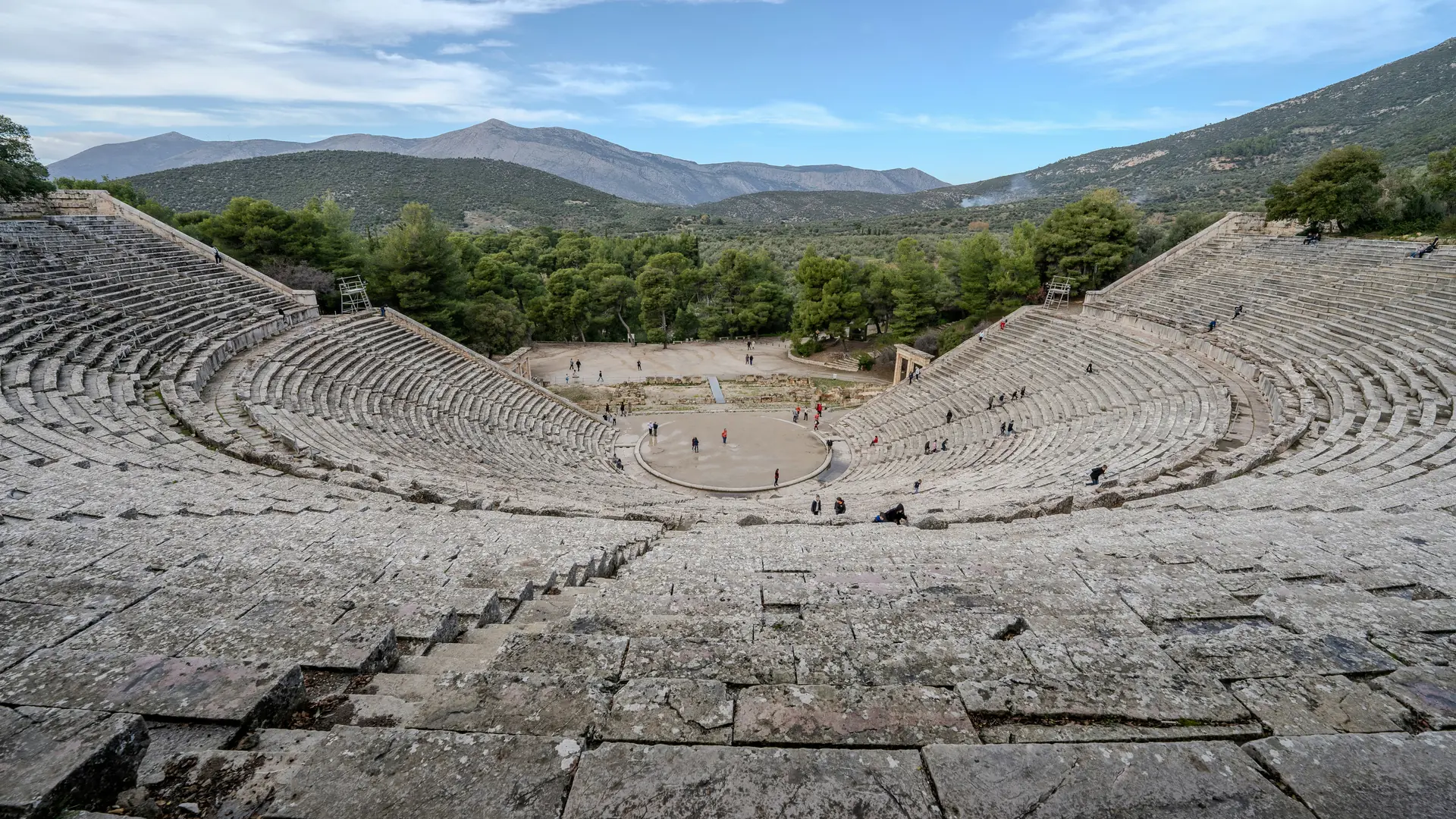
The ancient theater of Epidaurus stands as a remarkable example of classical Greek architecture. Built in the 4th century BCE it remains one of the best-preserved amphitheaters from that era. Its design prioritizes clarity and balance making every seat ideal for viewing performances. The structure features limestone seats arranged in concentric circles around a central stage area known as the orchestra. This layout ensures that sound travels evenly throughout the space even today visitors can experience how actors once communicated with audiences across vast distances.
The theater’s construction reflects advanced engineering skills of its time. Builders used local limestone and marble to create durable surfaces that withstand centuries of use. The precise curvature of seats and careful placement of columns minimize echoes while amplifying voices naturally. This innovation allowed small groups of performers to reach large crowds without modern amplification tools. The site also includes remnants of a temple dedicated to Asclepius the god of healing highlighting Epidaurus’ role as both cultural and religious hub.
Visitors today encounter an atmosphere steeped in history yet accessible for exploration. Walking through the rows of seats visitors can imagine ancient dramas or musical events that once filled the space. The surrounding area includes museums displaying artifacts found nearby offering context about daily life during Greece’s classical period. Guided tours explain how the theater functioned and its significance in shaping Western theatrical traditions. Many travelers note the serene environment making it a place for reflection as well as learning.
Modern efforts focus on preserving Epidaurus’ integrity while accommodating tourism. Conservation projects repair weathering damage to stone structures ensuring future generations can study and enjoy the site. Seasonal performances still take place here drawing artists who value its unique acoustics. These events connect past traditions with present creativity keeping ancient practices alive in tangible ways. The theater’s enduring presence reminds us of humanity’s capacity for innovation and cultural expression across millennia.
The Ancient Theater of Epidaurus, located in the Peloponnese region of Greece, is accessible via a combination of road and local transportation. The nearest major city is Nafplio, approximately 60 kilometers away, reachable by car or bus from Athens’ port (Piraeus). From Nafplio, visitors can take a taxi or rent a car to Epidaurus (about 1 hour drive). Public buses operate seasonally between Nafplio and the theater. The site is well-signposted, with parking available for private vehicles near the entrance. Accessibility includes ramps and pathways accommodating limited mobility needs during designated visiting hours.
Epidaurus offers a range of lodging that caters to both budget travelers and those seeking comfort. Near the ancient theater, you’ll find compact guesthouses and boutique B&Bs with prices typically between €50 – 90 (£41.98 – 75.57) per night, featuring locally sourced décor and easy access to the site’s walking paths. For families or larger groups, modest apartments and self‑contained units are available in nearby villages, often ranging from €80 – 120 (£67.17 – 100.76), providing kitchen facilities and more space. The area is renowned for its traditional stone cottages that blend rustic charm with modern amenities, appealing to visitors who appreciate authentic Greek architecture. Seasonal rates rise during the summer months, especially around festival dates, but early‑booking discounts are common.
Log in to add this place to a travel list and get a summary of all recommended items for your whole trip.
We calculate the average costs when travelling to destinations and compare those with the living costs at your home. With this you can get an estimate of how expensive or cheap the destination is for you.
To customise this, you can set up which location and price level are used for the calculations in your account settings.
The exchange rate price factor shows how expensive or cheap a currency currently is compared to its historical average. It's a quick way to see if a country is currently more or less affordable due to exchange rate changes.
