








Was this page helpful?

| Opening hours: |
|
||
|---|---|---|---|
| Public website: | pontdugard.fr |
| Power Grid: |
230 V, 50 Hz Plug: Type C , Type E
Type C:
  Read about power adapters |
|---|---|
| Currency: |
Euro (EUR) £1 ≈ €1.19 |
| Cashless info: |
Rating 5/5
Cashless payments are widely accepted, especially in cities and tourist areas.
Save with a travel credit card |
| eSIM providers: |
Best value: Saily Flexibility: Airalo Read our in-depth comparison |
| Tipping: | Tipping is optional but appreciated in restaurants (5-10%) and for exceptional service. |
|---|---|
| Public drinking: | Public drinking is allowed in designated areas, but restrictions apply in some cities. |
| Public smoking: | Smoking is banned in indoor public spaces but common in outdoor cafes. |
| Bastille Day (July) |
Parades and fireworks occur nationwide. |
|---|---|
| Easter (March/April) |
Cultural celebrations and closures. |
| Christmas (December) |
Markets and festive events. |
| Emergency contact: | Emergency Numbers: 112 (EU emergency), 15 (Ambulance), 17 (Police), 18 (Fire) |
|---|---|
| Taxi apps: | Uber, Bolt, Heetch |
| Other: | France offers diverse experiences, from art and culture to nature and cuisine. Be cautious in crowded areas. |
The best times to travel section shows how the months compare for a visit, so you can find the time of year that fits what you want to do.
Background colours of the months:
The colour shows the typical temperature: yellow (hot), green (mild) and blue (cold). How strong the colour is shows the travel season: full colour means high season, soft colour means shoulder season and soft-striped means off season.
Weather symbols:
Each month has one symbol showing what the weather is typically like, such as hot and sunny, freezing or a rainy or snowy season. Use them to quickly spot months that match the weather you want, or to avoid the ones that don't.
Crowdedness:
The people icon shows how busy the place usually is. The more people, the more crowded it gets.
Additional notes:
The grey info boxes point out special things worth knowing, like recurring weather issues or seasonal events.
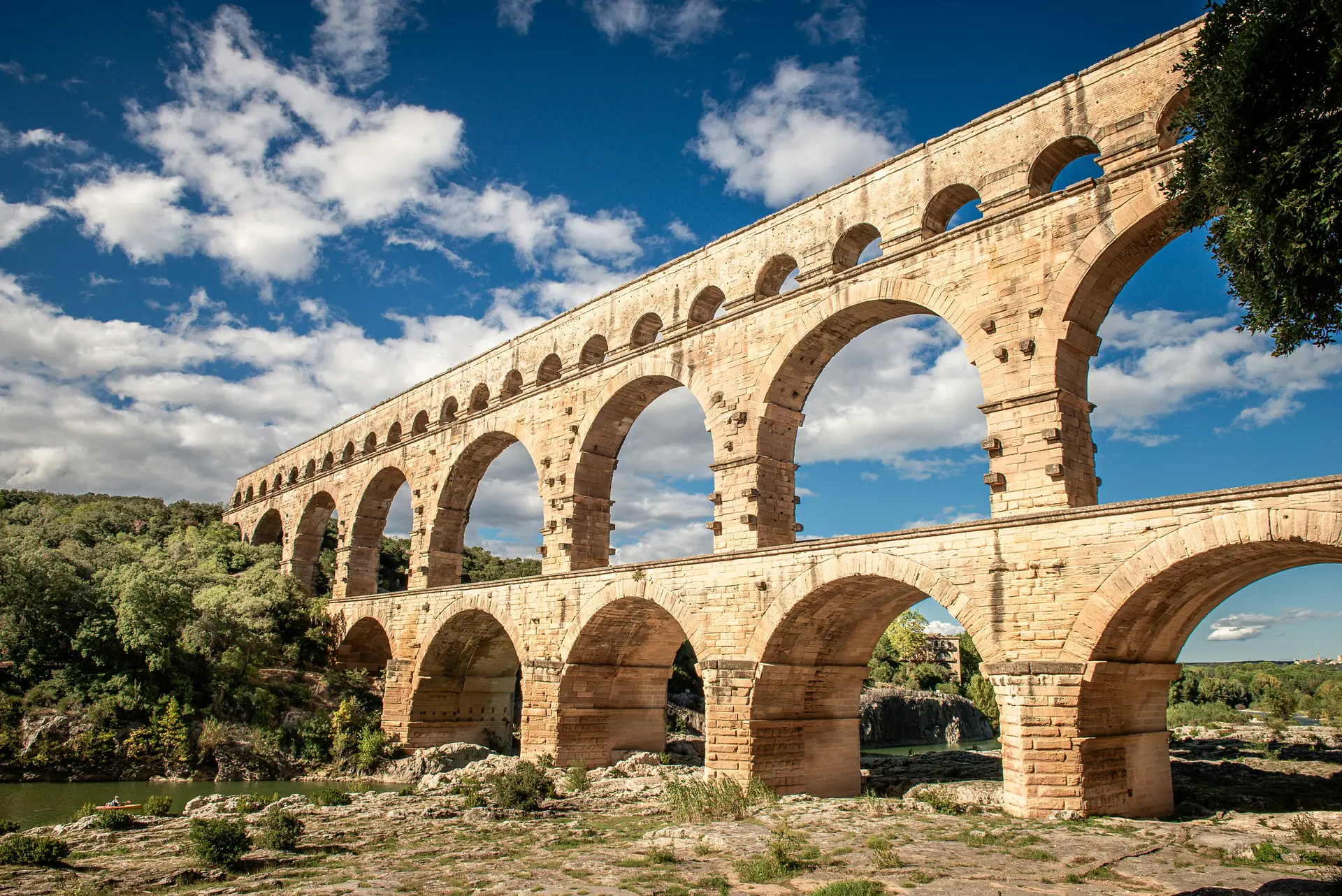
Pont du Gard stands as a remarkable example of ancient engineering located in southern France. Built over two thousand years ago it carries the legacy of Roman construction techniques across the Gardon River. The structure rises nearly 50 meters above the water and spans more than 200 meters wide. Its design reflects careful planning and precise stone cutting that has survived wars earthquakes and centuries of weather.
Visitors can walk along the bridge and observe how each block fits without mortar. The scale becomes clear when standing near the base where the height feels overwhelming yet controlled. Guides explain how water flowed through the channel above and why this particular location was chosen for its stable rock formations. Interpretive signs provide details about daily life in Roman times while showing sketches of workers who once shaped each stone.
The surrounding landscape includes fields vineyards and small villages that add to the region’s charm. Local markets sell fresh produce cheese bread and pastries made with regional ingredients. Cyclists can follow marked paths that pass close by offering quiet routes away from busy roads. Nearby towns such as Nîmes provide additional historical sites museums and cafes where travelers can rest after exploring the bridge.
Seasonal events often take place in the area including music festivals food fairs and guided tours led by archaeologists. Summer brings longer daylight hours allowing more time to study inscriptions or photograph reflections on the water below. Winter visits reveal softer light and fewer crowds making it easier to appreciate details without distraction. Whether you come for history science or simple scenery Pont du Gard remains a place where past and present meet in clear view.
The Pont du Gard, a Roman aqueduct bridge near Nîmes in southern France, is accessible by road via the D990 and D606 highways. The nearest major town is Uzès, approximately 20 km north, with parking available at designated sites like the "Parking de la Maison Carrée." Public transport includes regional buses operated by Lignes Sud, connecting Nîmes to Uzès; the bridge lies along the route between these stops. Train access requires reaching Nîmes station (30 minutes from Avignon or Montpellier) and transferring to a local bus or taxi for the final 5 km. Bicycle paths follow the Gardon River valley, offering scenic routes from nearby towns. The site is visible from the A9 motorway, with signage directing visitors to parking areas.
In the vicinity of the Pont du Gard, visitors find a range of lodging that caters to both budget‑conscious travelers and those seeking luxury. The area offers charming rural gîtes, offering rustic charm with modern amenities, as well as boutique bed‑and‑breakfasts nestled in historic villages. For families or groups desiring more space, agritourism farms provide spacious accommodations and the opportunity to experience local agriculture firsthand. Luxury seekers can opt for nearby châteaux converted into elegant hotels, featuring gourmet dining and spa facilities overlooking vineyards. The region’s accommodation landscape is further enriched by self‑catering apartments and holiday rentals that allow guests to immerse themselves in the Provençal lifestyle while enjoying easy access to the iconic bridge.
Log in to add this place to a travel list and get a summary of all recommended items for your whole trip.
We calculate the average costs when travelling to destinations and compare those with the living costs at your home. With this you can get an estimate of how expensive or cheap the destination is for you.
To customise this, you can set up which location and price level are used for the calculations in your account settings.
The exchange rate price factor shows how expensive or cheap a currency currently is compared to its historical average. It's a quick way to see if a country is currently more or less affordable due to exchange rate changes.
