











Was this page helpful?

| Power Grid: |
230 V, 50 Hz Plug: Type C , Type E , Type K
Type C:
   Read about power adapters |
|---|---|
| Currency: |
Danish Krone (DKK) £1 ≈ DKK 8.93 |
| Cashless info: |
Rating 5/5
Cashless payments are widespread, and cards are accepted almost everywhere.
Save with a travel credit card |
| eSIM providers: |
Best value: Saily Flexibility: Airalo Read our in-depth comparison |
| Tipping: | Tipping is not mandatory but appreciated. Rounding up the bill or leaving 5-10% is common. |
|---|---|
| Public drinking: | Public drinking is allowed, especially during festivals and celebrations. |
| Public smoking: | Smoking is banned in most indoor public spaces and workplaces. |
| Constitution Day (June) |
Celebrations occur, but shops may close early. |
|---|---|
| Christmas (December) |
Markets and festive events are popular. |
| Easter (March/April) |
Many closures and family gatherings. |
| Emergency contact: | Emergency Number: 112 (Police, Fire, Ambulance) |
|---|---|
| Taxi apps: | Uber, Bolt |
| Other: | Cycling is popular and convenient in Denmark. The country has a focus on sustainability and green living. |
The best times to travel section shows how the months compare for a visit, so you can find the time of year that fits what you want to do.
Background colours of the months:
The colour shows the typical temperature: yellow (hot), green (mild) and blue (cold). How strong the colour is shows the travel season: full colour means high season, soft colour means shoulder season and soft-striped means off season.
Weather symbols:
Each month has one symbol showing what the weather is typically like, such as hot and sunny, freezing or a rainy or snowy season. Use them to quickly spot months that match the weather you want, or to avoid the ones that don't.
Crowdedness:
The people icon shows how busy the place usually is. The more people, the more crowded it gets.
Additional notes:
The grey info boxes point out special things worth knowing, like recurring weather issues or seasonal events.
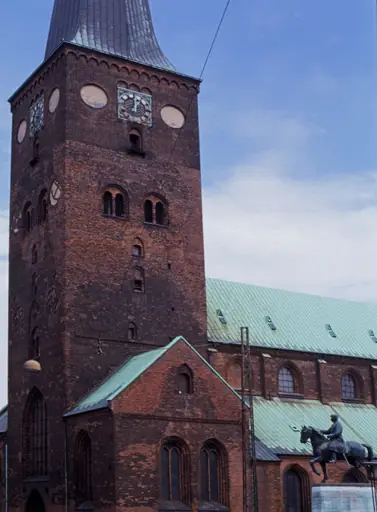
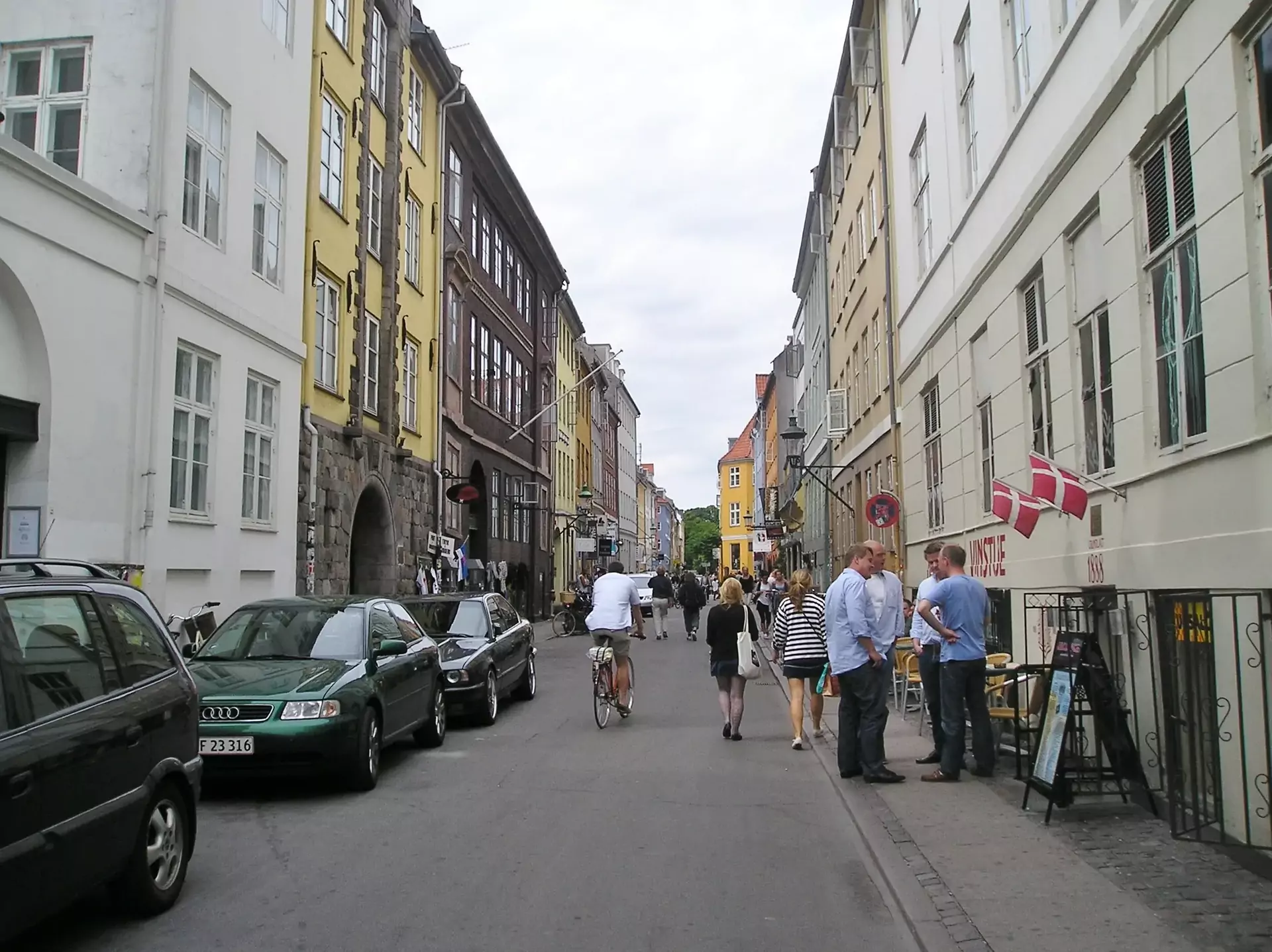
The Latin Quarter or Latinerkvarteret, is Aarhus' oldest district, with origins tracing back to the 14th century. Its narrow, winding cobblestone streets are lined with well-preserved buildings from the 16th century, creating an atmospheric blend of history and modern-day energy.
The quarter lives up to its name by evoking the bohemian vibe of the Latin Quarter in Paris, complete with vibrant street life, small galleries, artisan boutiques and inviting cafés. The central square, Pustervig Torv, is a charming oasis perfect for breaks amid exploring.
Cultural life flourishes here with live music concerts, street performances and creative workshops, adding to its exciting yet relaxed ambiance. It’s a great place to discover Nordic design, shop local crafts or simply savor traditional Danish pastries in a cozy setting.
Visitors should note that during chilly weather the outdoor atmosphere is less lively and parking can be challenging nearby, making public transport or walking preferable. The skirt of this neighborhood is ideal for those who appreciate history mingled with contemporary culture.
Visitors typically arrive via Aarhus Airport or by train to Aarhus Central Station. From the city center, the Latin Quarter is easily accessible on foot or by local buses. Its compact layout encourages leisurely strolling between shops and cafés.
Aarhus city center offers a variety of lodging options near the Latin Quarter – from boutique hotels housed in historic buildings to modern accommodations – ideal for easy access to this cultural hotspot.
Log in to add this place to a travel list and get a summary of all recommended items for your whole trip.
We calculate the average costs when travelling to destinations and compare those with the living costs at your home. With this you can get an estimate of how expensive or cheap the destination is for you.
To customise this, you can set up which location and price level are used for the calculations in your account settings.
The exchange rate price factor shows how expensive or cheap a currency currently is compared to its historical average. It's a quick way to see if a country is currently more or less affordable due to exchange rate changes.
