







Was this page helpful?

These place ratings give you a quick overview of how well a destination matches different types of trips.
‘Best for’ scores:
The specific interest scores show where this place really shines – whether it's ideal for hiking, food & drink experiences, museums or other activities. These highlights help you understand what makes the destination special at a glance.
‘Your personal’ scores:
This reflects how well a place matches your personal preferences. You can adjust the importances of travel topics or other personal requirements categories in your account settings.
‘Suited for’ badges:
These give you a quick overview of how well a destination suits specific types of travellers, to help you find the places that match your lifestyle, preferences or travel situation.
| Power Grid: |
220 V, 50 Hz Plug: Type A , Type B
Type A:
  Read about power adapters |
|---|---|
| Currency: |
Yemeni Rial (YER) £1 ≈ YER 314 |
| Cashless info: |
Rating 2/5
Cashless payments are not widely accepted in Yemen, and cash is the preferred method of payment.
Save with a travel credit card |
| eSIM providers: | We cannot recommend an eSIM provider for this country. We advise getting a local SIM card. |
| Tipping: | Tipping is appreciated but not mandatory in Yemen. Small tips for restaurant staff, taxi drivers, and hotel service providers are common. |
|---|---|
| Public drinking: | Public drinking is prohibited in Yemen, and alcohol consumption is restricted to private or licensed locations. |
| Public smoking: | Smoking is prohibited in indoor public spaces but is allowed in designated smoking areas. |
| Independence Day (30 November) |
Celebrates Yemen’s independence from British rule |
|---|
| Emergency contact: | Emergency Numbers: 194 (Police), 191 (Fire, Ambulance) |
|---|---|
| Taxi apps: | |
| Other: | Yemen is currently in a state of conflict, making travel highly unsafe. It is not a recommended destination for tourists at this time. |
The best times to travel section shows how the months compare for a visit, so you can find the time of year that fits what you want to do.
Background colours of the months:
The colour shows the typical temperature: yellow (hot), green (mild) and blue (cold). How strong the colour is shows the travel season: full colour means high season, soft colour means shoulder season and soft-striped means off season.
Weather symbols:
Each month has one symbol showing what the weather is typically like, such as hot and sunny, freezing or a rainy or snowy season. Use them to quickly spot months that match the weather you want, or to avoid the ones that don't.
Crowdedness:
The people icon shows how busy the place usually is. The more people, the more crowded it gets.
Additional notes:
The grey info boxes point out special things worth knowing, like recurring weather issues or seasonal events.
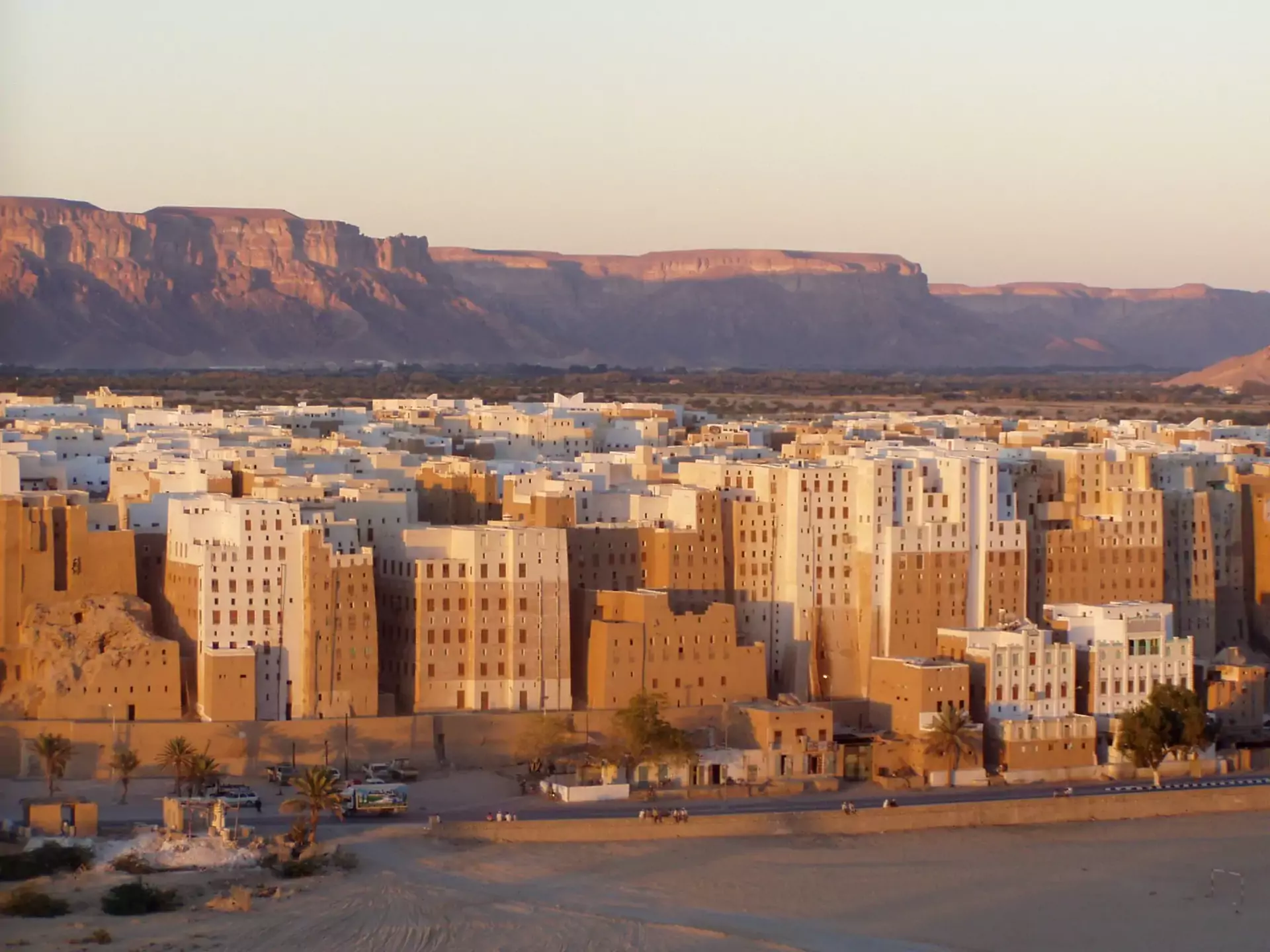
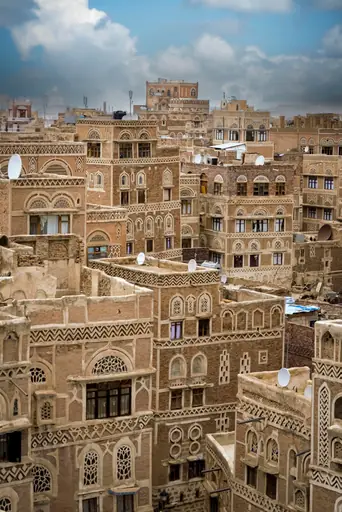
Shibam, often called the “Manhattan of the Desert,” is a living testament to medieval urban planning and architectural ingenuity. The town’s narrow streets wind through a maze of tightly packed mud‑brick towers that rise up to eight stories high, offering a unique perspective on how communities adapted to limited space and harsh desert conditions. Visitors can walk along the ancient alleyways, observing the intricate stonework and the way light plays across the façades throughout the day. The town’s history is deeply intertwined with Yemen’s trade routes and its layout reflects centuries of cultural exchange between Arab, Persian and African influences. Local guides provide insights into the social fabric that has sustained Shibam for generations, including traditional crafts such as weaving and pottery. The surrounding countryside offers opportunities to experience rural Yemeni life, with farms producing dates, olives and aromatic spices. Travelers interested in architecture, history or anthropology will find Shibam a compelling destination. Its UNESCO World Heritage status ensures that preservation efforts are ongoing, allowing visitors to witness the balance between heritage conservation and everyday living. The town’s modest accommodations and local eateries provide an authentic taste of Yemeni hospitality without the bustle of larger cities. For those seeking a quiet yet culturally rich experience, Shibam offers a window into a unique chapter of human settlement.
Shibam, located in Yemen’s Hadhramaut Governorate, is accessible primarily by road from major regional hubs. The nearest large city, Mukalla, serves as a key transit point, reachable via highway from Aden or Sana’a, with travel times ranging between 6–8 hours depending on road conditions and traffic. Local buses and private vehicles operate along these routes, though services may be limited due to infrastructure challenges. For international visitors, flights to Aden International Airport (approximately 2 hours by car) offer the most direct access, followed by ground transport to Shibam. Road travel requires a reliable vehicle, especially during rainy seasons when desert tracks can become impassable.
Shibam’s lodging scene blends historic charm with modern convenience. The town hosts a handful of boutique guesthouses perched on the ancient mud‑brick walls, offering intimate rooms that showcase traditional Yemeni décor and panoramic views of the city’s iconic skyline. For travelers seeking more contemporary comforts, several mid‑range hotels provide air‑conditioned suites, Wi‑Fi and rooftop terraces overlooking the bustling souk. Budget visitors can find modest hostels and family-run inns in nearby villages, where simple rooms are furnished with local textiles and shared kitchen facilities. The area is renowned for its “brick‑house” accommodations, allowing guests to experience living within the very architecture that defines Shibam’s UNESCO heritage.
We calculate the average costs when travelling to destinations and compare those with the living costs at your home. With this you can get an estimate of how expensive or cheap the destination is for you.
To customise this, you can set up which location and price level are used for the calculations in your account settings.
The exchange rate price factor shows how expensive or cheap a currency currently is compared to its historical average. It's a quick way to see if a country is currently more or less affordable due to exchange rate changes.
To help you plan your trip, we provide estimated daily costs per person (when travelling as a pair) for different travel styles. These numbers give you an idea of what you might spend each day at this destination, including accommodation, food, transport and activities.
Additionally, we also provide average hotel costs for different travel styles to give you an estimate for the accommodation only.
Please note that these are only estimates. The real costs depend on booking times, season and other factors.
Travel style categories explained:
Backpacker:
Staying in hostels or budget hotels, cooking your own meals or eating cheap and choosing low-cost activities.
Mid-range:
Staying in mid-range hotels, eating at a mix of restaurants and casual spots and enjoying a variety of activities.
Luxury:
Staying in luxury hotels, dining out at high-end restaurants and enjoying premium experiences without worrying about the price.
| Backpacker | Mid-range | Luxury | |
|---|---|---|---|
| 💵 Total costs per day, including accommodation | |||
| 🏨 Accommodation per night, per person | |||
| 🍝 Food per day | |||
| 🚕 Transportation per day |
| 🍽️ Restaurant Dinner, per person | |
|---|---|
| 🍛 Lunch Set, per person | |
| 🍟 Fast food combo | |
| 🍝 Preparing your own food, per day | |
| ☕ Cappuccino | |
| 🍺 Beer in a restaurant, 0.5 l |
| 🚌 Public transport ticket | |
|---|---|
| 🚕 Taxi Ride, 10 km / 6 mi | |
| ⛽ Petrol, 1 l |
| 🎞️ Cinema ticket | |
|---|---|
| 👩⚕️ Doctor's consult | |
| 🤧 Cold medication | |
| 💇 Basic haircut |
Log in to add this place to a travel list and get a summary of all recommended items for your whole trip.
