











Was this page helpful?

These place ratings give you a quick overview of how well a destination matches different types of trips.
‘Best for’ scores:
The specific interest scores show where this place really shines – whether it's ideal for hiking, food & drink experiences, museums or other activities. These highlights help you understand what makes the destination special at a glance.
‘Your personal’ scores:
This reflects how well a place matches your personal preferences. You can adjust the importances of travel topics or other personal requirements categories in your account settings.
‘Suited for’ badges:
These give you a quick overview of how well a destination suits specific types of travellers, to help you find the places that match your lifestyle, preferences or travel situation.
| Power Grid: |
220 V, 50 Hz Plug: Type A , Type C
Type A:
  Read about power adapters |
|---|---|
| Currency: |
Vietnamese Dong (VND) £1 ≈ ₫34,381 |
| Cashless info: |
Rating 4/5
Cashless payments are widely accepted in Vietnam, especially in larger cities and tourist areas. Cash is still commonly used in rural areas.
Save with a travel credit card |
| eSIM providers: |
Best value: Saily Flexibility: Airalo Read our in-depth comparison |
| Tipping: | Tipping is not customary in Vietnam, but small tips are appreciated for good service in restaurants, taxis, and hotels. |
|---|---|
| Public drinking: | Public drinking is generally allowed in Vietnam, but drinking in certain public spaces, like parks, may be regulated. |
| Public smoking: | Smoking is allowed in outdoor public spaces, but there are smoking restrictions in some indoor public areas. |
| Independence Day (2 September) |
Celebrates Vietnam’s independence from France |
|---|---|
| Tết (January/February) |
The most important holiday in Vietnam, typically in January or February |
| Emergency contact: | Emergency Numbers: 113 (Police), 115 (Ambulance), 114 (Fire) |
|---|---|
| Taxi apps: | Grab |
| Other: | Vietnam is famous for its vibrant cities, historic sites, and stunning landscapes like Ha Long Bay and the Mekong Delta, offering a rich and diverse travel experience. |
The best times to travel section shows how the months compare for a visit, so you can find the time of year that fits what you want to do.
Background colours of the months:
The colour shows the typical temperature: yellow (hot), green (mild) and blue (cold). How strong the colour is shows the travel season: full colour means high season, soft colour means shoulder season and soft-striped means off season.
Weather symbols:
Each month has one symbol showing what the weather is typically like, such as hot and sunny, freezing or a rainy or snowy season. Use them to quickly spot months that match the weather you want, or to avoid the ones that don't.
Crowdedness:
The people icon shows how busy the place usually is. The more people, the more crowded it gets.
Additional notes:
The grey info boxes point out special things worth knowing, like recurring weather issues or seasonal events.
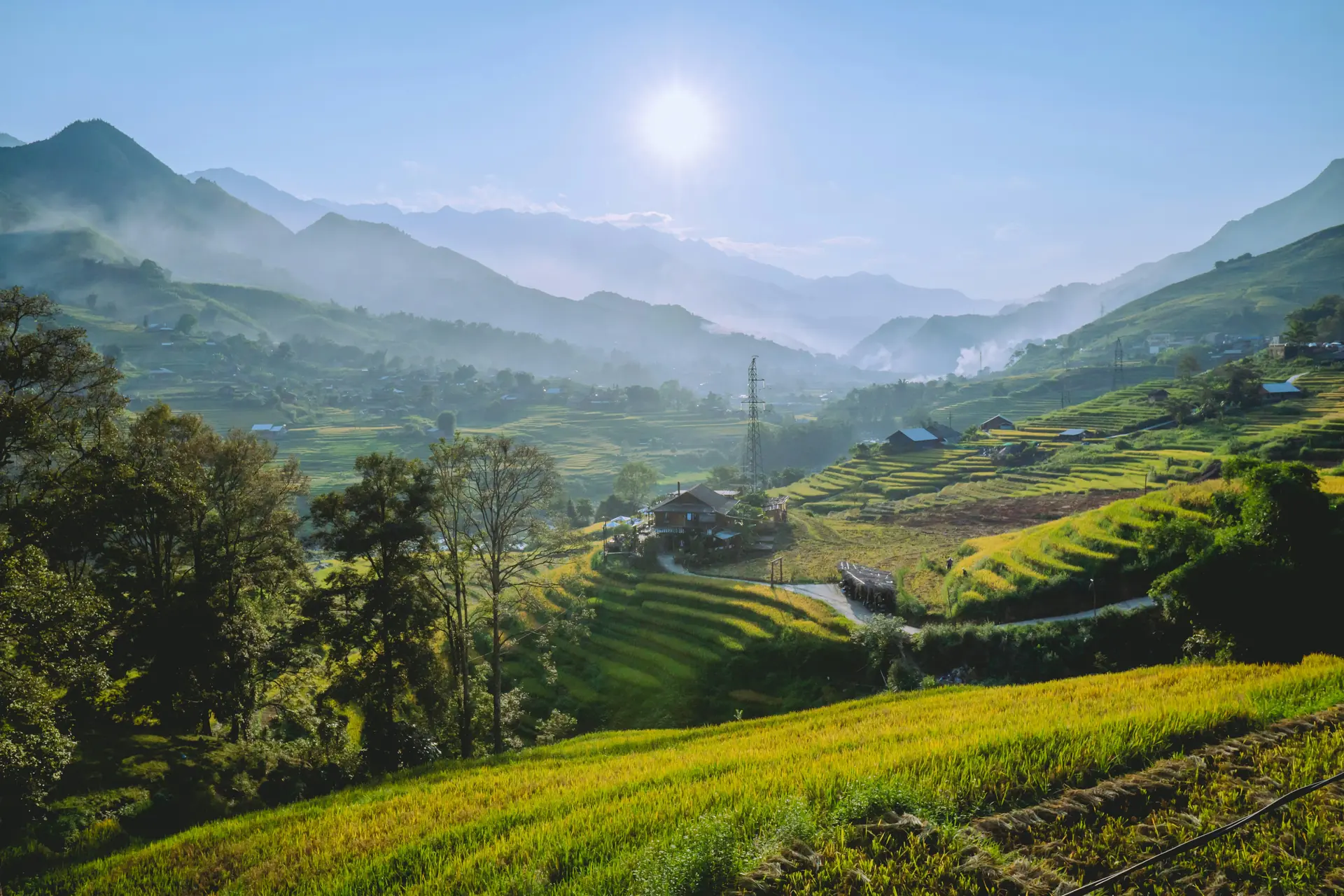
Sapa, perched at the edge of Vietnam’s northern highlands, offers travelers a blend of natural beauty and cultural depth that is both accessible and authentic. The town sits amid terraced rice paddies carved into limestone cliffs, creating a landscape that feels almost otherworldly yet remains rooted in everyday life. Visitors can walk through these terraces on guided hikes, learning how local ethnic groups – such as the Hmong, Dao and Tay – cultivate their crops using traditional methods passed down for generations. Beyond agriculture, Sapa’s climate is pleasantly cool compared to Vietnam’s lowland heat, making it an ideal retreat during summer months. The town’s colonial-era architecture, with its wooden balconies and stone facades, reflects a history of French influence that still echoes in the local cafés and markets. Strolling through the central market offers a taste of regional produce: fresh herbs, bamboo shoots and handmade textiles. For those interested in adventure, Sapa provides trekking routes ranging from easy walks to multi-day treks into remote villages. The experience is enriched by opportunities to stay with families in homestays, where guests can participate in daily chores or simply enjoy a quiet evening under starlit skies. Whether you seek scenic vistas, cultural immersion or a respite from tropical heat, Sapa delivers a balanced and memorable journey.
Sapa, located in northern Vietnam’s Lao Cai Province, is accessible primarily by road from Hanoi, the national capital. The journey takes approximately 6 to 8 hours via Highway 4B and Route 14, passing through scenic mountainous terrain and rural landscapes. Buses and private cars operate daily services between Hanoi and Sapa, with options ranging from budget‑friendly shared vans to luxury coaches. For travelers preferring rail transport, the nearest railway station is in Lao Cai, approximately 50 kilometers away, connected by taxi or local bus. During peak seasons, especially around holidays, additional shuttle services may be available. The town itself sits at an elevation of about 1,600 meters above sea level.
Sapa offers a range of lodging that caters to both budget travelers and those seeking luxury. Hostels and guesthouses line the main street, providing clean rooms for as low as ₫230,000 – 345,000 (£6.65 – 9.97) per night, often with shared kitchen facilities and free Wi‑Fi. Mid‑range boutique hotels and homestays are plentiful; prices typically fall between ₫690,000 – 1,380,000 (£19.94 – 39.89), offering private bathrooms, local décor and sometimes breakfast featuring regional specialties. For a more upscale experience, boutique resorts and eco‑lodges perched on terraced hills offer panoramic views, hot tubs and personalized service, with rates around ₫1,840,000 – 2,760,000 (£53.18 – 79.77) per night. Many accommodations emphasize traditional Vietnamese architecture, using bamboo, wood and stone to blend modern comfort with cultural authenticity.
We calculate the average costs when travelling to destinations and compare those with the living costs at your home. With this you can get an estimate of how expensive or cheap the destination is for you.
To customise this, you can set up which location and price level are used for the calculations in your account settings.
The exchange rate price factor shows how expensive or cheap a currency currently is compared to its historical average. It's a quick way to see if a country is currently more or less affordable due to exchange rate changes.
To help you plan your trip, we provide estimated daily costs per person (when travelling as a pair) for different travel styles. These numbers give you an idea of what you might spend each day at this destination, including accommodation, food, transport and activities.
Additionally, we also provide average hotel costs for different travel styles to give you an estimate for the accommodation only.
Please note that these are only estimates. The real costs depend on booking times, season and other factors.
Travel style categories explained:
Backpacker:
Staying in hostels or budget hotels, cooking your own meals or eating cheap and choosing low-cost activities.
Mid-range:
Staying in mid-range hotels, eating at a mix of restaurants and casual spots and enjoying a variety of activities.
Luxury:
Staying in luxury hotels, dining out at high-end restaurants and enjoying premium experiences without worrying about the price.
| Backpacker | Mid-range | Luxury | |
|---|---|---|---|
| 💵 Total costs per day, including accommodation | |||
| 🏨 Accommodation per night, per person | |||
| 🍝 Food per day | |||
| 🚕 Transportation per day |
| 🍽️ Restaurant Dinner, per person | |
|---|---|
| 🍛 Lunch Set, per person | |
| 🍟 Fast food combo | |
| 🍝 Preparing your own food, per day | |
| ☕ Cappuccino | |
| 🍺 Beer in a restaurant, 0.5 l |
| 🚌 Public transport ticket | |
|---|---|
| 🚕 Taxi Ride, 10 km / 6 mi | |
| ⛽ Petrol, 1 l |
| 🎞️ Cinema ticket | |
|---|---|
| 👩⚕️ Doctor's consult | |
| 🤧 Cold medication | |
| 💇 Basic haircut |
Log in to add this place to a travel list and get a summary of all recommended items for your whole trip.
