Asia › Syria › Palmyra › Climate

Palmyra climate data

Palmyra, set in the heart of the Syrian desert, has a hot desert climate with dramatic seasonal contrasts. Summers are long, extremely hot, and rainless, while winters are cool to cold with occasional snow and light rain. The region’s arid steppe environment and abundant sunshine make Palmyra a striking destination for history and adventure seekers.

Best times to travel

The best times to travel section shows how the months compare for a visit, so you can find the time of year that fits what you want to do.

Background colours of the months:
The colour shows the typical temperature: yellow (hot), green (mild) and blue (cold). How strong the colour is shows the travel season: full colour means high season, soft colour means shoulder season and soft-striped means off season.

Weather symbols:
Each month has one symbol showing what the weather is typically like, such as hot and sunny, freezing or a rainy or snowy season. Use them to quickly spot months that match the weather you want, or to avoid the ones that don't.

Crowdedness:
The people icon shows how busy the place usually is. The more people, the more crowded it gets.

Additional notes:
The grey info boxes point out special things worth knowing, like recurring weather issues or seasonal events.

for Palmyra, Syria
🔥
Jan
🔥
Feb
🔥
Mar
🔥
Apr
🌦️
May
🔥
Jun
🔥
Jul
🌦️
Aug
🌦️
Sep
⛈️
Oct
🌦️
Nov
🔥
Dec
High season: March - April, Oct. - Nov.
Shoulder season: Jan. - Feb., May, Dec.
Crowdedness: 0 (Very few tourists)
Tap on a month for more info Hover over a month for more info
Most governments advise against all travel to Syria; access to Palmyra depends on the security situation and local permits
Summer temperatures often exceed 40 °C (104 °F); the ruins offer almost no shade

The climate of Palmyra

Palmyra experiences a subtropical desert climate, defined by scorching, dry summers and cool, brief winters. From April to October, the city endures a long, rainless summer, with daytime highs often exceeding 40°C from June to August. Nights offer some relief but remain warm, and humidity is consistently low. Sunshine is abundant, with up to 12–14 hours of daylight in peak summer, making the ancient ruins glow under the desert sun.

Winter, from December to February, is markedly cooler, with average highs around 12–14°C and lows near 3–4°C. Cold waves can occasionally bring temperatures below freezing, and light snowfall is not uncommon, though it rarely accumulates. Most of Palmyra’s scant annual rainfall – about 110–150 mm – falls in winter and early spring, with January typically the wettest month. Spring and autumn are transitional, offering milder temperatures (20–28°C) and pleasant conditions for exploring the oasis and archaeological sites. Winds are generally light, but the region can experience strong southerly winds in spring, sometimes causing sandstorms that reduce visibility and raise temperatures suddenly.

Palmyra’s climate is shaped by its oasis location in the arid steppe, with dramatic diurnal temperature shifts and minimal moisture. Despite the harsh environment, ancient irrigation systems once supported lush gardens and date palms, a testament to the ingenuity of its inhabitants. Today, visitors should be prepared for intense summer heat, chilly winter nights, and the ever-present brilliance of the desert sun.

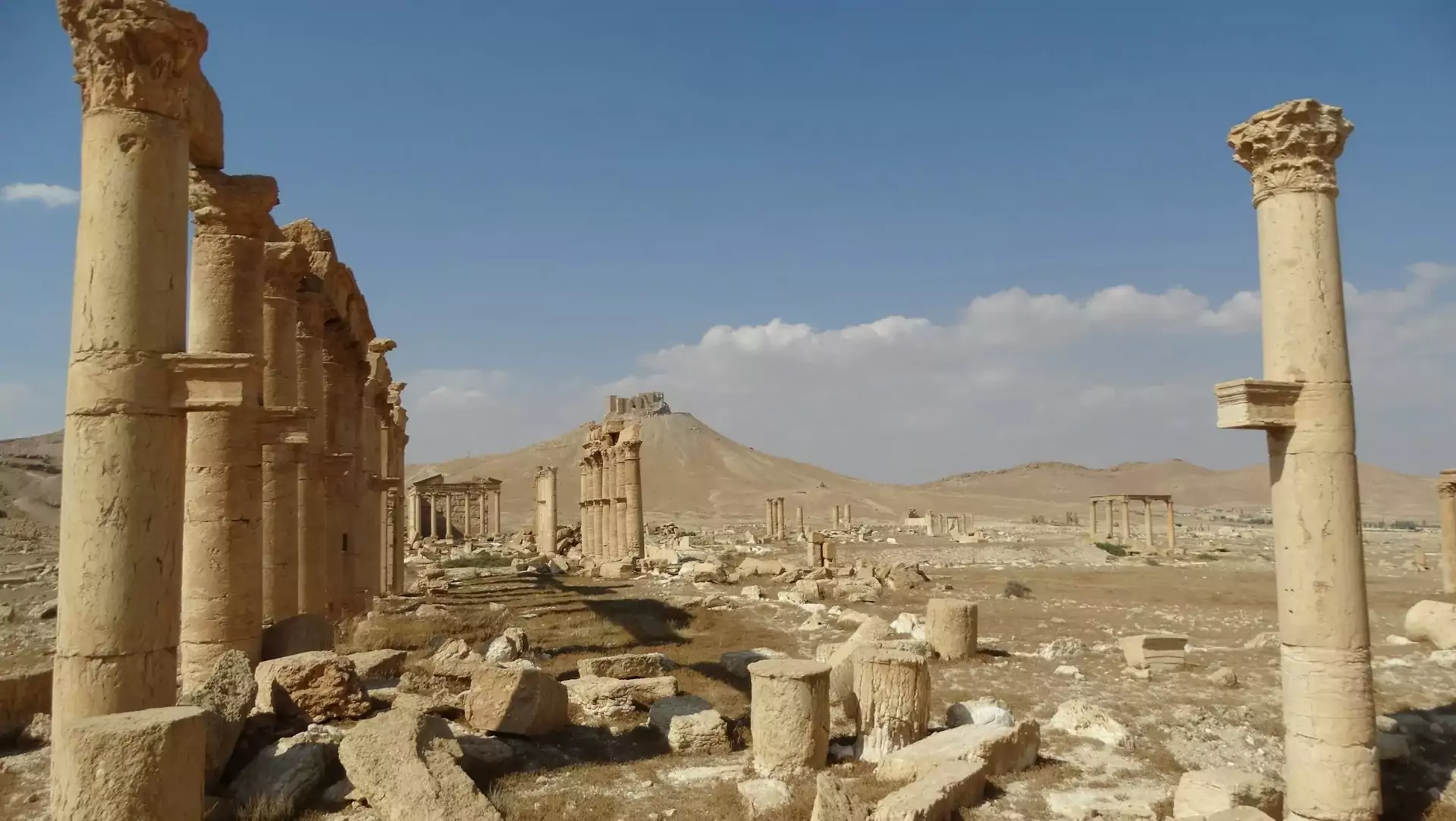
Average climate data for Palmyra, Syria
Month Jan Feb Mar Apr May Jun Jul Aug Sep Oct Nov Dec Year
Average maximum temperature (°C) 29 32 35 37 37 34 33 33 32 31 29 28 37
Average minimum temperature (°C) 18 19 22 25 26 24 24 23 23 22 20 19 18
Average precipitation (mm) 9 10 18 45 94 61 75 84 89 178 103 31 799
Average rainfall days (days) 5 4 8 13 21 18 15 20 20 23 20 13 178
Average snowfall (mm) 3 1 1 0 0 0 0 0 0 0 0 1 6
Average snowfall days (days) 0 0 0 0 0 0 0 0 0 0 0 0 1
Average relative humidity (%) 69 57 51 49 54 60 64 68 68 75 79 75 64
Average wind speed (km/h) 8 8 8 7 8 11 10 9 7 6 7 8 8
Average daily daylight hours (h) 11 11 12 12 12 12 12 12 12 11 11 11 12
Average daily sunshine hours (h) 9 9 9 9 11 11 9 8 8 7 5 6 8
Average cloud coverage (%) 19 12 15 20 25 33 38 38 36 40 41 34 29
Average UV index 6 7 8 8 8 7 7 7 7 6 6 6 7

Travel info

  • Spring (March–May): Mild and sunny, with highs of 20–31°C. Occasional light rain and strong winds can cause sandstorms. Ideal for sightseeing and exploring ruins – pack layers and sun protection.
  • Summer (June–September): Extremely hot and dry, with highs of 36–40°C or more. Rain is virtually nonexistent. Outdoor activities are best scheduled for early mornings or late afternoons. Stay hydrated and avoid midday sun.
  • Autumn (October–November): Warm and pleasant, with highs of 28–20°C. Rainfall remains low, and conditions are comfortable for travel. Bring a light jacket for cooler evenings.
  • Winter (December–February): Cool to cold, with highs of 11–14°C and lows near 3–4°C. Occasional rain or light snow possible. Dress in layers and be prepared for chilly nights.
  • Travel tip: The best travel months are April and October for comfortable temperatures and clear skies. In summer, plan activities for early or late in the day to avoid extreme heat. Always check for sandstorm forecasts in spring.

The best time to visit Palmyra

The best time to visit Palmyra is in spring (March to May) and autumn (late September to November), when temperatures are mild, rainfall is minimal, and the desert landscape is most comfortable for sightseeing. April and October are especially pleasant, with highs between 22–30°C and abundant sunshine, ideal for exploring the ancient ruins.

The worst time to visit Palmyra

The least favourable time to visit Palmyra is during the peak summer months (June to August), when daytime temperatures regularly exceed 40°C and rain is virtually absent. The intense heat can make outdoor activities dangerous, especially at midday. Winter, while cooler, can bring cold nights and occasional rain or snow.

Frequently asked questions

What is the climate like in Palmyra year-round?

Palmyra has a hot desert climate with extremely hot, dry summers and cool, brief winters. Summer temperatures often exceed 40°C, while winters are mild to cold with occasional rain and rare snowfall.

When is the best time to visit Palmyra?

The best months to visit Palmyra are April and October, when temperatures are comfortable (22–30°C), skies are clear, and the desert heat is less intense—making it ideal for sightseeing and exploring the ruins.

Does it rain or snow in Palmyra?

Palmyra receives very little precipitation, averaging 110–150 mm annually. Most rain falls in winter and early spring. Snow is rare but possible during cold spells, usually melting quickly and not accumulating.

How hot does it get in Palmyra during summer?

Summers in Palmyra are extremely hot, with daytime highs of 36–40°C or more from June to August. Nights are warm, and humidity is low. Outdoor activities should be planned for early morning or late afternoon.

Are sandstorms common in Palmyra?

Sandstorms can occur, especially in spring, when strong southerly winds raise dust and reduce visibility. These events are usually brief but can cause sudden temperature spikes and should be monitored in travel plans.

What should I pack for a trip to Palmyra?

Pack lightweight, breathable clothing for summer, sun protection, and a hat. In winter, bring layers for cool days and cold nights. A scarf or mask is useful for sandstorms, and always carry water when exploring outdoors.

Is Palmyra suitable for travel in winter?

Yes, Palmyra is suitable for winter travel, with mild daytime temperatures and fewer tourists. However, nights can be cold, and occasional rain or light snow is possible. Dress in layers and check the forecast before visiting.

Minimum and maximum temperatures in Palmyra

The warmest month, with the highest average maximum temperature, is April (37.2 °C). The month with the lowest average maximum temperature is December (28.3 °C). Overall, the average maximum temperature over the whole year is 32.6 °C.

The month with the highest average minimum temperature is May (26.1 °C). The coldest month, with the lowest average minimum temperature, is January (18.2 °C). Overall, the average minimum temperature over the whole year is 22.2 °C.

Rainfall amount in Palmyra

The wettest month, with the highest amount of precipitation, is October (178.4 mm). The driest month, with the least amount of precipitation, is January (9 mm). Over the whole year there are 799.3 mm of rainfall on average.

Rainfall days in Palmyra

The month with the most days of rain is October (22.6 days). The month with the fewest days of rain is February (4 days). Over the whole year there are 178.1 days of rain on average.

Snowfall amount in Palmyra

The month with the most snowfall is January (3 mm). The months with the least snowfall are April, May, June, July, August, September, October and November (0 mm). Over the whole year there are 6 mm of snowfall on average.

Snowfall days in Palmyra

The month with the most days of snowfall is December (0.3 days). The months with the fewest days of snowfall are May and August (0 days). Over the whole year there are 1.2 days of snowfall on average.

Relative humidity in Palmyra

The month with the highest average relative humidity is November (78.5 %). The month with the lowest average relative humidity is April (48.8 %). The overall average relative humidity over the whole year is 64.1 %.

Wind speed in Palmyra

The windiest month, with the highest average wind speed, is June (10.7 km/h). The calmest month, with the lowest average wind speed, is October (6 km/h). The overall average wind speed over the whole year is 8.1 km/h.

Cloud coverage in Palmyra

The month with the cloudiest skies, so the highest cloud coverage, is November (41.3 %). The month with the clearest skies, so the lowest cloud coverage, is February (11.9 %). Over the whole year there is an average cloud coverage of 29.3 %.

Daylight hours and sunshine hours in Palmyra

The month with the longest days, so the most daylight, is June (Average daylight: 12.1 h). The months with the shortest days, so the least daylight, are January and December (Average daylight: 11 h). Over the whole year there are 11.6 h of daylight per day on average.

The month with the most sunshine per day is June (Average sunshine: 11.1 h). The month with the least sunshine per day is November (Average sunshine: 5.2 h). Over the whole year there are 8.5 h of sunlight per day on average.

UV index in Palmyra

The months with the highest average UV index are March, April and May (UV index: 8). The months with the lowest average UV index are January, October, November and December (UV index: 6). Over the whole year the average UV index is 6.9.

Was this page helpful?
Feedback