




Was this page helpful?

| Public website: | www.cwg.go.kr |
|---|
| Power Grid: |
220 V, 60 Hz Plug: Type C , Type F
Type C:
  Read about power adapters |
|---|---|
| Currency: |
South Korean Won (KRW) £1 ≈ ₩1,788 |
| Cashless info: |
Rating 5/5
Cashless payments are widely accepted in South Korea. Credit cards are commonly used in most establishments, including smaller businesses.
Save with a travel credit card |
| eSIM providers: |
Best value: Saily Flexibility: Airalo Read our in-depth comparison |
| Tipping: | Tipping is not customary in South Korea. However, small tips are appreciated in hotels and for exceptional service. |
|---|---|
| Public drinking: | Public drinking is allowed in South Korea, though drinking in public spaces like parks and streets may attract attention. Alcohol is also served in many convenience stores. |
| Public smoking: | Smoking is prohibited in indoor public spaces, but designated smoking areas are available in some outdoor locations. |
| Seollal (January/February) |
Celebrated in January or February with family gatherings |
|---|---|
| Chuseok (September/October) |
Celebrated in September or October |
| Emergency contact: | Emergency Numbers: 112 (Police), 119 (Fire, Ambulance) |
|---|---|
| Taxi apps: | Kakao T, T Map Taxi |
| Other: | South Korea offers a blend of traditional culture and modern technology, with historical sites, vibrant cities, and stunning landscapes. |
The best times to travel section shows how the months compare for a visit, so you can find the time of year that fits what you want to do.
Background colours of the months:
The colour shows the typical temperature: yellow (hot), green (mild) and blue (cold). How strong the colour is shows the travel season: full colour means high season, soft colour means shoulder season and soft-striped means off season.
Weather symbols:
Each month has one symbol showing what the weather is typically like, such as hot and sunny, freezing or a rainy or snowy season. Use them to quickly spot months that match the weather you want, or to avoid the ones that don't.
Crowdedness:
The people icon shows how busy the place usually is. The more people, the more crowded it gets.
Additional notes:
The grey info boxes point out special things worth knowing, like recurring weather issues or seasonal events.
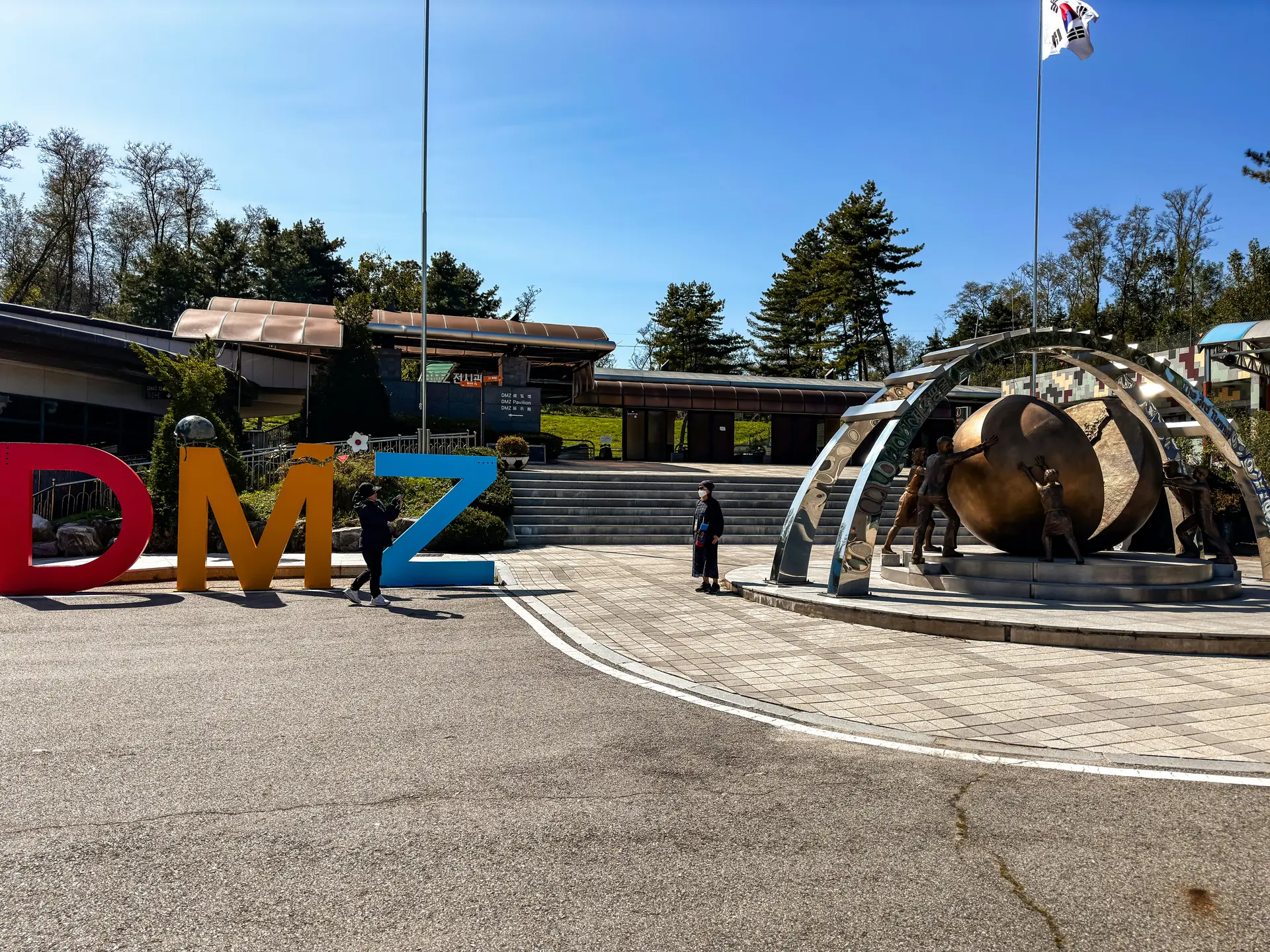
The DMZ (Demilitarized Zone) stretches across the Korean Peninsula as a 4-kilometer-wide, 250-kilometer-long buffer zone between North and South Korea established after the 1953 Korean Armistice Agreement. This strip of land has remained heavily guarded and largely untouched by human development, creating a rare wildlife haven and a poignant symbol of division and hope for peace.
While the area is a symbol of conflict, it surprises many visitors with its natural beauty. Over the decades, flora and fauna have thrived in this restricted zone, making it an unwitting sanctuary for several endangered species. The DMZ also holds multiple historical sites such as the Third Tunnel – an underground infiltration tunnel dug by North Korea – and observation decks like Dora Observatory, where you can peer across into North Korea.
Tourism here is tightly regulated, with visitors only allowed to enter on authorized tours. Safety and respect for the ongoing military presence is crucial. The Joint Security Area (JSA) tours, which visit the famous blue buildings where soldiers from both Koreas face off, have been temporarily suspended in recent years due to security concerns, affecting the visitor experience.
Visiting the DMZ is an eye-opening experience that combines chilling reminders of geopolitical tensions with moments of serene beauty. It’s not a typical tourist destination – expect strict rules, guided access only and a somber atmosphere, but also a profound understanding of one of the world's most enduring conflicts.
The DMZ is accessible only via guided tours departing primarily from Seoul, South Korea’s capital. Tour operators provide transportation typically by bus and the tours include stops at key observation points and historical sites. Visitors must carry a valid passport and follow strict security protocols. The area is highly controlled due to ongoing military sensitivity, making independent visits impossible and a tour guide mandatory.
Most visitors stay in Seoul, where there is a wide range of accommodation options from budget guesthouses to luxury hotels. Since the DMZ tours are usually day trips, staying near the capital offers the most convenience and variety.
Log in to add this place to a travel list and get a summary of all recommended items for your whole trip.
We calculate the average costs when travelling to destinations and compare those with the living costs at your home. With this you can get an estimate of how expensive or cheap the destination is for you.
To customise this, you can set up which location and price level are used for the calculations in your account settings.
The exchange rate price factor shows how expensive or cheap a currency currently is compared to its historical average. It's a quick way to see if a country is currently more or less affordable due to exchange rate changes.
