

Asia › Saudi Arabia › Mecca › Mount Arafat

Mount Arafat

Scroll
The Hill of Mercy's Sacred Peak

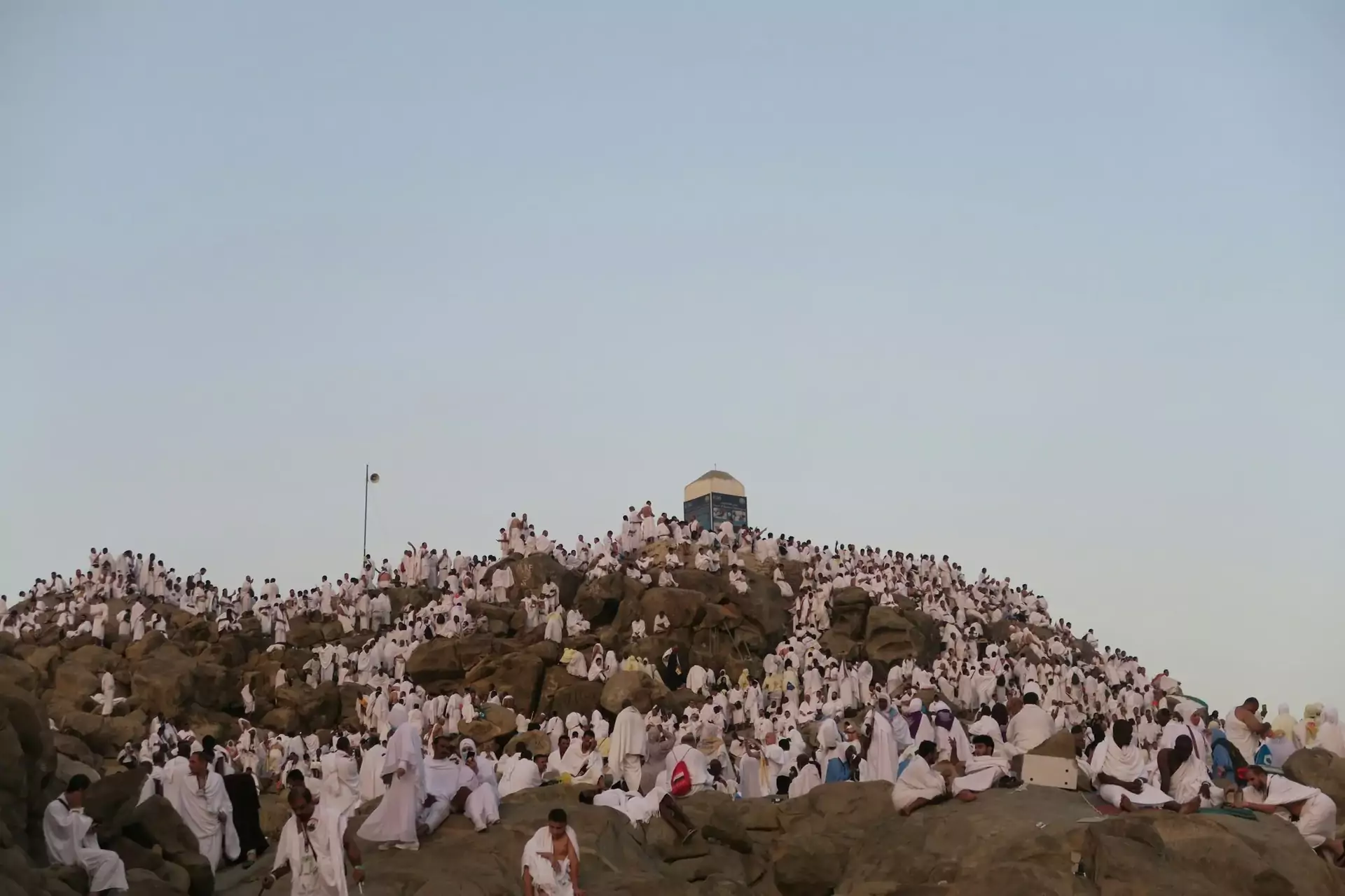
Mount Arafat stands as a significant landmark in Saudi Arabia, central to Islamic tradition and pilgrimage. Located near Mecca, this rocky hill rises about 700 meters above sea level. Pilgrims gather here during Hajj, spending the afternoon in prayer and reflection. The site holds deep spiritual meaning for Muslims worldwide, symbolizing humility and devotion. Its simplicity reflects core values of faith and equality among believers. Visitors experience a quiet atmosphere marked by reverence and community connection as they witness this historic moment together.

Peak in Mecca
Climate zone: Hot desert

Hot desert: Extremely arid climates with very high temperatures, minimal rainfall, strong evaporation and sparse vegetation, typical of subtropical deserts.

See climate table
Ticket price: free
$Cheap
$$Medium
$$$Expensive, upscale
$$$+Very expensive, luxury
Safety: 7.6
General Safety:8
Accessibility:6
Read details
Tourist English: 3/5
English is moderately spoken by service staff and guides in the area, especially during Hajj, but Arabic remains dominant. Basic communication in English is usually possible in hotels and with tour services.
Last update: 12 Oct 2026
* We earn a commission from some links on this page.
Mount Arafat Summary
Central for Hajj pilgrimage rituals. Pilgrims gather in prayer and reflection on the plain and hillside during the annual pilgrimage.
Saudi Arabia – Quick facts
Power Grid: 230 V, 60 Hz
Plug: Type G
Type G:
Diagram of a Type G power plug

Read about power adapters
Currency: Saudi Riyal (SAR)
£1 ≈ SAR 4.99
Cashless info: Rating 5/5
Cashless payments are widely accepted in Saudi Arabia, especially in urban areas and large businesses.

Save with a travel credit card
eSIM providers: Best value: Saily
Flexibility: Airalo
Read our in-depth comparison
Tipping: Tipping is not expected in Saudi Arabia, but rounding up the bill or leaving a small tip in restaurants, taxis, and hotels is appreciated.
Public drinking: Public drinking is strictly prohibited in Saudi Arabia. Alcohol consumption is illegal, and there are heavy penalties for violations.
Public smoking: Smoking is prohibited in indoor public spaces, but designated smoking areas are available outdoors.
National Day
(23 September)
Celebrates the founding of Saudi Arabia
Eid al-Fitr
(variable)
Marks the end of Ramadan with celebrations
Emergency contact: Emergency Numbers: 911 (General), 999 (Police), 997 (Ambulance), 998 (Fire)
Taxi apps: Uber, Careem
Other: Saudi Arabia is known for its vast deserts, historic cities, and religious significance, particularly in Islam. It offers a mix of modernity and tradition.
Best times to travel

The best times to travel section shows how the months compare for a visit, so you can find the time of year that fits what you want to do.

Background colours of the months:
The colour shows the typical temperature: yellow (hot), green (mild) and blue (cold). How strong the colour is shows the travel season: full colour means high season, soft colour means shoulder season and soft-striped means off season.

Weather symbols:
Each month has one symbol showing what the weather is typically like, such as hot and sunny, freezing or a rainy or snowy season. Use them to quickly spot months that match the weather you want, or to avoid the ones that don't.

Crowdedness:
The people icon shows how busy the place usually is. The more people, the more crowded it gets.

Additional notes:
The grey info boxes point out special things worth knowing, like recurring weather issues or seasonal events.

for Mount Arafat, Saudi Arabia
☀️
Jan
🔥
Feb
🔥
Mar
🔥
Apr
🔥
May
🔥
Jun
🔥
Jul
🔥
Aug
🔥
Sep
🔥
Oct
🔥
Nov
🔥
Dec
High season: Jan. - March, Nov. - Dec.
Shoulder season: April - May, Oct.
Tap on a month for more info Hover over a month for more info
Only Muslims may enter Mecca; all other visitors are barred from the city
Hajj pilgrims gather here on the 9th of Dhul Hijjah; the area is closed to others and extremely crowded

Mount Arafat is known as Jabal al-Rahmah or the "Mountain of Mercy." This granite hill holds deep religious significance as the site where Prophet Muhammad delivered his Farewell Sermon to his followers. Pilgrims ascend this peak during the annual Hajj to stand in prayer and reflection, marking the climactic day of the pilgrimage known as the Day of Arafat.

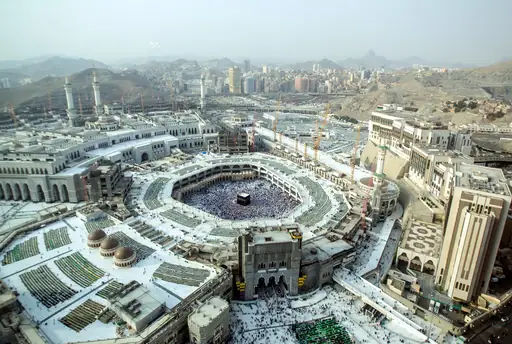
The vast plain surrounding the mount fills with millions of pilgrims gathering to pray from noon until sunset. This day is charged with profound spirituality, as it symbolizes forgiveness, mercy and equality, with everyone dressed in simple white Ihram clothing. The unity and devotion witnessed here are truly moving, creating a sense of global Muslim brotherhood.

While visiting, it’s important to be prepared for the intense heat since the region has a hot desert climate (Köppen BWh), with temperatures sometimes soaring above 40°C. Sun protection, hydration and appropriate footwear are essential, especially as pilgrims navigate the hill’s steep and rocky terrain. Crowd safety is strictly managed, but the massive gatherings mean patience and caution are advised.

Mount Arafat is freely accessible, but it is predominantly a spiritual and religious destination rather than a typical tourist spot. The experience is heightened during Hajj, but the site remains a remarkable place to visit for those interested in Islamic history and culture.

Knowledge before you go

  • Hajj pilgrims only. Essential wuquf standing ritual.
  • Spend 9th Dhul Hijjah from noon until sunset in supplication on Arafat plain.
  • Climb Jabal Rahmah for Prophet's farewell sermon site and panoramic views.
  • Without Arafat attendance on designated day, entire Hajj pilgrimage becomes invalid.

How to travel to Mount Arafat

Mount Arafat is accessible from Mecca, primarily by road, around 20 kilometers southeast. During the Hajj pilgrimage season, special transport arrangements such as buses are organized to safely handle the large influx of pilgrims. For visitors outside the Hajj period, traveling to Mecca by air through King Abdulaziz International Airport in Jeddah is the usual starting point, followed by a road journey to Mount Arafat.

Access summary

  • From Jeddah Airport (JED): Taxi or bus via Mecca, about 2–3 hours.
  • From Mecca city: Taxi, rideshare or Hajj buses, roughly 30–45 minutes.
  • From Medina: Haramain high-speed train to Mecca, then taxi/bus to Arafat, around 3–4 hours.

Where to stay near Mount Arafat

Accommodation near Mount Arafat is mostly found in Mecca, offering a range from mid-level to high-end hotels that cater especially to pilgrims during Hajj. Visitors usually stay in Mecca or nearby Mina and travel to Arafat for the day, as there are no accommodations right at the mount itself.

Hotel recommendations

*by rating and popularity. Commissions have no influence on the rankings.
We couldn't find any nearby hotels for now.
Budget snapshot
Costs compared to home

We calculate the average costs when travelling to destinations and compare those with the living costs at your home. With this you can get an estimate of how expensive or cheap the destination is for you.

To customise this, you can set up which location and price level are used for the calculations in your account settings.

-53 %
Daily expenses in the region are around 53% lower than the average across United States. That means you'll spend a lot less on meals and getting around.
Exchange rate trend

The exchange rate price factor shows how expensive or cheap a currency currently is compared to its historical average. It's a quick way to see if a country is currently more or less affordable due to exchange rate changes.

-4 %
Your exchange rate (GBP to SAR) is 4% better than in recent years. That means travelling now costs around the same compared to the past.

Safety information overview

General safety
8
Mount Arafat, a sacred site near Mecca, remains highly secure due to strict Saudi security measures and continuous monitoring by the Ministry of Interior. Travelers should follow local guidance, avoid large crowds during peak pilgrimage times and stay hydrated. Overall safety is excellent.
Accessi­bility
6
Mount Arafat’s peak offers limited accessibility: steep, uneven paths and no wheelchair access make it challenging for mobility‑impairment visitors. While the site is open to all pilgrims, those with disabilities should plan alternative routes or seek local assistance.

Looking for inspiration?

Discover
Pilgrimage destinations and sacred sites
Pilgrimage travel is among the oldest forms of purposeful journey, with sacred routes, shrine destinations and holy cities drawing millions of travellers annually across every…
Read more
Discover
Top historical destinations and historic sites
The most compelling history destinations are places where the past is still physically present and legible in the landscape, the architecture and the daily life of the people who…
Read more
Discover
Best historical destinations in Asia
Asia's historical depth is staggering, encompassing some of the oldest continuous civilisations on earth and a range of empires, belief systems and cultural traditions that have…
Read more
Discover
Most famous pilgrimage destinations in Asia
Asia is the birthplace of the world's major religious traditions and contains the most significant concentration of sacred destinations, pilgrimage routes and holy cities anywhere…
Read more
Discover
Most beautiful beaches and coastal escapes
For a lot of people, a beach is the whole point of a holiday, but what makes a beach day perfect really depends on personal taste. Some travellers want isolation and the feeling…
Read more
Discover
Stunning national parks and wilderness areas
National parks exist because someone decided that certain landscapes were too important to lose. The best of them protect ecosystems, wildlife and natural processes that would…
Read more
Discover
Intimate escapes and romantic getaways
The most memorable trips for couples tend to have less to do with luxury and more to do with the quality of shared experience. A place that slows you down, removes the usual…
Read more
Was this page helpful?
Feedback