






Was this page helpful?

| Opening hours: |
|
|---|
| Power Grid: |
230 V, 50 Hz Plug: Type A , Type C
Type A:
  Read about power adapters |
|---|---|
| Currency: |
Lao Kip (LAK) £1 ≈ LAK 29,949 |
| Cashless info: |
Rating 3/5
Cashless payments are available in larger cities and tourist areas, but cash is still the dominant payment method. Credit cards are accepted in some places, though mobile payments are not as widespread.
Save with a travel credit card |
| eSIM providers: |
Best value: Saily Flexibility: Airalo Read our in-depth comparison |
| Tipping: | Tipping is not common in Laos, but it is appreciated for good service. In restaurants, a small tip of around 5-10% may be given, especially in tourist areas. Taxi drivers may appreciate rounding up the fare. |
|---|---|
| Public drinking: | Public drinking is not widely accepted in Laos, and alcohol consumption is generally restricted to licensed venues like bars and restaurants. Drinking in public spaces can be considered disrespectful. |
| Public smoking: | Smoking is prohibited in many indoor public places, including restaurants and shops. Designated smoking areas are available in certain locations. |
| Lao New Year (13–16 April) |
The biggest holiday in Laos with water fights, festivals, and family celebrations |
|---|---|
| That Luang Festival (November) |
A religious festival with processions, prayers, and cultural performances |
| Emergency contact: | Emergency Numbers: 191 (Police), 195 (Ambulance), 190 (Fire) |
|---|---|
| Taxi apps: | Tuk Tuk, Lao Taxi |
| Other: | Laos is a peaceful and beautiful destination with many outdoor activities, including trekking, visiting Buddhist temples, and cruising along the Mekong River. Travellers should be prepared for basic amenities outside of tourist areas. |
The best times to travel section shows how the months compare for a visit, so you can find the time of year that fits what you want to do.
Background colours of the months:
The colour shows the typical temperature: yellow (hot), green (mild) and blue (cold). How strong the colour is shows the travel season: full colour means high season, soft colour means shoulder season and soft-striped means off season.
Weather symbols:
Each month has one symbol showing what the weather is typically like, such as hot and sunny, freezing or a rainy or snowy season. Use them to quickly spot months that match the weather you want, or to avoid the ones that don't.
Crowdedness:
The people icon shows how busy the place usually is. The more people, the more crowded it gets.
Additional notes:
The grey info boxes point out special things worth knowing, like recurring weather issues or seasonal events.
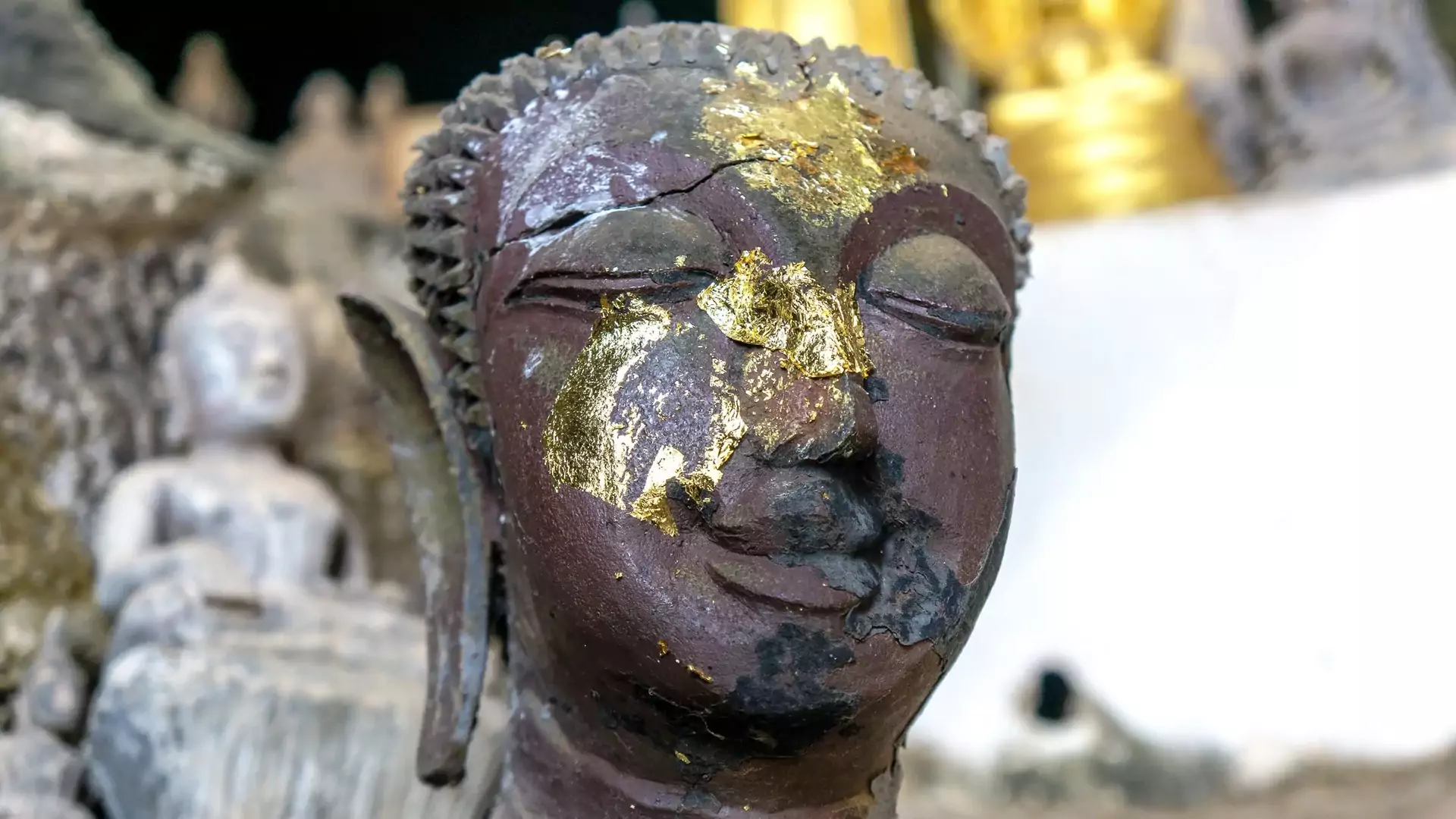
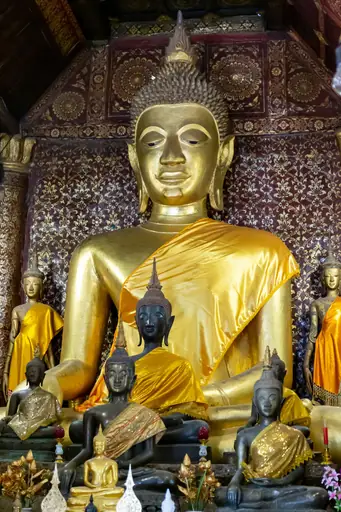
Pak Ou Caves, known locally as Tham Ting and Tham Theung, are two limestone caves situated high above the Mekong River. The lower cave, Tham Ting, is naturally lit and accessible, filled with thousands of Buddha statues of all sizes and styles, symbolizing meditation, peace and nirvana among other themes. These figures have been placed here by Buddhist pilgrims over hundreds of years, making it a sacred place of worship and cultural significance.
The upper cave, Tham Theung, lies about 200 meters above the river and is darker, accessible only with a flashlight or rented torch. It houses the majority of the statues in a cooler, more mysterious atmosphere. The cave is secured with wooden doors and an iron gate, guarded to protect its priceless relics. The climb up the stairs to this cave is moderately challenging but rewarded with tranquil views and a unique spiritual experience.
While the caves themselves are not vast, their spiritual and historical importance, combined with the captivating boat journey and the peaceful riverside village of Ban Xang Hai – famous for its local whisky and pottery – make the visit memorable. Visitors should wear comfortable shoes for climbing stairs and bring mosquito repellent. The caves can get crowded during Lao New Year when locals gather to cleanse and honor the Buddha statues.
Visitors should be aware that the area inside the caves can be damp and slippery and lighting is limited in parts. The site is less commercialized than other tourist spots, offering a more authentic yet modestly rugged experience of Laos’ religious heritage and natural beauty.
The Pak Ou Caves are about 25 km north of Luang Prabang and are most commonly reached by a scenic two-hour traditional boat ride upstream on the Mekong River from Luang Prabang. The boat ride itself offers enchanting views of riverside villages and natural landscapes. Alternatively, the caves can be accessed by road from Luang Prabang, but the boat journey is highly recommended for its cultural and visual experience.
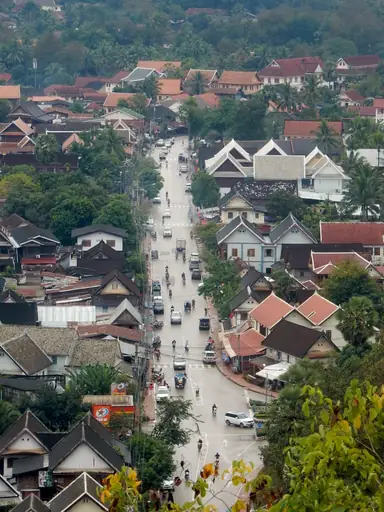
Accommodations around Luang Prabang range from budget guesthouses to boutique hotels and resorts. Most visitors stay in Luang Prabang town, which offers easy access to the river docks for the boat ride to Pak Ou Caves and plenty of amenities.
Log in to add this place to a travel list and get a summary of all recommended items for your whole trip.
We calculate the average costs when travelling to destinations and compare those with the living costs at your home. With this you can get an estimate of how expensive or cheap the destination is for you.
To customise this, you can set up which location and price level are used for the calculations in your account settings.
The exchange rate price factor shows how expensive or cheap a currency currently is compared to its historical average. It's a quick way to see if a country is currently more or less affordable due to exchange rate changes.
